Gestion Financière Agricole : Guide Complet
La gestion financière agricole enregistre les revenus, dépenses, actifs et flux de trésorerie pour prendre des décisions éclairées et assurer la rentabilité. Les exploitations réussies traitent l'agriculture comme une entreprise, pas seulement comme un style de vie. Les métriques clés incluent le bénéfice net, la marge bénéficiaire, le rendement des actifs (ROA), le ratio dette-actif et le fonds de roulement. Ce guide couvre les états financiers, la budgétisation, la gestion de trésorerie, le financement et les stratégies de rentabilité.
Pourquoi la Gestion Financière Agricole est Essentielle
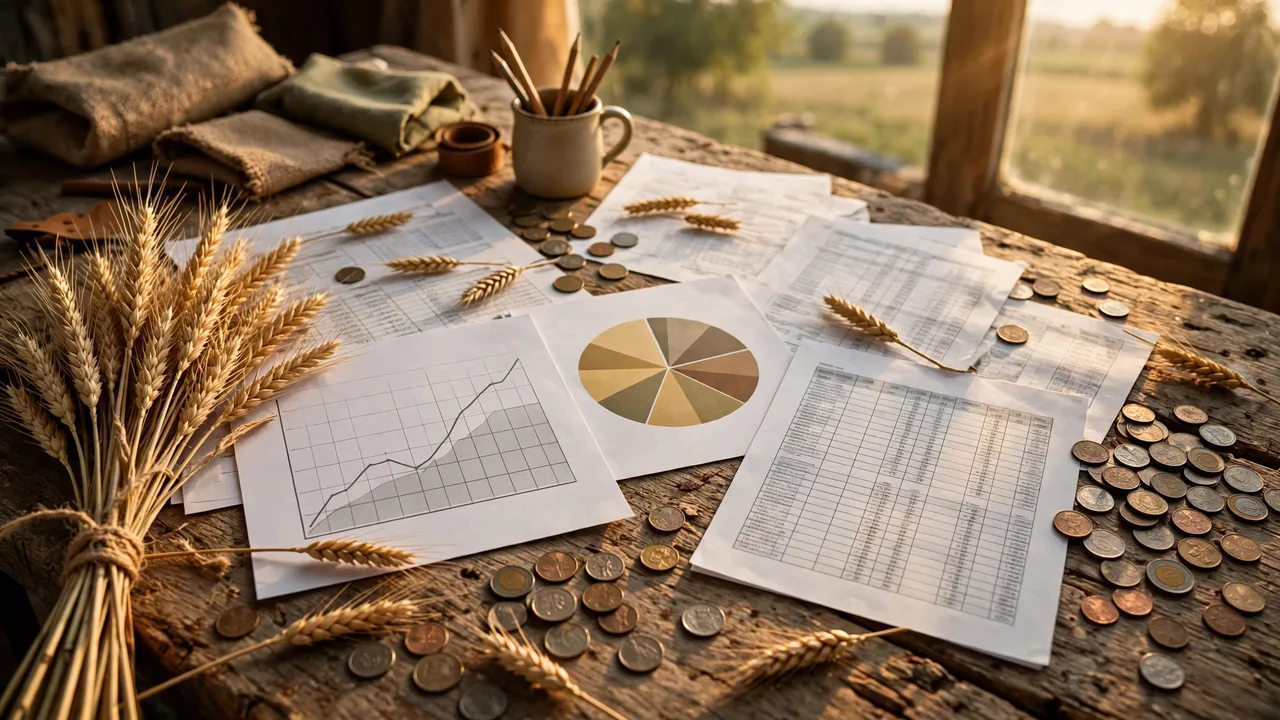
L'agriculture est une entreprise à forte intensité de capital, à faible marge et à haut risque (climat, marchés, ravageurs). Beaucoup d'exploitations échouent non pas à cause d'une mauvaise production, mais à cause d'une mauvaise gestion financière. Les pièges financiers courants incluent : ne pas connaître les coûts réels, sous-estimer les prix des produits, mauvaise planification de trésorerie, dette excessive et ne pas séparer les finances personnelles de celles de l'exploitation. Une bonne gestion financière vous aide à : Ce guide couvre calculateur budget agricole et les calculs agricoles associés pour vous aider à optimiser les opérations de votre ferme.
- Savoir quelles cultures/entreprises sont rentables (et lesquelles perdent de l'argent)
- Prendre des décisions éclairées sur l'expansion, le nouvel équipement ou les nouvelles entreprises
- Planifier les écarts saisonniers de trésorerie (la plupart des exploitations concentrent les revenus à la récolte)
- Obtenir des prêts et du financement (les prêteurs exigent des états financiers)
- Minimiser les impôts grâce à des registres et déductions appropriés
- Planifier la retraite et la succession
- Survivre aux ralentissements et événements inattendus (sécheresse, maladie, krachs boursiers)
États Financiers Clés
1. Compte de Résultat (Pertes et Provisions)
Le compte de résultat montre les revenus, dépenses et bénéfices sur une période (mois, trimestre, année). Format :
| Poste | Exemple | Notes |
|---|---|---|
| Revenu Brut | 250 000 $ | Tous les revenus de l'exploitation (vente de cultures, bétail, paiements gouvernementaux, autres) |
| − Dépenses d'Exploitation | 180 000 $ | Semences, engrais, pesticides, carburant, main-d'œuvre, réparations, loyer, assurance, services publics |
| = Bénéfice d'Exploitation | 70 000 $ | Bénéfice des opérations agricoles principales |
| − Amortissement | 15 000 $ | Usure de l'équipement, bâtiments, améliorations |
| − Frais d'Intérêts | 8 000 $ | Intérêts sur les prêts (pas les paiements de capital) |
| = Revenu Net de l'Exploitation | 47 000 $ | Bénéfice avant impôts et retraits du propriétaire |
| − Impôts | 7 000 $ | Impôt sur le revenu, impôt de travail indépendant |
| = Bénéfice Net | 40 000 $ | Bénéfice final |
Utilisez notre Calculatrice de Budget Agricole pour projeter les revenus et dépenses de chaque entreprise.
2. Bilan (État de Valeur Nette)
Le bilan montre les actifs, passifs et valeur nette à un moment donné (généralement le 31 décembre). L'équation fondamentale : Actifs = Passifs + Valeur Nette.
- Actifs courants : Espèces, inventaire de cultures, bétail de marché, fournitures, comptes débiteurs (convertibles en espèces en 1 an)
- Actifs intermédiaires : Bétail de reproduction, machinerie, équipement (durée de vie utile 1-10 ans)
- Actifs à long terme : Terre, bâtiments, améliorations permanentes (durée de vie utile >10 ans)
- Passifs courants : Prêts d'exploitation, comptes créditeurs, capital dû en 1 an
- Passifs intermédiaires : Prêts d'équipement (dus en 1-10 ans)
- Passifs à long terme : Hypothèques foncières, prêts de bâtiments (dus en >10 ans)
3. État des Flux de Trésorerie
L'état des flux de trésorerie enregistre les entrées et sorties d'espèces mois par mois. C'est l'état le plus important pour la survie de l'exploitation — les exploitations rentables peuvent échouer si elles manquent d'espèces pendant les mois creux. Une projection de trésorerie vous aide à :
- Identifier les mois où les espèces seront insuffisantes (planifier les prêts d'exploitation)
- Calendrier les gros achats pendant les mois avec entrée d'espèces
- Déterminer combien de crédit d'exploitation vous avez besoin
- Planifier les paiements de prêt
- Mettre de côté l'argent pour les impôts et les retraits du propriétaire
La plupart des exploitations ont une trésorerie saisonnière : dépenses au printemps (semis), revenus à l'automne (récolte). Une ligne de crédit d'exploitation comble l'écart. Mettez à jour votre trésorerie mensuellement — comparez le projeté vs. le réel et ajustez.
Ratios Financiers Clés
| Ratio | Formule | Plage Saine | Ce qu'il Mesure |
|---|---|---|---|
| Marge Bénéficiaire | Bénéfice Net ÷ Revenus | 10% bon, >20% excellent | Rentabilité par dollar de ventes |
| Rendement des Actifs (ROA) | Bénéfice Net ÷ Actifs Totaux | 5-10% typique, >10% bon | Efficacité avec laquelle les actifs génèrent du bénéfice |
| Rendement des Capitaux Propres (ROE) | Bénéfice Net ÷ Valeur Nette | 10% bon | Rendement de l'investissement du propriétaire |
| Ratio Dette-Actif | Passifs Totaux ÷ Actifs Totaux | <30% fort, 30-60% prudence, >60% risqué | Effet de levier et risque financier |
| Ratio de Liquidité Générale | Actifs Courants ÷ Passifs Courants | 1.5 fort, 1.0-1.5 prudence, <1.0 risqué | Liquidité à court terme (capacité à payer les factures) |
| Fonds de Roulement | Actifs Courants − Passifs Courants | 10% des dépenses annuelles | Tampon pour les coûts inattendus |
| Ratio des Dépenses d'Exploitation | Dépenses d'Exploitation ÷ Revenus | <70% bon, >80% risqué | Contrôle des coûts |
| Ratio de Couverture de la Dette | (Revenu Net + Amortissement + Intérêts) ÷ (Capital + Intérêts) | 1.5 fort, <1.1 risqué | Capacité à rembourser la dette |
Calculez ces ratios annuellement et suivez les tendances sur 3-5 ans. Le ratio d'une seule année peut être trompeur (année de mauvais temps). Les tendances révèlent si votre position financière s'améliore ou se détériore.
Budgétisation par Entreprise
Un budget d'entreprise estime les revenus et dépenses d'une culture ou entreprise d'élevage spécifique (par exemple, 1 hectare de tomates, 10 têtes de bétail). C'est l'outil le plus puissant pour la rentabilité de l'exploitation — il vous dit exactement quelles entreprises gagnent de l'argent et lesquelles en perdent.
Composantes d'un Budget d'Entreprise
- Rendement attendu : Rendement réaliste basé sur l'historique, le sol et la gestion
- Prix de vente : Estimation conservatrice du prix (utilisez la moyenne sur 3-5 ans, pas les prix de pointe)
- Coûts variables : Semences, engrais, pesticides, irrigation, main-d'œuvre, travail à façon, commercialisation — coûts qui varient avec la superficie/production
- Coûts fixes : Loyer foncier, amortissement, assurance, intérêts — coûts encourus indépendamment de la production
- Revenu brut : Rendement × prix
- Bénéfice net : Revenu brut − coûts variables − coûts fixes
- Prix d'équilibre : (Coûts variables + fixes) ÷ Rendement — prix minimum pour couvrir tous les coûts
- Rendement d'équilibre : (Coûts variables + fixes) ÷ Prix — rendement minimum pour couvrir tous les coûts
Utilisation des Budgets d'Entreprise
- Éliminer les entreprises perdantes : Si une entreprise perd constamment de l'argent (après avoir alloué des coûts équitables), arrêtez de la faire. Beaucoup d'exploitations ont des entreprises « vaches sacrées » qui perdent de l'argent chaque année.
- Développer les entreprises rentables : Allouez plus de terre, de main-d'œuvre et de capital à vos entreprises les plus rentables. Mais ne vous spécialisez pas trop — la diversification répartit le risque.
- Comparer les alternatives : Devriez-vous cultiver du maïs ou du soja ? Acheter ou louer de l'équipement ? Marché direct ou gros ? Les budgets d'entreprise vous donnent la réponse.
- Identifier les générateurs de coûts : Quels coûts sont les plus élevés ? Pouvez-vous les réduire ? (par exemple, acheter les intrants en gros, réduire le labour, améliorer l'efficacité)
- Fixer les prix : Pour la commercialisation directe, votre prix d'équilibre vous indique le prix minimum. Ajoutez une marge bénéficiaire (20-50%) pour fixer votre prix de vente.
Gestion de la Trésorerie
La trésorerie est le défi financier #1 pour les exploitations. Les revenus sont saisonniers (récolte), mais les dépenses surviennent toute l'année. Stratégies pour gérer la trésorerie :
1. Construire le Fonds de Roulement
Fonds de roulement = actifs courants − passifs courants. Visez un fonds de roulement égal à 15-25% des dépenses annuelles. C'est votre tampon financier pour les sécheresses, les bas prix ou les réparations inattendues. Construisez le fonds de roulement pendant les bonnes années en retenant les bénéfices plutôt qu'en les dépensant pour le style de vie ou l'équipement inutile.
2. Utiliser les Lignes de Crédit d'Exploitation
Une ligne de crédit d'exploitation est un prêt renouvelable pour les dépenses saisonnières (coûts de semis, main-d'œuvre, fournitures). Vous l'utilisez selon les besoins et la remboursez après la récolte. Taux d'intérêt : 6-10% pour les prêts d'exploitation agricoles. Conseils clés :
- Établissez la ligne avant d'en avoir besoin (les prêteurs sont plus disposés quand vous n'avez pas besoin d'argent)
- Utilisez-la seulement pour les dépenses d'exploitation, pas pour les achats de capital ou les dépenses personnelles
- Remboursez-la en entier au moins une fois par an (après la récolte)
- Comparez les meilleurs taux et conditions (Système de Crédit Agricole, banques commerciales, programmes USDA)
3. Lisser les Revenus par la Diversification
Diversifiez les sources de revenus pour réduire les écarts saisonniers de trésorerie :
- Plusieurs cultures avec différentes époques de récolte : Légumes précoces (printemps), cultures principales (été/automne), cultures de stockage (ventes d'hiver)
- Élevage : Revenus constants du lait, des œufs ou des ventes régulières de bétail
- Produits à valeur ajoutée : Confitures, sauces, produits de boulangerie — peuvent être produits et vendus toute l'année
- Revenus hors exploitation : Beaucoup d'exploitations réussies ont un partenaire travaillant hors exploitation pour des revenus et avantages constants
- AMAP (Agriculture Soutenue par l'Collectivité) : Les membres paient d'avance au printemps pour des paniers hebdomadaires de produits — résout la trésorerie !
4. Gérer le Calendrier des Dépenses
- Achetez les intrants en gros quand les prix sont bas (achats d'engrais à l'automne, commandes de semences tôt)
- Calendrier les achats de capital pendant les années à haut revenu (avantage fiscal de l'amortissement accéléré)
- Utilisez le crédit fournisseur (conditions de paiement de 30-60 jours) quand disponible
- Retardez les dépenses non essentielles jusqu'à ce que les espèces soient disponibles
- Louez plutôt que d'acheter l'équipement pour un usage occasionnel (réduit la dépense de capital)
Financement et Gestion de la Dette
Types de Prêts Agricoles
| Type de Prêt | Durée | Taux d'Intérêt | Usage |
|---|---|---|---|
| Ligne de Crédit d'Exploitation | 1 an (renouvelable) | 6-10% | Semences, engrais, main-d'œuvre, dépenses saisonnières |
| Prêt d'Équipement | 3-7 ans | 6-9% | Tracteurs, moissonneuses, outils |
| Hypothèque Immobilière | 15-30 ans | 5-8% | Achat de terre, bâtiments |
| Prêts USDA FSA | Variable | 1.5-5% (subventionné) | Agriculteurs débutants, groupes défavorisés, urgence |
| Système de Crédit Agricole | Variable | Taux du marché | Tous types, coopérative détenue par les agriculteurs |
Principes de Gestion de la Dette
- Assortir la durée du prêt à la vie de l'actif : Ne financez pas les semences (utilisées en 1 an) avec un prêt d'équipement à 7 ans. Ne financez pas la terre (actif à 30 ans) avec un prêt à 5 ans.
- Maintenir le ratio dette-actif en dessous de 50% : Au-dessus de 60%, vous êtes vulnérable aux augmentations de taux d'intérêt et aux baisses de revenus. En dessous de 30%, vous avez une forte flexibilité financière.
- Maintenir le ratio de couverture de la dette >1.5 : Cela signifie que vos revenus sont 1.5× vos paiements de dette. En dessous de 1.1, vous risquez le défaut.
- Éviter de refinancer les pertes d'exploitation en dette à long terme : C'est un chemin courant vers la ruine financière. Si vous avez des pertes d'exploitation, corrigez le problème sous-jacent (coûts, prix, mix d'entreprises) plutôt que d'enterrer les pertes dans plus de dette.
- Construire les capitaux propres, pas seulement la taille : Une petite exploitation sans dette est souvent plus rentable et résiliente qu'une grande exploitation fortement endettée.
Planification Fiscale
Les agriculteurs ont des avantages et responsabilités fiscales uniques. Stratégies fiscales clés :
- Moyenne des revenus : Les agriculteurs peuvent moyenner les revenus de l'année actuelle sur les 3 années précédentes (Formulaire 1040 Schedule J), réduisant les impôts pendant les années à haut revenu.
- Amortissement accéléré : L'Article 179 et l'amortissement bonus permettent de passer en charges les achats d'équipement l'année de l'achat (jusqu'à 1,16 M $ en 2024). Calendrier les achats pendant les années à haut revenu.
- Dépenses prépayées : Les agriculteurs peuvent prépayer jusqu'à 50% des dépenses de l'année prochaine (semences, engrais, loyer) pour réduire les revenus de l'année actuelle. Doit être un prépaiement réel, pas seulement un dépôt.
- Échanges de même nature : Différer les gains en capital lors de l'échange d'équipement ou de terre (Article 1031). Règles strictes — utilisez un intermédiaire qualifié.
- Impôt de travail indépendant : Les agriculteurs paient 15.3% d'impôt SE (Sécurité Sociale + Medicare) sur le revenu net de l'exploitation. Envisagez de former une société S ou LLC pour réduire l'impôt SE (consultez un conseiller fiscal).
- Servitudes de conservation : Donner une servitude de conservation sur des terres agricoles peut fournir des avantages fiscaux importants sur le revenu et la succession.
- Tenir de bons registres : Chaque dépense déductible a besoin d'un reçu. Registre de kilométrage pour l'utilisation du véhicule de l'exploitation. Registre de toutes les ventes et dépenses. Utilisez un logiciel de comptabilité (QuickBooks, FarmBooks, Xero) ou un bon système de tableur.
Références
- USDA Farm Service Agency (FSA)
- Extension de l'Université du Minnesota - Gestion Agricole
- USDA Risk Management Agency (RMA)
Gérez les finances de votre exploitation : Utilisez notre Calculatrice de Budget Agricole pour les budgets d'entreprise, la Calculatrice de Prêt Agricole pour les paiements de prêt, la Calculatrice de Marge de Culture pour les prix, et la Calculatrice de Subventions Agricoles pour les paiements gouvernementaux.
Erreurs Financières Courantes
- Ne pas connaître les coûts réels : Beaucoup d'agriculteurs sous-estiment les coûts en ignorant l'amortissement, le coût d'opportunité de la terre/main-d'œuvre et les frais généraux. Utilisez des budgets d'entreprise avec une allocation complète des coûts.
- Sous-estimer les prix des produits : Vendre au ou en dessous du point d'équilibre parce que « c'est ce que tout le monde facture ». Calculez votre coût complet et ajoutez une marge bénéficiaire. Pour la commercialisation directe, les clients paieront pour la qualité et l'histoire.
- Mélanger les finances personnelles et de l'exploitation : Comptes bancaires séparés, cartes de crédit séparées, se payer un salaire régulier (ou retrait du propriétaire). Cela facilite la période des impôts et vous donne une image claire de la rentabilité de l'exploitation.
- Acheter de l'équipement pour économiser des impôts : Un tracteur de 50 000 $ économise 10 000-15 000 $ en impôts mais coûte 50 000 $. Achetez de l'équipement parce que vous en avez besoin et qu'il s'amortira par une efficacité accrue ou une réduction du travail à façon — pas seulement pour les économies d'impôt.
- Se développer trop vite : L'expansion rapide conduit souvent à une dette excessive et à des problèmes de trésorerie. Croissez progressivement, assurez-vous que chaque expansion est rentable avant d'en assumer d'autres.
- Ne pas avoir de tampon financier : Chaque exploitation a de mauvaises années (sécheresse, inondation, maladie, krach boursier). Un fonds de roulement égal à 15-25% des dépenses annuelles vous aide à survivre sans vendre d'actifs ou contracter des dettes à haut intérêt.
- Ignorer les états financiers : Revoyez le compte de résultat mensuellement, le bilan annuellement, la trésorerie hebdomadairement pendant les périodes critiques. Si vous ne le mesurez pas, vous ne pouvez pas le gérer.
Comment Démarrer la Gestion Financière Agricole
- Mettre en place un système de registres : Logiciel de comptabilité (QuickBooks Self-Employed, FarmBooks, Xero) ou une feuille de calcul détaillée. Enregistrez chaque transaction. Catégorisez par entreprise.
- Créer des budgets d'entreprise : Pour chaque entreprise de culture/élevage, estimez les revenus, coûts variables, coûts fixes et bénéfice. Mettez à jour avec les résultats réels après la récolte.
- Projeter la trésorerie : Créez une projection de trésorerie sur 12 mois. Mettez à jour mensuellement. Identifiez les déficits d'espèces et planifiez le crédit d'exploitation.
- Calculer les ratios financiers : Annuellement, calculez la marge bénéficiaire, le ROA, le ratio dette-actif, le ratio de liquidité. Suivez les tendances sur 3-5 ans.
- Revoir et ajuster : Trimestriellement, revoyez la performance financière. Éliminez les entreprises perdantes, développez les rentables, ajustez les prix, contrôlez les coûts.
- Obtenir de l'aide professionnelle : Un comptable agricole ou un consultant en gestion agricole peut vous faire économiser bien plus que ses honoraires. Recherchez des professionnels avec une expérience spécifique à l'agriculture. Le Système de Crédit Agricole et l'extension universitaire offrent des conseils financiers gratuits ou à faible coût.
Questions Fréquentes
Comment créer un budget agricole et que doit-il inclure?
Un budget complet comprend: (1) Budgets par entreprise — ventilation par culture ou élevage de tous les coûts et revenus; (2) Budget de la ferme entière — revenus et dépenses consolidés; (3) Budget de trésorerie — projections mensuelles des entrées et sorties pour identifier les besoins d'emprunt; (4) Budget partiel — analyse du changement d'une pratique (ex: passage au semis direct, ajout d'engrais verts). Coûts: variables/exploitation (semence, engrais, produits chimiques, carburant, main-d'œuvre, réparations, irrigation), fixes/propriété (amortissement, intérêts, assurance, impôts fonciers, fermage), et frais généraux (utilités, bureau, honoraires). Revenus: ventes cultures/élevage, paiements gouvernementaux, travail à façon. Utilisez un calculateur de budget agricole pour construire des budgets par entreprise et comparer la rentabilité.
Quelle est la différence entre trésorerie, bénéfice et seuil de rentabilité?
La trésorerie mesure l'argent réel entrant et sortant de votre compte — trésorerie positive signifie que vous pouvez payer vos factures à temps. Le bénéfice (revenu net) = revenus totaux - dépenses totales (y compris les dépenses non monétaires comme l'amortissement) — mesure la viabilité économique mais n'indique pas directement si vous avez de l'argent. Le seuil de rentabilité est le point où les revenus = coûts totaux: prix seuil = coût total par unité / rendement attendu; rendement seuil = coût total par hectare / prix attendu. Une ferme peut être bénéficiaire mais avoir une trésorerie négative (ex: avec gros achats d'équipement financés), ou avoir une trésorerie positive mais ne pas être bénéficiaire (ex: quand les emprunts couvrent les pertes). Comprendre les trois est essentiel: utilisez le budget de trésorerie pour la liquidité, l'analyse du bénéfice pour la viabilité, et les calculateurs de seuil pour les décisions de prix.
Comment calculer le coût de production par hectare ou par unité?
Coût de production = coûts totaux alloués à l'entreprise. Pour les cultures: Coût total par hectare = (coûts variables par hectare) + (coûts fixes alloués par hectare). Coûts variables: semence, engrais, produits chimiques, carburant, main-d'œuvre, réparations, irrigation. Coûts fixes: amortissement de l'équipement utilisé pour cette culture, intérêts sur le capital d'exploitation, fermage ou coût de propriété foncière, assurance, impôts. Pour le coût par unité (tonne, quintal): Coût par unité = Coût total par hectare / Rendement par hectare. Exemple, si le coût total est 2 100€/ha et le rendement 11,2 t/ha: coût = 187,5€/t. Utilisez un calculateur de budget agricole pour allouer les coûts partagés (équipement, main-d'œuvre) entre les entreprises selon l'usage (heures, hectares). Le coût de production précis est la base des décisions de prix et de l'amélioration de la rentabilité.
Quels ratios financiers dois-je surveiller pour ma ferme?
Ratios clés: (1) Ratio de liquidité générale = actifs courants / passifs courants — mesure la liquidité à court terme; objectif >1,5 (sain), <1,0 préoccupant. (2) Ratio d'endettement = passifs totaux / actifs totaux — mesure l'effet de levier; objectif <0,4 (conservateur), >0,7 risque élevé. (3) Rendement des actifs (ROA) = revenu net / actifs totaux — mesure la rentabilité; objectif >5%. (4) Ratio dépenses d'exploitation = dépenses d'exploitation / revenu brut; objectif <0,7. (5) Ratio revenu net = revenu net / revenu brut; objectif >0,1. (6) Couverture de la dette à terme = (revenu net + amortissement + intérêts) / (principal + intérêts) — mesure la capacité de remboursement; objectif >1,25. Calculez annuellement à partir du bilan et du compte de résultat. Utilisez un calculateur de ROI agricole pour suivre le rendement et comparer aux références.
Comment améliorer la rentabilité sans augmenter les hectares?
Stratégies: (1) Augmenter les rendements — meilleure génétique, agriculture de précision, analyse de sol, fertilisation optimale, gestion des ravageurs; même 5-10% d'amélioration impacte significativement. (2) Réduire les coûts d'intrants — achats en gros, commandes anticipées, produits génériques, analyse de sol pour éviter la sur-fertilisation, partage d'équipement ou travail à façon. (3) Améliorer la commercialisation — contrats à terme, trading de base, stockage du grain pour de meilleurs prix, produits à valeur ajoutée, vente directe (AMAP, marchés de producteurs). (4) Optimiser le mélange d'entreprises — abandonner les cultures à faible bénéfice, développer les rentables, utiliser la rotation pour réduire les coûts. (5) Contrôler les frais généraux — revoir assurance, utilités, honoraires; éliminer les abonnements inutiles. (6) Améliorer l'efficacité de la main-d'œuvre — formation, meilleur équipement, optimisation des processus. Utilisez un calculateur de marge culturale pour identifier les entreprises les plus rentables et un calculateur de seuil pour fixer les objectifs de prix.
Comment gérer la trésorerie pendant les fluctuations saisonnières?
La trésorerie agricole est fortement saisonnière — dépenses toute l'année mais revenus souvent en quelques mois après récolte. Stratégies: (1) Créez un budget mensuel de trésorerie projetant 12-24 mois, identifiant les mois à déficit. (2) Utilisez des lignes de crédit d'exploitation pour couvrir les dépenses pré-récolte, en remboursant après récolte. (3) Construisez des réserves de fonds de roulement — objectif 15-25% du revenu brut annuel en épargne liquide. (4) Échelonnez les ventes — stockez le grain et vendez tout au long de l'année. (5) Diversifiez les revenus — élevage, travail à façon, agritourisme, revenus hors ferme. (6) Négociez les conditions de paiement avec les fournisseurs — conditions prolongées pour semence/engrais. (7) Utilisez les programmes gouvernementaux — prêts FSA, aide catastrophe. Revoyez la trésorerie mensuellement. Utilisez un calculateur de budget agricole pour projeter les positions mensuelles et planifier les besoins d'emprunt.