Aucun calcul pour l'instant
Aucun favori pour l'instant
Calculateur d'Irrigation
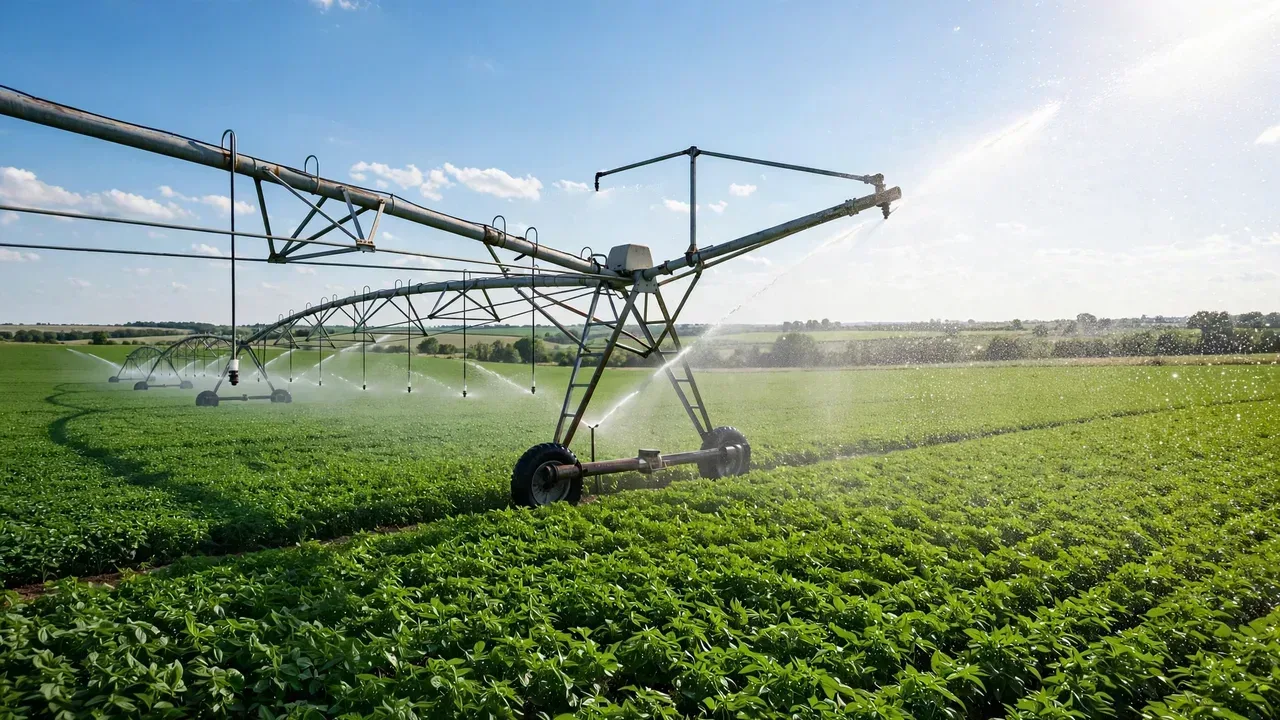
Calculate irrigation water requirement and duration based on soil moisture, crop type, and irrigation efficiency.
Results
Comment Utiliser Cette Calculatrice
Entrez les valeurs d'entrée requises dans les champs du formulaire. Chaque champ inclut des valeurs par défaut que vous pouvez ajuster à votre situation spécifique. Cliquez sur le bouton Calculer pour voir des résultats instantanés. Utilisez le bouton Métrique/Impérial pour basculer entre les systèmes d'unités. Les résultats sont affichés dans le panneau de résultats et peuvent être utilisés pour la planification et la prise de décision agricole.
À Propos de Cet Outil
La Irrigation est conçue pour aider les agriculteurs, les agronomes et les étudiants en agriculture à effectuer des calculs rapides et précis pour la gestion de l'exploitation. Cet outil utilise des formules agricoles standard basées sur les recommandations des services de vulgarisation et la littérature scientifique. Que vous planifiiez les intrants, estimiez les rendements ou gériez les finances, cette calculatrice fournit des estimations fiables.
Applicabilité: Adapté à la planification de l'irrigation en Afrique de l'Ouest et centrale.
Comment Fonctionne le Calcul
Cette calculatrice utilise des formules agricoles établies pour calculer les résultats à partir de vos valeurs d'entrée. La méthodologie de calcul suit les pratiques standard recommandées par les services de vulgarisation agricole et les institutions de recherche. Toutes les formules sont transparentes et peuvent être vérifiées dans la littérature agricole publiée. La calculatrice tient compte des facteurs d'efficacité standard et des taux de perte le cas échéant. Pour des recommandations précises, consultez votre service de vulgarisation local ou un agronome qualifié.
Exemple Pratique
Un agriculteur utilise cette calculatrice pour planifier irrigation dans son exploitation. En entrant ses données de champ spécifiques, il reçoit des calculs instantanés qui l'aident à prendre des décisions de gestion éclairées. Les résultats lui permettent de comparer différents scénarios, d'optimiser les intrants et d'estimer les résultats avant d'engager des ressources. Cela fait gagner du temps, réduit le gaspillage et améliore l'efficacité et la rentabilité globales de l'exploitation.
Conseils et Erreurs Courantes
Les erreurs courantes incluent l'utilisation d'unités incorrectes (vérifiez toujours métrique vs impérial), la saisie de données estimées plutôt que mesurées, l'ignorance des conditions locales et des recommandations de vulgarisation, et la surinterprétation des résultats (les calculatrices fournissent des estimations, pas des prédictions exactes). Pour de meilleurs résultats : utilisez des entrées mesurées et précises, comprenez les hypothèses de la formule, vérifiez les résultats par rapport à votre expérience, consultez des experts locaux pour les décisions critiques, et utilisez l'analyse de scénarios.
Révisé par l'Équipe Éditoriale d'Agricalc — Ingénieurs agricoles et agronomes avec plus de 10 ans d'expérience sur le terrain. Notre équipe vérifie chaque formule contre des publications de vulgarisation révisées par des pairs. Pour des conseils spécifiques, consultez votre agronome local.
Références
- FAO — Crop Water Requirements (Irrigation and Drainage Paper 56)
- USDA NRCS — Irrigation Water Management Guide
- Penn State Extension — Irrigation Scheduling and Water Management
Questions Fréquemment Posées
How do I determine crop water requirements for Irrigation?
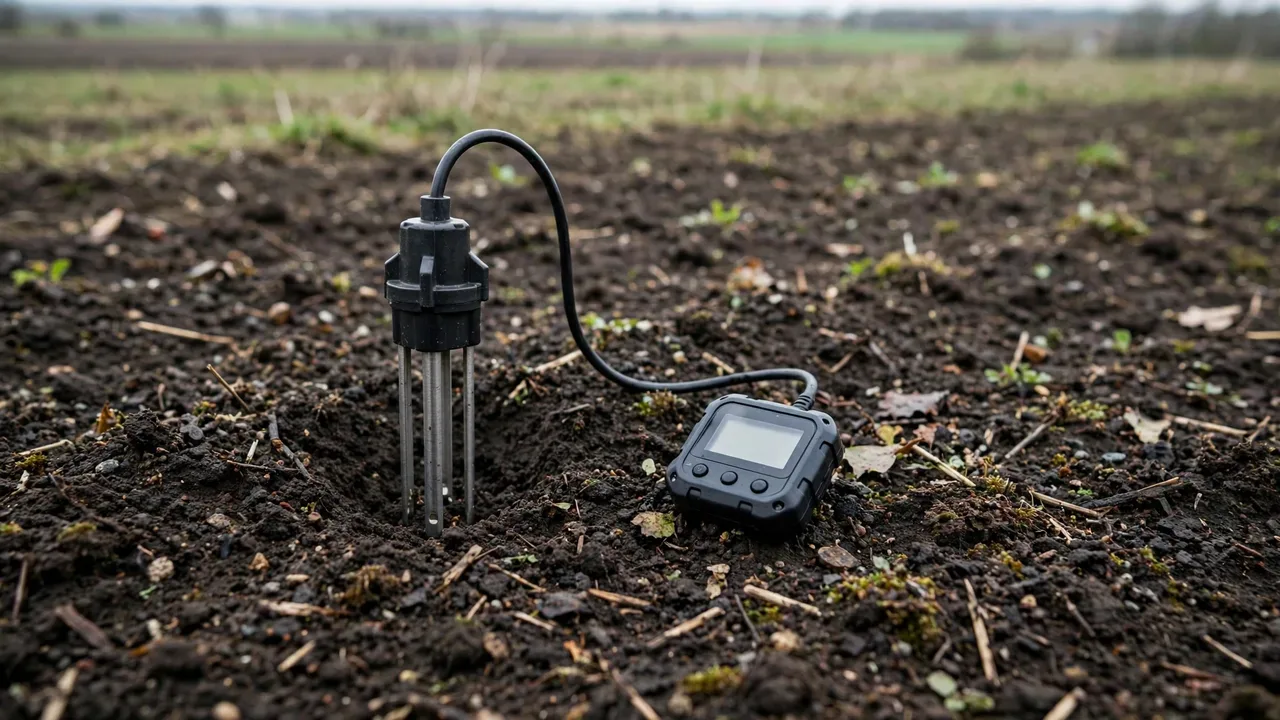
Crop water requirements for Irrigation are calculated using the formula: ETc = ETo × Kc, where ETo is reference evapotranspiration (from weather data using Penman-Monteith) and Kc is the crop coefficient (varies by growth stage: 0.3-0.5 initial, 1.0-1.2 mid-season, 0.6-0.9 late). Net irrigation requirement = ETc − effective rainfall + leaching requirement. Local agricultural extension services provide ETo data and Kc values for common crops. Soil moisture sensors can also guide irrigation scheduling by measuring actual water depletion in the root zone.
What irrigation efficiency should I use for Irrigation?
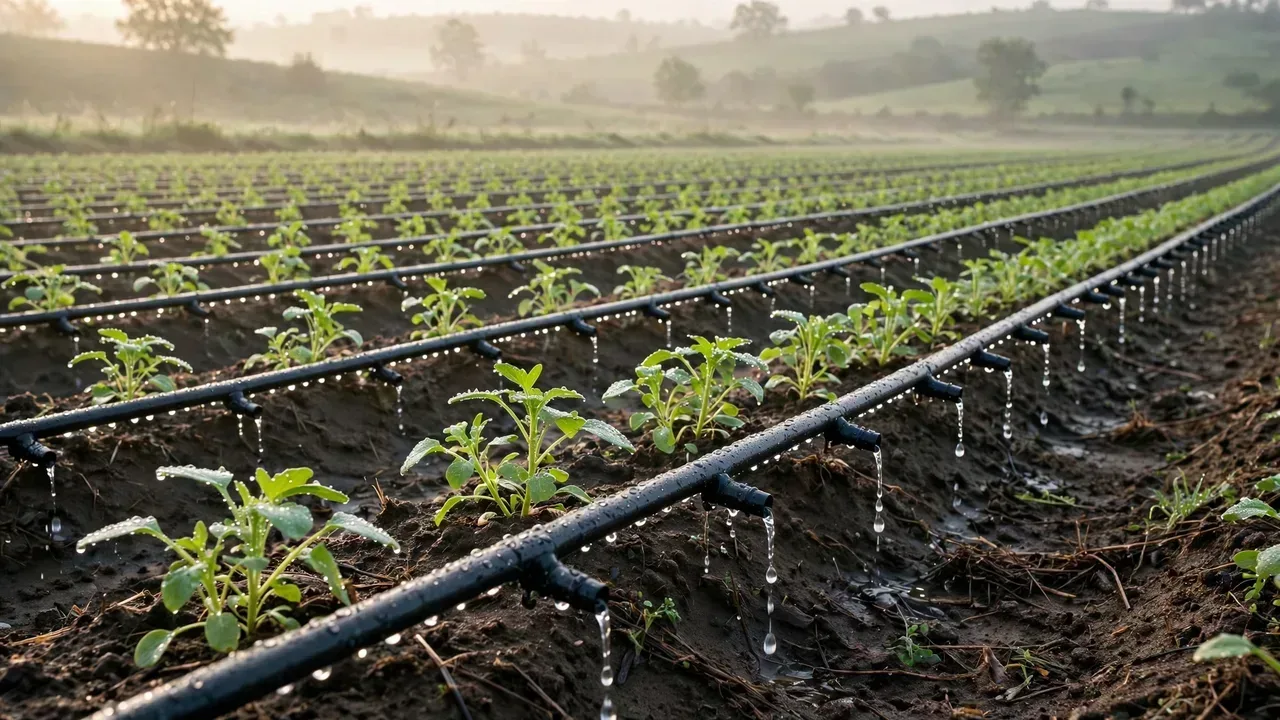
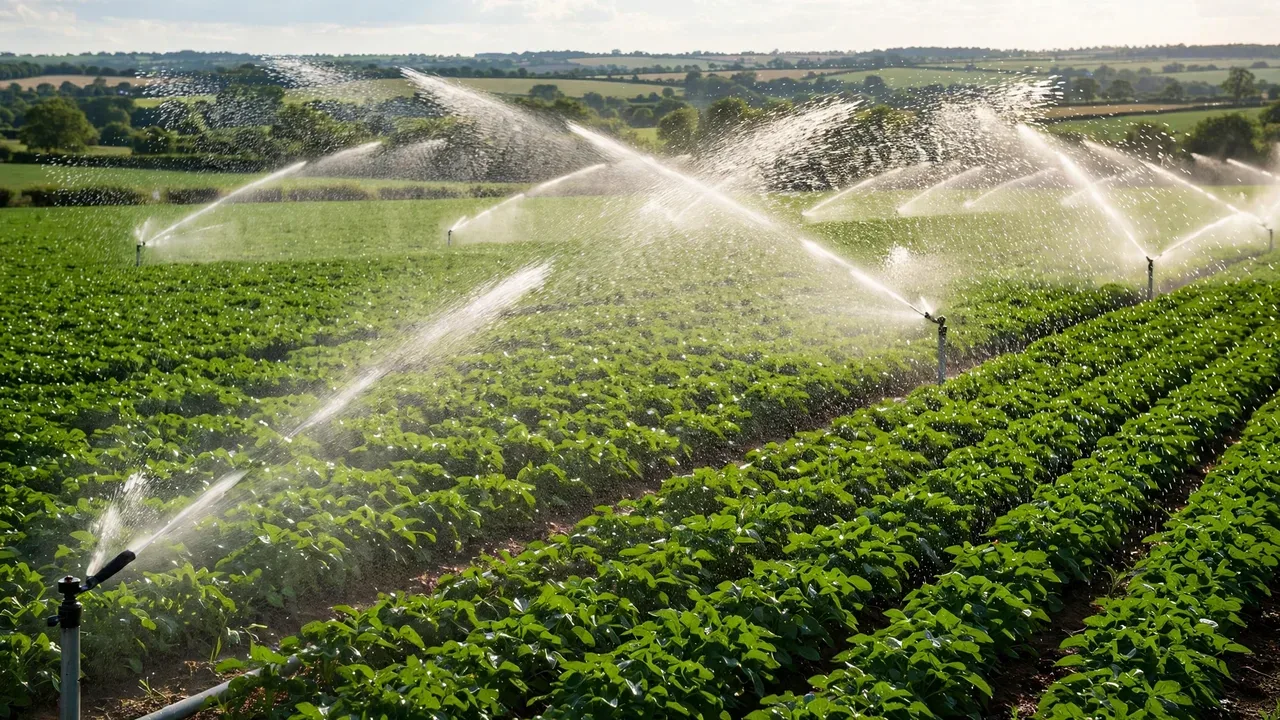
Irrigation efficiency varies by system type: drip/trickle irrigation achieves 80-95% efficiency (minimal evaporation and runoff), sprinkler systems achieve 60-80% (some wind drift and evaporation losses), and flood/furrow irrigation achieves 40-60% (significant runoff and deep percolation). To calculate gross water application: Gross = Net ÷ efficiency. If your crop needs 40 mm and your system is 70% efficient, you must apply 57 mm. Improving efficiency through system upgrades, maintenance, and better scheduling saves water, energy, and money while reducing nutrient leaching.
How often should I irrigate using Irrigation?
Irrigation frequency for Irrigation depends on: soil water-holding capacity (sand: 50-100 mm/m, loam: 150-200 mm/m, clay: 150-250 mm/m), crop root depth (shallow: 30-60 cm, deep: 90-150 cm), daily crop water use (ETc), and allowable depletion (typically 40-60% of available water for most crops, 30-40% for sensitive crops). Formula: Interval (days) = (Available water × root depth × allowable depletion) ÷ daily ETc. In peak summer, many crops need irrigation every 3-7 days; in cooler periods, intervals extend to 7-14 days.
What is the best time of day for Irrigation?
The best time for Irrigation is generally early morning (4:00-9:00 AM) or late evening (after 6:00 PM). Morning irrigation minimizes evaporation losses (cooler temperatures, lower wind, higher humidity) and allows foliage to dry during the day, reducing disease risk. Evening irrigation also reduces evaporation but may leave foliage wet overnight, increasing fungal disease risk for susceptible crops. Midday irrigation (10 AM-4 PM) has the highest evaporation losses (up to 15-20% for sprinklers) and is generally avoided except for cooling purposes or when water delivery schedules require it.
How do I know if my Irrigation is working properly?
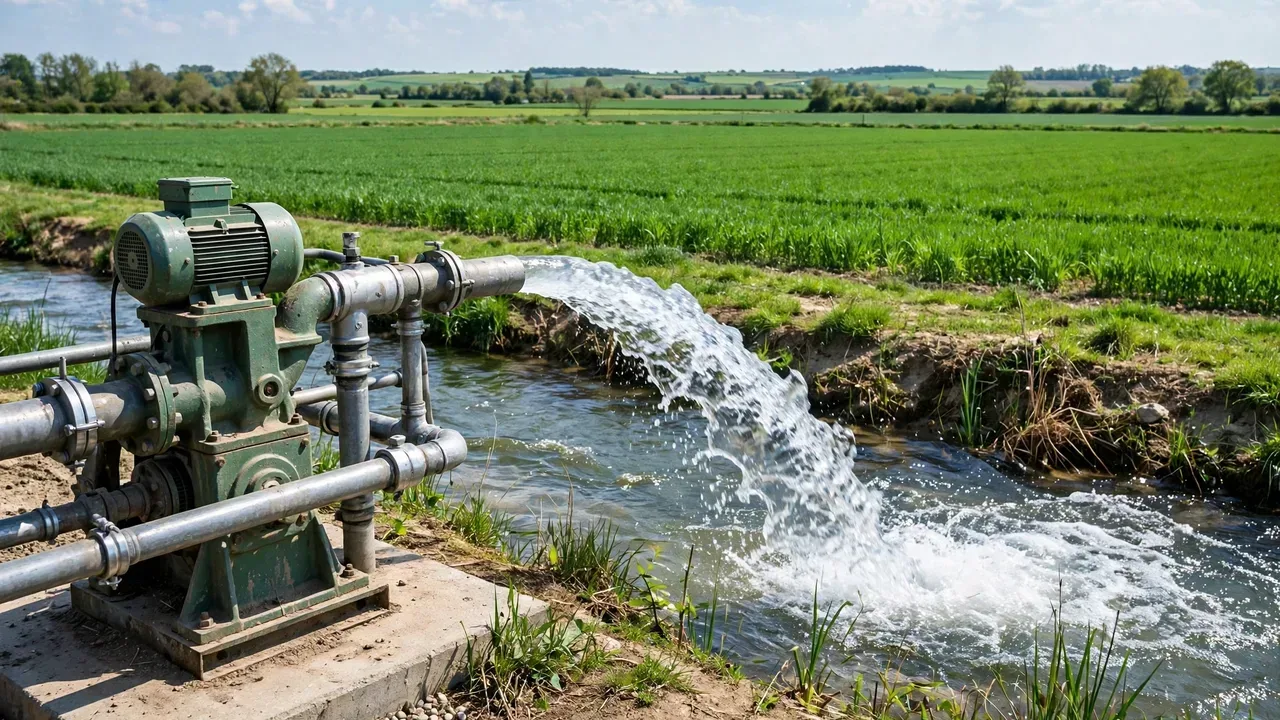
To verify Irrigation is working properly: (1) Check system pressure at the pump and at the farthest sprinkler/drip zone — pressure should be within manufacturer specifications, (2) Perform a uniformity test using catch cans (place cans in a grid pattern, run system for a set time, measure water volume in each can — Christiansen's Uniformity Coefficient should be >80%), (3) Inspect for leaks, broken sprinklers, clogged emitters, and worn nozzles, (4) Check flow rate against design specifications, (5) Use soil moisture sensors to verify water is reaching the root zone. Regular maintenance (weekly during season, annual full inspection) ensures optimal performance and water savings.