Climate-Resilient Crop Rotation Planning for Changing Weather Patterns
Climate change is making weather patterns less predictable: earlier springs, delayed frosts, more intense droughts, heavierainfall events, and unexpected heat waves are becoming the norm. Traditional crop rotations designed for stable climates are increasingly failing. A climate-resilient rotation diversifies crops, builds soil health, spreads risk, and includes built-in flexibility to adapto whatever the season brings. This guide shows how to design a rotation that can weather the unexpected.
Why Traditional Rotations Are Failing
Classic rotations like corn-soybean-wheat were built around predictable seasonal patterns and reliable rainfall. Today, a farmer may face a spring so wet that planting is delayed three weeks, followed by a six-week drought in July, then an early fall frost. A single-crop or two-crop rotation leaves the entire farm vulnerable tone weather event. A 2023 study by the USDA found that farms with diversified rotations experienced 22% lower yield variability during extreme weather compared to monoculture farms.
Principles of Climate-Resilient Rotations
1. Diversify Across Plant Families
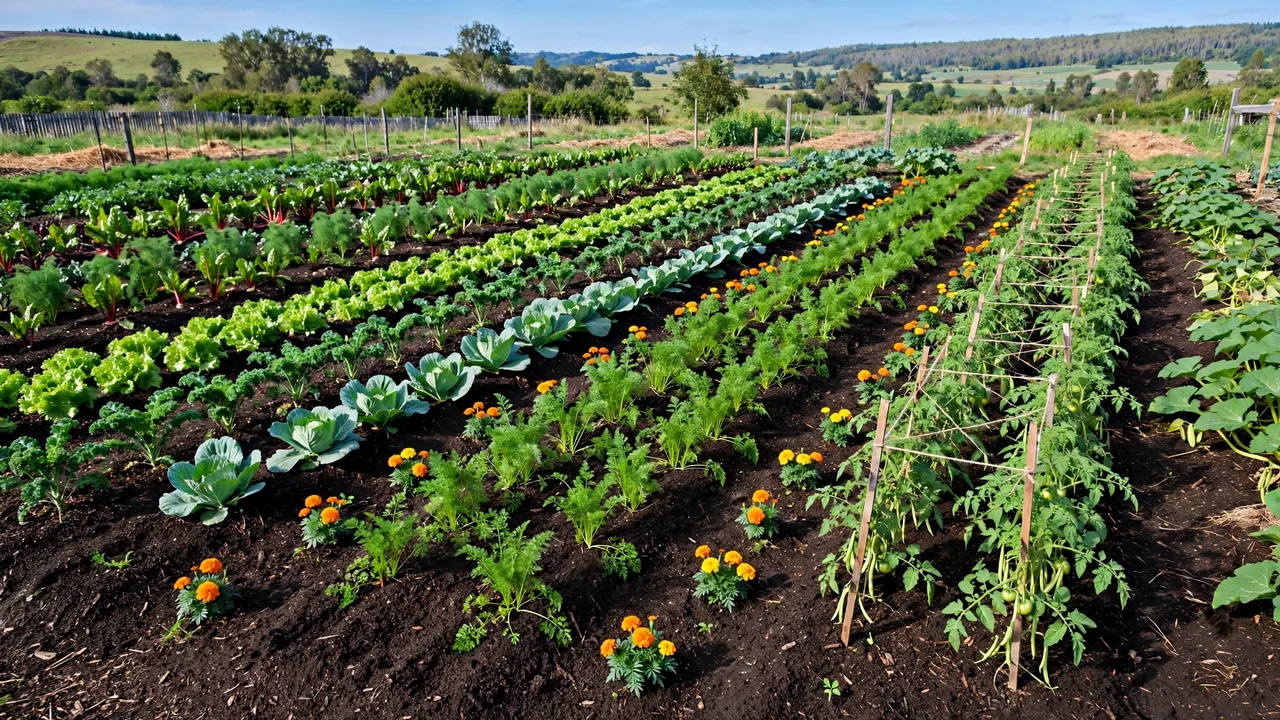
Include crops from at least 3–4 different plant families in your rotation. Different families have different root structures, water requirements, pest complexes, and temperature tolerances. A rotation that includes grasses (corn, wheat, sorghum), legumes (soybeans, clover, peas), and broadleaf crops (sunflowers, buckwheat, vegetables) spreads risk across multiple growing conditions.
2. Mix Warm-Season and Cool-Season Crops
Warm-season crops (corn, soybeans, sorghum, tomatoes) thrive in heat but fail in cold, wet springs. Cool-season crops (wheat, oats, barley, peas, leafy greens) tolerate cold and can be planted early or late. Including both ensures that if spring is too cold for corn, your wheat and oatstill perform; if summer is too hot for cool-season crops, your warm-season crops carry the season.
3. Include Deep-Rooted and Shallow-Rooted Species
Deep-rooted crops (alfalfa, chicory, sunflowers, sorghum) access water and nutrients from 3–6 feet deep, making them drought-tolerant and improving soil structure. Shallow-rooted crops (lettuce, onions, wheat) use topsoil moisture and nutrients. Combining them creates a more efficient use of soil resources and reduces the impact of both surface drought and subsoil compaction.
4. Integrate Cover Crops
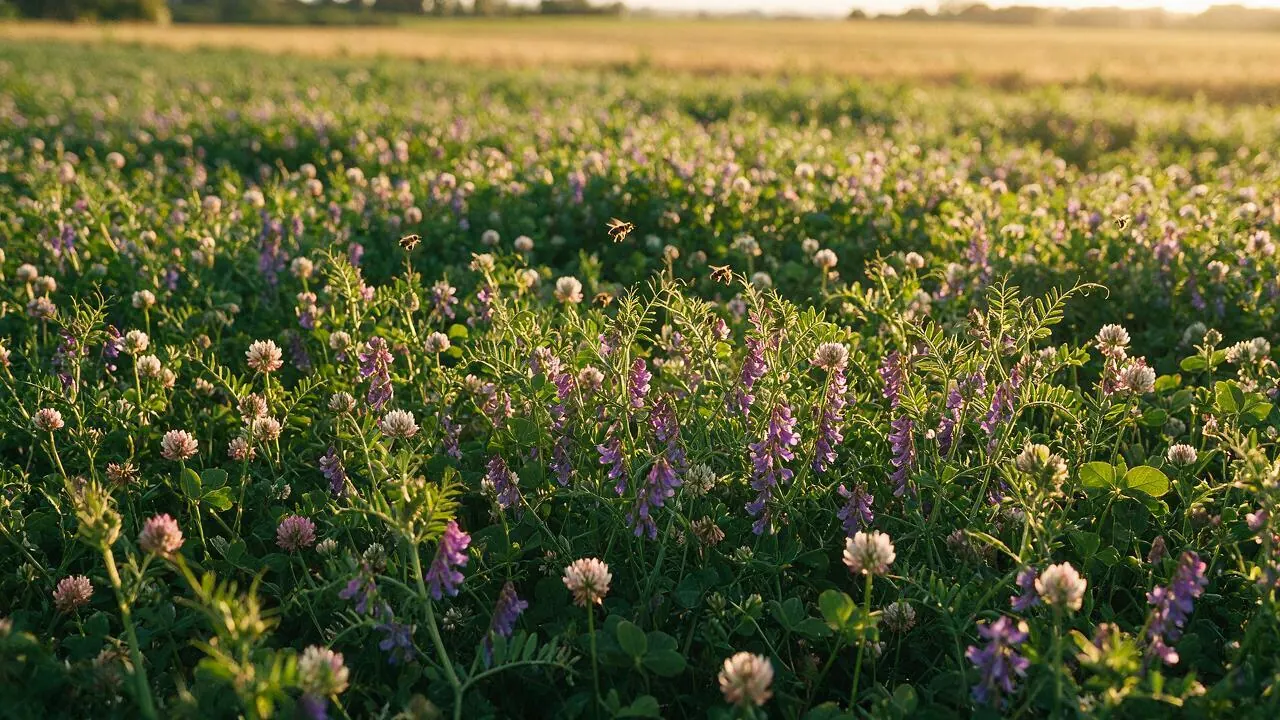
Cover crops are the single most effective climate adaptation tool in a rotation. They protect soil from erosion during heavy rains, improve water infiltration, add organic matter, suppress weeds, and scavenge nutrients. A cereal rye cover crop can reduce soil erosion by 90% during winter storms and increase water infiltration by 30–50%. Use our Crop Rotation Planner to map cover crops into your rotation sequence.
Example Climate-Resilient Rotations
4-Year Rotation for Variable Rainfall (Midwest)
- Year 1: Corn (warm-season, deep-rooted) with cereal rye cover crop after harvest
- Year 2: Soybeans (warm-season, nitrogen-fixing) with oats/radish cover crop
- Year 3: Winter wheat (cool-season, early harvest) with red clover frost-seeded
- Year 4: Oats + mixed cover crop (cowpea, radish, turnip, clover) forage or green manure
This rotation has crops planted in both fall and spring, deep and shallow roots, and living cover on the soil for at least 10 months of the year. If corn fails due to drought, wheat and soybeans provide revenue. If spring is too wet for corn planting, the field can be shifted to oats or a cover crop mix.
3-Year Rotation for Drought-Prone Regions
- Year 1: Grain sorghum (drought-tolerant, warm-season)
- Year 2: Winter wheat (cool-season, uses early-spring moisture)
- Year 3: Fallow or cover crop mix (sunn hemp, cowpea, millet) to rebuild moisture
Sorghum uses 20–30% less water than corn and produces grain under conditions where corn would fail. Winter wheat matures before the hottest, driest part of summer. The fallow or cover year allowsoil moisture to recharge.
Adaptive Management: Building Flexibility Into the Rotation
A climate-resilient rotation is not a rigid schedule. It includes decision points where you can adjust based on current conditions:
- Planting window flexibility: Have both early and late planting options. If spring is too wet for corn, plant soybeans or sunflowers later.
- Relay cropping: Plant a second crop into a standing first crop (e.g., soybeans into wheat stubble) to spread risk and maximize use of a short season.
- Double cropping: After an early wheat harvest, plant soybeans, buckwheat, or a cover crop to capture late-season moisture and heat.
- Emergency forage options: If a primary crop fails, have a plan to plant a quick-growing forage (sorghum-sudangrass, millet, turnips) to salvage some value.
Timing and Planting Decisions
Changing weather patterns mean traditional planting dates are no longereliable. Use our Crop Planting Calendar to calculate optimal planting windows based on your location and current frost dates, then build in 1–2 weeks oflexibility. Monitor long-range forecasts and soil temperature rather than relying on calendar dates. Soil temperature at planting depth is a moreliable indicator than the calendar for warm-season crops: corn needs 50°F+, soybeans 55°F+, cucurbits 60°F+.
Soil Health as Climate Insurance
Every aspect of a climate-resilient rotation ultimately feeds back to soil health. Soil with 4–5% organic matter can hold 2–4 inches of additional plant-available water per acre-foot compared to soil with 2% organic matter — enough to carry a crop through a 2–3 week drought. Cover crops, reduced tillage, and diverse rotations all increase organic matter. Think of soil organic matter as your drought insurance policy: it costs nothing extra to build through good management, and it pays off when weather turns adverse.
Getting Started
Begin by mapping your current rotation and identifying its vulnerabilities. Which crops would fail in a drought? In a flood? In an early frost? Then add one or two new crops or cover crops that fill those gaps. You don't need to redesign your entire farm at once — start with 10–20% of your acreage and expand as you learn. Track yields and weather data for each crop to refine your rotation over time.
Related Tools
Pland schedule your climate-resilient rotation.
- Crop Rotation Planner — Design multi-year crop sequences with cover crops.
- Crop Planting Calendar — Calculate optimal planting and harvest windows for your location.
Frequently Asked Questions
What makes a crop rotation climate-resilient?
A climate-resilient rotation includes diverse crops from multiple plant families, mixes warm- and cool-season species, combines deep- and shallow-rooted plants, integrates cover crops, and includes flexibility to adapto changing weather conditions during the season.
How do cover crops help with climate resilience?
Cover crops reduce soil erosion by up to 90% during heavy rains, increase water infiltration by 30–50%, add organic matter that improves drought tolerance, suppress weeds, and scavenge nutrients that would otherwise leach. They keep living roots in the soil, feeding the soil ecosystem that supports crop health.
What are the most drought-tolerant field crops?
Grain sorghum, millet, sunflowers, and cowpeas are among the most drought-tolerant field crops. Sorghum uses 20–30% less water than corn and can produce grain under conditions where corn fails. For forage, sorghum-sudangrass and pearl millet are excellent drought options.
Can I change my rotation mid-season if weather is bad?
Yes. Adaptive management includes having backup crops ready. If corn planting is delayed by wet weather, switch to shorter-season corn hybrids, soybeans, or sorghum. If a crop fails, plant a quick-growing cover crop or emergency forage to protecthe soil and salvage some value.
How long does it take to see benefits from a new rotation?
Some benefits (erosion control, weed suppression) appear in the first year. Soil organic matter improvements take 3–5 years of consistent cover cropping and reduced tillage. Yield stability during extreme weather typically improves after 2–3 full rotation cycles as soil health builds.
References & Sources
- FAO (Food and Agriculture Organization) - Irrigation and Drainage Paper 56: Crop Evapotranspiration
- USDA (United States Department of Agriculture) - Natural Resources Conservation Service (NRCS) Guidelines
- IPCC (Intergovernmental Panel on Climate Change) - 2019 Refinement to the 2006 IPCC Guidelines for National Greenhouse Gas Inventories
- NRC (National Research Council) - Nutrient Requirements of Domestic Animals Series
- Extension Services - Land-Grant University Cooperative Extension System
This content is for informational purposes only. Always consult with local agricultural experts and extension services for site-specific recommendations.
Frequently Asked Questions
How do I design a climate-resilient crop rotation?
Design principles: (1) Include deep-rooted crops (alfalfa, sorghum, sunflower) to access subsoil moisture during drought; (2) Mix warm-season and cool-season crops to spread risk across variable weather; (3) Include legumes every 2–3 years to fix nitrogen and reduce fertilizer dependency; (4) Add cover crops in fallow periods to protect soil and build organic matter; (5) Avoid planting the same crop family in consecutive years to break pest and disease cycles; (6) Maintain 20–30% of farm in diverse species as a risk buffer.
What crops are most drought-tolerant for rotation?
Top drought-tolerant crops for rotation: sorghum (grain and forage), pearl millet, cowpea, pigeon pea, chickpea, sunflower, safflower, cassava, and sweet potato. These crops have deep root systems, waxy leaves, or C4 photosynthesis that enables water use efficiency 2–3x higher than C3 crops like wheat and soybean. Integrate them as either primary crops or cover crops in rotation to reduce overall farm drought risk.
How does crop rotation help with climate change adaptation?
Crop rotation builds climate resilience through: improved soil structure and organic matter (each year of diverse rotation adds 0.1–0.3% organic matter), increasing water holding capacity by 15–25%; reduced pest and disease pressure through host breaks, reducing pesticide dependency; diversified income streams so a single weather event doesn't wipe out the whole farm; nutrient cycling through legumes and deep-rooted crops reduces fertilizer needs; and cover crop integration prevents soil erosion during intense rainfall events.
How long should a crop rotation cycle be?
Optimal rotation length depends on farm goals and climate risk. A 2-year rotation (corn-soybean) is common but provides limited diversity and resilience. A 3–4 year rotation (e.g., corn-soybean-wheat/cover crop) significantly improves soil health and pest management. For maximum climate resilience, use 4–6 year rotations that include perennials, legumes, and cover crops. Organic farms typically use 5–7 year rotations. Longer rotations reduce yield variability by 20–30% during extreme weather years.