Aucun calcul pour l'instant
Aucun favori pour l'instant
Espacement de Verger
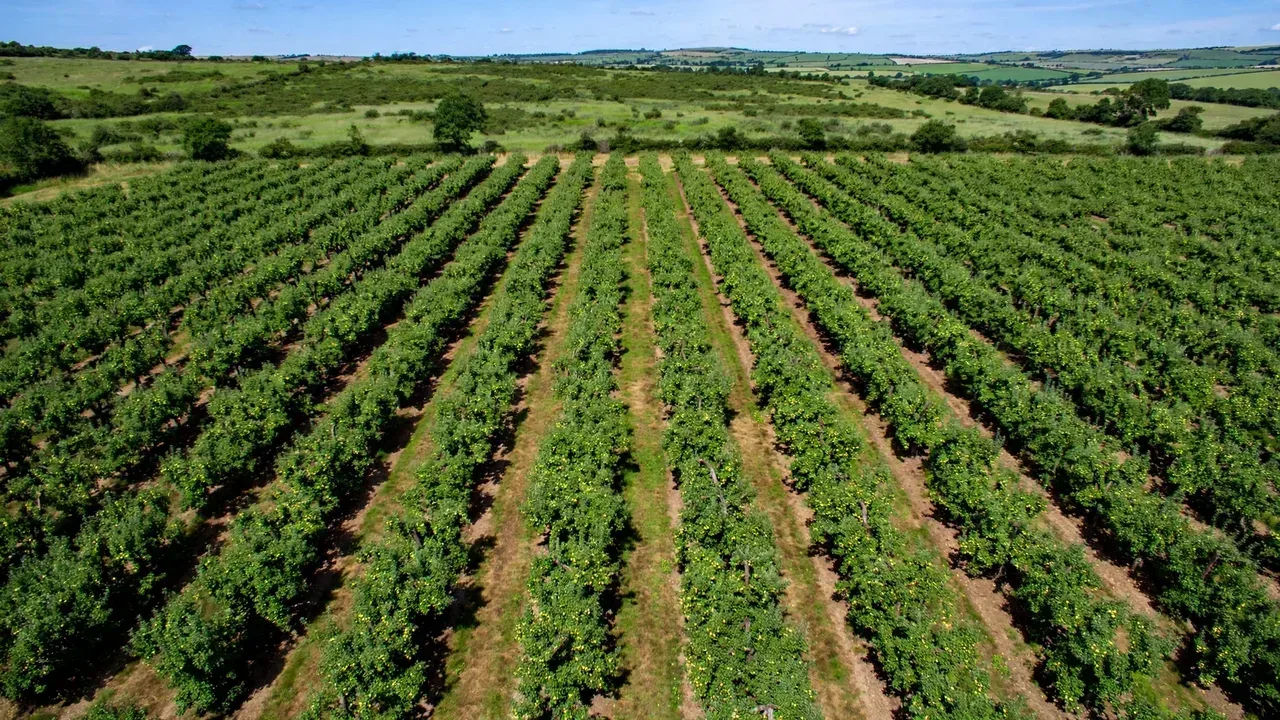
Calculer optimal tree spacing, trees per hectare, and total seedling requirement forchard planning.
Résultats
Comment Utiliser Cette Calculatrice
Entrez les valeurs d'entrée requises dans les champs du formulaire. Chaque champ inclut des valeurs par défaut que vous pouvez ajuster à votre situation spécifique. Cliquez sur le bouton Calculer pour voir des résultats instantanés. Utilisez le bouton Métrique/Impérial pour basculer entre les systèmes d'unités. Les résultats sont affichés dans le panneau de résultats et peuvent être utilisés pour la planification et la prise de décision agricole.
À Propos de Cet Outil
La Orchard Spacing est conçue pour aider les agriculteurs, les agronomes et les étudiants en agriculture à effectuer des calculs rapides et précis pour la gestion de l'exploitation. Cet outil utilise des formules agricoles standard basées sur les recommandations des services de vulgarisation et la littérature scientifique. Que vous planifiiez les intrants, estimiez les rendements ou gériez les finances, cette calculatrice fournit des estimations fiables.
Applicabilité: Applicable aux grandes cultures (maïs, manioc) en Afrique de l'Ouest et centrale.
Comment Fonctionne le Calcul
Cette calculatrice utilise des formules agricoles établies pour calculer les résultats à partir de vos valeurs d'entrée. La méthodologie de calcul suit les pratiques standard recommandées par les services de vulgarisation agricole et les institutions de recherche. Toutes les formules sont transparentes et peuvent être vérifiées dans la littérature agricole publiée. La calculatrice tient compte des facteurs d'efficacité standard et des taux de perte le cas échéant. Pour des recommandations précises, consultez votre service de vulgarisation local ou un agronome qualifié.
Exemple Pratique
Un agriculteur utilise cette calculatrice pour planifier orchard spacing dans son exploitation. En entrant ses données de champ spécifiques, il reçoit des calculs instantanés qui l'aident à prendre des décisions de gestion éclairées. Les résultats lui permettent de comparer différents scénarios, d'optimiser les intrants et d'estimer les résultats avant d'engager des ressources. Cela fait gagner du temps, réduit le gaspillage et améliore l'efficacité et la rentabilité globales de l'exploitation.
Conseils et Erreurs Courantes
Les erreurs courantes incluent l'utilisation d'unités incorrectes (vérifiez toujours métrique vs impérial), la saisie de données estimées plutôt que mesurées, l'ignorance des conditions locales et des recommandations de vulgarisation, et la surinterprétation des résultats (les calculatrices fournissent des estimations, pas des prédictions exactes). Pour de meilleurs résultats : utilisez des entrées mesurées et précises, comprenez les hypothèses de la formule, vérifiez les résultats par rapport à votre expérience, consultez des experts locaux pour les décisions critiques, et utilisez l'analyse de scénarios.
Révisé par l'Équipe Éditoriale d'Agricalc — Ingénieurs agricoles et agronomes avec plus de 10 ans d'expérience sur le terrain. Notre équipe vérifie chaque formule contre des publications de vulgarisation révisées par des pairs. Pour des conseils spécifiques, consultez votre agronome local.
Références
- FAO — Seed Quality and Planting Material Guidelines
- USDA — Seed Germination and Planting Rates Guide
- University of Minnesota Extension — Planting Rates and Seed Selection
Questions Fréquemment Posées
How do I calculate the correct Orchard Spacing rate?
To calculate the correct Orchard Spacing rate: (1) Determine desired plant population (plants/ha or plants/acre) for your crop and conditions, (2) Account for germination percentage (from seed tag or test), (3) Account for expected field emergence (typically 80-95% of germination), (4) Calculate seed weight needed using thousand-kernel weight (TKW) or seeds per kg, (5) Formula: Seeding rate (kg/ha) = (Desired population × TKW) ÷ (Germination % × Field emergence % × 100). For example: wheat target 300 plants/m², TKW 40 g, germination 95%, emergence 90% → rate = (300 × 40) ÷ (0.95 × 0.90 × 100) = 140 kg/ha.
What is the ideal plant population for Orchard Spacing?
Ideal plant populations for Orchard Spacing depend on crop, soil fertility, moisture availability, and planting date. Common ranges: corn 60,000-90,000 plants/ha (higher for irrigated, lower for dryland), wheat 250-400 plants/m², soybeans 300,500-500,000 plants/ha, rice 100-200 plants/m² (transplanted) or 300-500 (direct-seeded), cotton 80,000-120,000 plants/ha, sunflower 40,000-70,000 plants/ha. Too high a population causes intraspecific competition, lodging, and reduced individual plant yield; too low wastes resources and reduces total yield. Local extension recommendations provide crop- and region-specific guidance.
How does row spacing affect Orchard Spacing?
Row spacing affects Orchard Spacing through: light interception (narrower rows achieve canopy closure faster, intercepting more sunlight and reducing weed competition), water use efficiency, airflow and disease pressure (wider rows improve airflow, reducing fungal diseases), machinery compatibility (row spacing must match planter, cultivator, and harvester equipment), and planting density. Common spacings: corn 70-76 cm (conventional) or 38-51 cm (narrow), wheat 15-20 cm (drill) or 30 cm (row), soybeans 19-38 cm (narrow) or 76 cm (row). Narrow rows generally increase yield by 5-15% in favorable conditions but may increase disease risk in humid climates.
What seed quality factors matter for Orchard Spacing?
Key seed quality factors for Orchard Spacing: germination percentage (minimum standards: 85% for most field crops, 90% for vegetables, 75% for some grasses), purity (percentage of pure seed vs inert matter and other crop/weed seeds — minimum 95-98%), vigor (ability to germinate under stress conditions — tested via cold test, accelerated aging), seed health (freedom from seed-borne diseases), moisture content (12-13% for safe storage of most grains), and genetic purity (for hybrid and variety seed). Always purchase certified seed with a current seed tag showing test results. High-quality seed ensures uniform emergence and optimal plant stands.
How do I calibrate my seeder for Orchard Spacing?
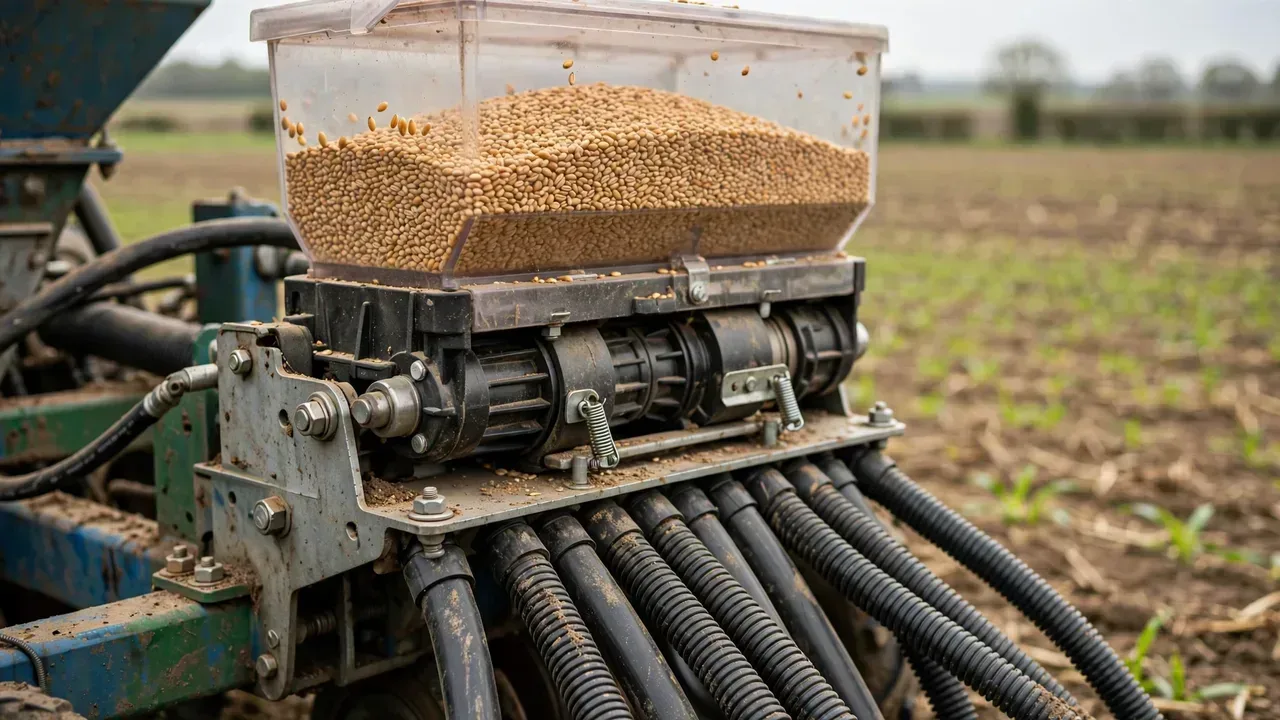
To calibrate your seeder for Orchard Spacing: (1) Determine target seeding rate (kg/ha or seeds/m), (2) Consult seeder manual for initial setting based on seed size and rate, (3) Fill seed hopper with the actual seed to be planted, (4) Drive a measured distance (e.g., 50 m) at normal planting speed with seeder operating, (5) Collect and weigh seed from a known number of rows or units, (6) Calculate actual seeding rate: Rate (kg/ha) = (Seed weight collected × 10,000) ÷ (Distance × row spacing × number of rows), (7) Adjust seeder setting up or down and repeat until rate matches target within ±5%. Recalibrate when changing seed lots, varieties, or rates. Proper calibration ensures accurate plant populations and avoids costly over- or under-seeding.