Cattle Feedlot Stocking Density: Space Requirements and Welfare Guidelines
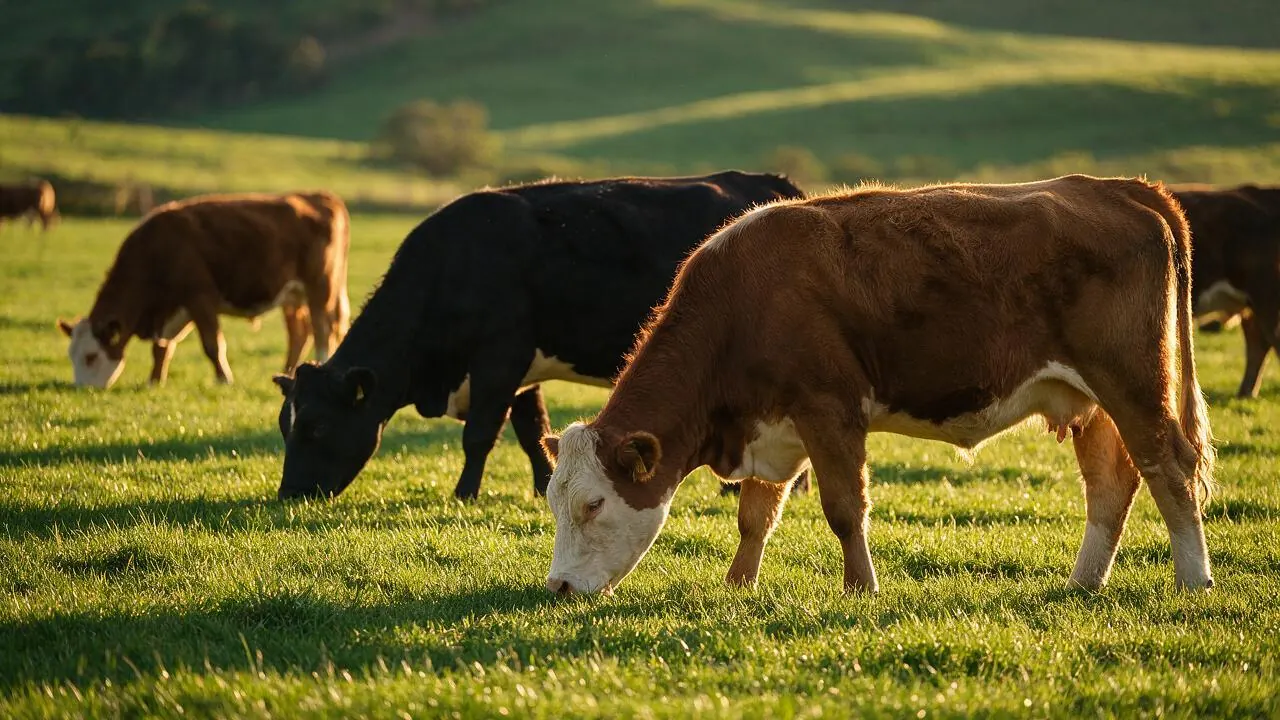
Stocking density is one of the most overlooked factors affecting feedlot performance, yet it directly impacts daily weight gain, feed conversion, disease incidence, and animal welfare. A feedlothat packs cattle too tightly saves on pen construction costs but loses far more through reduced gains, increased respiratory disease, and higher death loss. This guide covers the space requirements, pen design principles, and welfare standards every feedlot operator should know.
Recommended Space Allowances
The amount of spaceach animal needs depends on body weight, climate, and whether the pen has a shelter or mound. Industry standards and welfare guidelines recommend the following minimum space allowances for open feedlot pens:
- Calves (400-600 lb): 125-150 sq ft per head
- Feeder cattle (600-800 lb): 150-200 sq ft per head
- Finished cattle (800-1,200 lb): 200-250 sq ft per head
- Cows/calves pairs: 350-500 sq ft per pair
In wet climates or heavy rainfall regions, increase space by 20-30% to allow for mud management. In arid climates with well-drained soil, you can operate at the lower end of the range. The key metric is not justotal pen area buthe amount of dry, usable space — cattle will not lie down in mudeeper than 4-6 inches, so a 250 sq ft pen that is half mud effectively provides only 125 sq ft of usable space.
How Overcrowding Reduces Performance
Research from feedlotrials consistently shows that increasing stocking density beyond recommended levels reduces average daily gain (ADG) by 0.1-0.3 lb/day and worsens feed conversion ratio (FCR) by 0.2-0.5 points. For a 1,000-head feedlot finishing cattle over 150 days, a 0.2 lb/day reduction in ADG means 30,000 fewer pounds of gain — at $1.60/lb, that is $48,000 in lost revenue per turn.
Overcrowding also increases disease risk. Cattle packed tightly cannot maintain personal space, increasing stress and suppressing immune function. Bovine respiratory disease (BRD) incidence can double in overcrowded pens, and treatment costs average $25-50 per sick animal, plus the hidden cost of reduced performance after recovery. Aggressive behavior and injuries from fighting also increase, particularly at the feed bunk when space is limited.
Feed Bunk and Water Space
Pen area is only part of the equation — feed bunk space and water access are equally critical. Each animal needs 18-24 inches of bunk space to eat without excessive competition. For 100 head of finished cattle, that is 150-200 linear feet of bunk. If bunk space is below 12 inches per head, subordinate cattle (smaller, younger, or newly arrived) will not get enough to eat, creating uneven growth within the pen.
Water trough space should provide 1-2 linear inches per head, with a minimum of two water sources per pen to prevent dominant animals from blocking access. Water flow rate should be at least 1-2 gallons per minute per 100 head — a 100-head peneeds a trough that refills at 10-20 GPM to meet peak demand during hot weather, when cattle can drink 15-20 gallons each per day.
Pen Design and Drainage
Well-designed feedlot pens have a 2-4% slope toward a drainage channel or settling basin, allowing rain and urine to drain away quickly. A 1-2% slope is too flat (water ponds), while above 5% causes erosion and makes it difficult for cattle to traverse. Penshould be oriented withe long axis perpendicular to prevailing winds to reduce wind chill in winter, and provide a mound or elevated area 12-18 inches high where cattle can lie above mud level.
Pen size should accommodate 50-150 head per pen — smaller pens allow closer observation and more precise feeding, while larger pens reduce per-head fencing costs. A common configuration is a 100-foot-wide by 250-foot-deepen (25,000 sq ft), which comfortably holds 100-125 finished cattle at 200-250 sq ft per head, with a feed bunk running the full 100-foot width.
Welfare Standards and Audits
Major beef certification programs (Global Animal Partnership, Certified Humane, and many retailer-specific standards) set maximum stocking densities that feedlots must meet. The USDA's Feedlot Stewardshiprogram and the National Cattlemen's Beef Association (NCBA) Beef Quality Assurance (BQA) guidelines recommend a minimum of 150 sq ft per 1,000 lb animal in open lots, with additional space for sheltered areas. Third-party welfare audits typically measure lying space, cleanlinesscores, and the percentage of animals with mud or manure on more than 50% of their body.
During heat stress, effective space requirements increase dramatically. Cattle need extra space to dissipate body heat — atemperatures above 85°F withighumidity, densitieshould be reduced by 15-20% or sprinklers and shade must be provided. Heat stress can reduce ADG by 0.5-1.0 lb/day and, in extreme cases, cause death loss of 1-5% of the pen.
Calculating Your Feedlot Capacity
To determine how many cattle your pens can hold, divide total usable pen area by the space allowance for your average animal weight. For example, if you have eight pens each 25,000 sq ft (200,000 sq ft total), and you are finishing 800-lb cattle at 200 sq ft/head, your capacity is 200,000 ÷ 200 = 1,000 head. But if your climate is wet and you need 250 sq ft/head, capacity drops to 800 head. Use our Livestock Density Calculator to computexact capacity based on your pen dimensions and animal weight, and our Feed Calculator to estimate total feed requirements for your herd size.
Adjusting Density Seasonally
Many successful feedlots operate at lower density in winter (more space for mud management) and higher density in summer (drier conditions, but with shade and sprinklers). A flexible approach — designing pens for the worst-caseason and using portable fencing to subdivide pens in dry seasons — maximizes facility utilization without sacrificing welfare. Monitor pen conditions weekly: if more than 20% of the pen surface has mudeeper than 4 inches, it is time to reduce density, add bedding, or improve drainage.
Related Tools
Calculate your feedlot capacity and feed needs withese free tools.
Livestock Density Calculator →Feed Calculator →Frequently Asked Questions
How many square feet does a feedlot steer need?
A finished feedlot steer (800-1,200 lb) needs 200-250 square feet of pen space in an open lot. Lighter feeder cattle (600-800 lb) need 150-200 sq ft. In wet climates, increase by 20-30% to account for mud. The space must be dry and usable — muddy areas do not count toward the allowance.
Does stocking density affect weight gain?
Yes. Overcrowding reduces average daily gain by 0.1-0.3 lb/day and worsens feed conversion by 0.2-0.5 points. For a 1,000-head feedlot, this can mean $30,000-$50,000 in lost revenue per finishing cycle. The cost savings from higher density are almost always less than the performance loss.
How much feed bunk space per head of cattle?
Each animal needs 18-24 inches of feed bunk space to eat without excessive competition. Below 12 inches per head, subordinate cattle cannot consumenough feed, leading to uneven growth. For 100 finished cattle, provide 150-200 linear feet of bunk.
What is the ideal pen size for a feedlot?
A common and practical pen size is 100 feet wide by 250 feet deep (25,000 sq ft), holding 100-125 finished cattle. This provides enough room for a full-width feed bunk, a drainage slope, and a mound area. Pens holding 50-150 head are generally optimal for management and observation.
How does weather affect stocking density?
In wet weather, mud reduces usable space andensitieshould be reduced by 20-30%. In hot weather (above 85°F), cattle need extra space for heat dissipation — reduce density by 15-20% or provide shade and sprinklers. Many feedlots operate flexibly, using lower density in wet winters and higher density in dry summers.
References & Sources
- FAO (Food and Agriculture Organization) - Irrigation and Drainage Paper 56: Crop Evapotranspiration
- USDA (United States Department of Agriculture) - Natural Resources Conservation Service (NRCS) Guidelines
- IPCC (Intergovernmental Panel on Climate Change) - 2019 Refinement to the 2006 IPCC Guidelines for National Greenhouse Gas Inventories
- NRC (National Research Council) - Nutrient Requirements of Domestic Animals Series
- Extension Services - Land-Grant University Cooperative Extension System
This content is for informational purposes only. Always consult with local agricultural experts and extension services for site-specific recommendations.
Frequently Asked Questions
How much space does a feedlot steer need?
A feedlot steer requires 12–25 m² (130–270 ft²) of pen space depending on climate and soil type. In dry, well-drained climates, 12–15 m²/head is adequate. In wet or high-rainfall areas, increase to 20–25 m²/head to prevent mud. Additionally, provide 25–35 cm (10–14 inches) of bunk space per head for uninterrupted feeding.
What is the ideal stocking density for a cattle feedlot?
Ideal stocking density is typically 15–20 m² per head for open dirt feedlots in temperate climates. This balances animal comfort, waste management, and land use efficiency. Densities below 12 m²/head increase stress, disease risk, and reduce average daily gain by 5–15%. Densities above 30 m²/head waste land and increase feeding labor.
How does stocking density affect cattle weight gain?
Overcrowding reduces average daily gain (ADG) by 0.1–0.3 kg/day due to increased stress, competition for feed, reduced resting time, and higher disease incidence. At optimal density, cattle gain 1.2–1.6 kg/day. Cattle in overcrowded pens also have 2–3x higher incidence of respiratory disease and liver abscesses, increasing veterinary costs and carcass condemnations.
What bunk space is needed per feedlot animal?
Provide 25–35 cm (10–14 inches) of bunk space per head for growing cattle, and 35–45 cm (14–18 inches) for finished cattle approaching slaughter weight. Insufficient bunk space causes subordinate cattle to eat less, increasing weight variation within the pen. For self-feeders, allow 1 feeder space per 10–15 head. Ensure all cattle can eat simultaneously to reduce competition and stress.