Hurricane Isaias Hits Southeast Harvest
Introduction
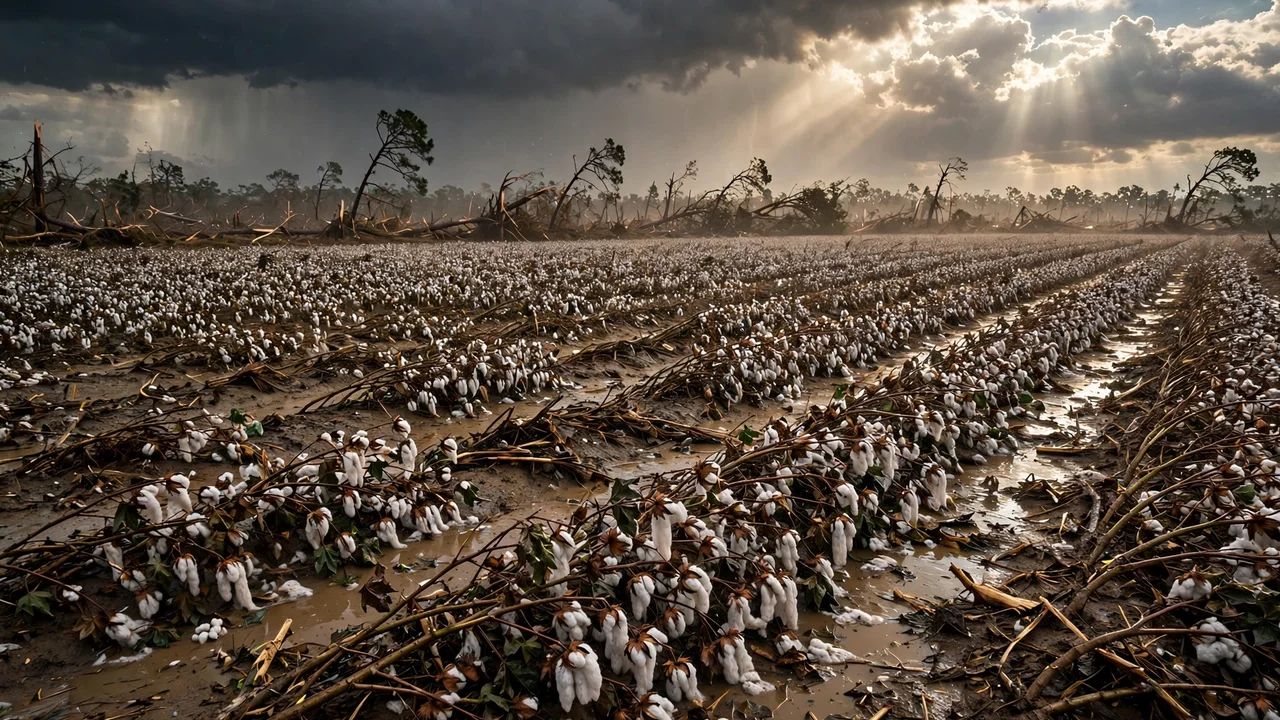
Hurricane Isaias became the first Atlantic hurricane of the 2026 season — tying the 1905 record for the latest first hurricane on record — and made landfall near Destin, Florida, on the evening of October 9 as a Category 2 storm with maximum sustained winds of 105 mph (169 km/h). It weakened rapidly inland, turned post-tropical over Alabama on October 10, and tracked north toward the Appalachians. At least four people died, peak outages approached 800,000 customers, and flooding continued for days after the winds stopped. For Southeast farmers, the timing could hardly be worse: the storm arrived in the middle of harvest.
What the storm hit — and what it missed
USDA chief meteorologist Brad Rippey noted that the track offered some relief: the center stayed well east of the Mississippi Delta and Louisiana sugarcane, and west of peninsular Florida’s citrus groves and winter specialty crops. But southwest Georgia and the Wiregrass region of southeast Alabama — the heart of the Southeast peanut and cotton belt — took the core of the storm while producers were actively harvesting cotton, peanuts, soybeans and pecans.
Gale-force winds can blow open-boll cotton off the plants, shake premature pecans from trees, and disrupt peanut digging schedules. Torrential rainfall saturates fields and halts machinery; even where direct crop loss is limited, wet ground and prolonged power outages can create harvest bottlenecks that ripple into local supply chains and transport to market.
Crop by crop: why the timing matters
Cotton. Open bolls exposed to triple-digit winds can be stripped from the plant — a direct, unrecoverable yield loss. In Talladega County, Alabama, growers raced to get cotton out ahead of landfall, a common late-season gamble when a storm’s track is known days in advance.
Peanuts. Mid-October is peak digging season in the Southeast. Georgia’s harvest typically runs from September into mid-October, with about 660,000 acres in the state this year. Rain at digging time delays harvest, and waiting too long lets overmature pods separate in the ground. UGA Extension research has found that digging too early or too late can cut yield potential by up to 30%.
Soybeans and pecans. Soybean harvest faces the same wet-field delays. For pecans, wind shakes premature nuts from trees before they are ready, and storm-felled limbs damage orchards for future seasons, not just this one.
After the storm: a practical checklist
- Wait for fields to drain. Running equipment on saturated ground compacts soil and can cost more than the delay. Resume harvest only when fields will carry machinery.
- Document everything before cleanup. Photograph damage with dates and locations before moving debris or reworking fields. Adjusters need loss documentation — cleanup first can erase the evidence.
- Call your crop insurer promptly. Report losses within the policy’s required window and request an adjuster before replanting, destroying, or putting damaged acreage to another use.
- Check stored grain and equipment. Outages shut down dryers and aeration; inspect stored crops for heating or moisture and test electrical systems before restarting motors.
- Recalculate your cost position. Storm delays change fuel, labor, drying and interest costs. Run the new harvest window through our break-even yield calculator and farm budget calculator before deciding what to prioritize.
Disaster aid: what is available
Growers in counties with disaster designations can access USDA help: FSA emergency loans for restoring essential property and covering production losses, the Emergency Conservation Program for farmland damaged by natural disaster, and crop insurance indemnities where policies are in place. Use our FSA loan calculator to estimate payments at current program rates before visiting your county office. Programs and eligibility vary by county and designation — confirm details with your local FSA service center.
Conclusion
Isaias has moved on, but for Southeast harvest crews the storm’s work continues in flooded fields and delayed schedules. Assess carefully, document thoroughly, and run the numbers before committing more money to a damaged crop. The calculators linked above are free and take under a minute each.
References
- AgWeb, "Hurricane Isaias’ Late-Season Arrival Raises Concerns for Southeast Agriculture," October 2026. https://www.agweb.com/weather/hurricane-isaias-late-season-arrival-raises-concerns-southeast-agriculture
- National Hurricane Center advisories on Hurricane Isaias, October 8–10, 2026. https://www.nhc.noaa.gov
- UGA Cooperative Extension peanut harvest guidance. https://fieldreport.caes.uga.edu/
- USDA Farm Service Agency disaster assistance programs. https://www.fsa.usda.gov/programs-and-services/disaster-assistance-program
Related Calculators
Frequently Asked Questions
When did Hurricane Isaias make landfall?
On the evening of October 9, 2026, near Destin, Florida, as a Category 2 hurricane with maximum sustained winds of 105 mph (169 km/h). It weakened to a post-tropical cyclone over Alabama the next morning.
Which crops were most at risk?
Cotton, peanuts, soybeans and pecans in southwest Georgia and southeast Alabama's Wiregrass region, where harvest was actively underway when the storm arrived.
How does a hurricane damage a peanut crop?
Rain delays digging, and waiting too long lets overmature pods separate in the ground where they are lost. UGA Extension research has found that digging too early or too late can cut yield potential by up to 30%.
What should I do first after storm damage?
Document damage with dated photos before cleanup, report losses to your crop insurer promptly, and wait for fields to drain before running equipment on them.
What USDA aid is available after a hurricane?
In disaster-designated counties: FSA emergency loans, the Emergency Conservation Program, and crop insurance indemnities. Confirm eligibility with your local FSA service center.
More Articles
More Articles
134 calculators, all free, no sign-up
Planting, soil, irrigation, livestock, machinery and farm finance — pick a tool and get an answer in under a minute.