Agricultura Sin Labranza: Beneficios, Transición y Equipo
La agricultura sin labranza significa sembrar cultivos sin perturbar el suelo mediante la labranza. En su lugar, las semillas se colocan directamente a través del residuo del cultivo o del mantillo de cultivo de cobertura usando una sembradora de labranza cero. Los beneficios incluyen 80-90% menos erosión, 1-2% más de materia orgánica en 5 años, 50% menos uso de combustible, mejor infiltración de agua y menores requisitos de mano de obra. La transición toma 3-5 años y requiere un manejo cuidadoso del residuo, las malezas y la fertilidad.
¿Qué es la Agricultura Sin Labranza?
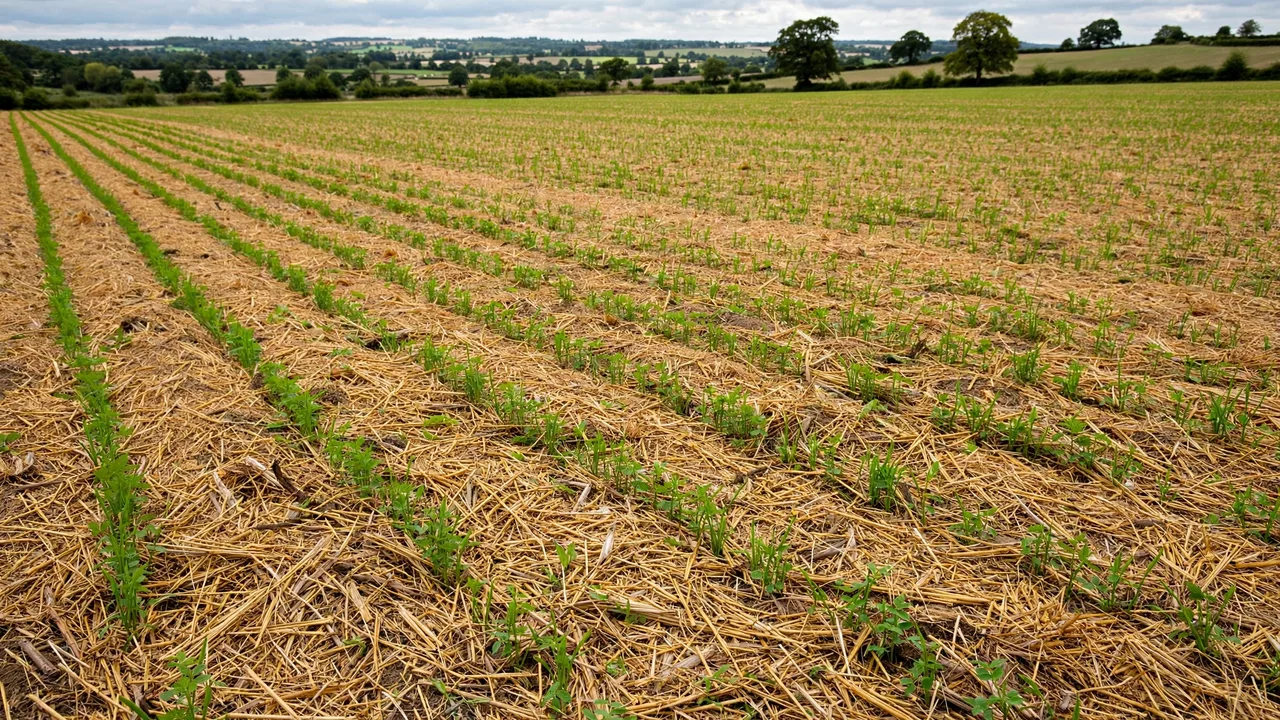
La sin labranza (también llamada labranza cero o siembra directa) es un sistema agrícola donde el suelo nunca se invierte ni se perturba. En lugar de arar, diskear o escarificar, las semillas se colocan directamente en el suelo sin perturbar a través de una hendidura o ranura fina abierta por una sembradora de labranza cero. La superficie del suelo permanece cubierta por el residuo del cultivo anterior o un mantillo de cultivo de cobertura.
La sin labranza no es solo "no arar" — es un sistema completo que incluye: cobertura permanente del suelo (residuo o cultivos de cobertura), rotaciones diversas de cultivos, perturbación mínima del suelo y manejo integrado de nutrientes y plagas. La sin labranza sin cobertura de residuo es solo "siembra directa en suelo desnudo" y pierde la mayoría de los beneficios.
Beneficios de la Sin Labranza
Control de la Erosión del Suelo
Este es el beneficio más grande e inmediato. El residuo del cultivo en la superficie del suelo absorbe el impacto de las gotas de lluvia, ralentiza la escorrentía y mantiene las partículas del suelo en su lugar. Los datos del USDA muestran que la sin labranza reduce la erosión hídrica en un 80-90% y la erosión eólica en un 70-80% en comparación con la labranza convencional. En campos en pendiente, la diferencia puede ser de toneladas de capa arable ahorradas por acre por año.
Materia Orgánica del Suelo
La labranza oxida la materia orgánica del suelo — cada vez que ara, libera carbono como CO2. La sin labranza detiene esta pérdida y, con la adición de residuos, construye gradualmente materia orgánica. La investigación muestra un aumento de 0.5-1% de materia orgánica en 5-10 años en sistemas de sin labranza. Cada aumento del 1% en materia orgánica añade aproximadamente 20,000 galones por acre de capacidad de retención de agua y 20 lb/acre de N disponible para las plantas mediante mineralización.
Gestión del Agua
Los suelos de sin labranza tienen mejor estructura, más canales de lombrices y más macroporos — todo lo cual mejora la infiltración de agua. Los estudios muestran que los campos de sin labranza pueden absorber 1-3 pulgadas más de lluvia por hora que los campos labrados. Esto significa menos escorrentía, más agua almacenada en el perfil del suelo y mejor resistencia a la sequía. En años secos, los cultivos de sin labranza a menudo rinden 5-15% mejor que los cultivos labrados debido a una mejor disponibilidad de agua.
Ahorro de Combustible y Mano de Obra
| Operación | Labranza Convencional | Sin Labranza | Ahorro |
|---|---|---|---|
| Labranza primaria (arado/escarificador) | 1-2 pasadas | 0 pasadas | $15-30/acre |
| Labranza secundaria (disco/cultivador) | 1-2 pasadas | 0 pasadas | $10-20/acre |
| Siembra | 1 pasada | 1 pasada (sembradora cero labranza) | — |
| Combustible total (gal/acre) | 5-8 | 2-3 | 3-5 gal/acre |
| Mano de obra total (hrs/acre) | 1.5-2.5 | 0.5-1.0 | 1-1.5 hrs/acre |
A $3.50/galón de diésel y $20/hora de mano de obra, los ahorros suman $40-80/acre por año. Esto a menudo paga la sembradora de labranza cero (que cuesta $30,000-80,000) en 3-5 años. Los servicios personalizados de siembra de labranza cero cobran $15-25/acre, lo que sigue siendo más barato que hacer todas las pasadas de labranza usted mismo.
El Período de Transición (Años 1-3)
La transición a la sin labranza es la parte más difícil. En los primeros 1-3 años, puede ver:
- Suelos más frescos y húmedos en primavera: El residuo aísla el suelo, manteniéndolo 2-5°F más fresco en primavera. Esto puede retrasar la siembra y el crecimiento temprano, especialmente en climas del norte. Soluciones: siembre más tarde, use limpiadores de hilera en la sembradora para mover el residuo lejos de la hilera de semilla, o use la labranza en franjas como sistema de transición.
- Cambios en las malezas: La labranza mata las malezas y entierra las semillas de malezas. La sin labranza permite que las malezas germinen en la superficie del suelo. Puede ver más gramíneas anuales y malezas de hoja ancha de semilla pequeña inicialmente. Soluciones: use cultivos de cobertura para la supresión de malezas, diversifique los modos de acción de los herbicidas, y considere la labranza estratégica ocasional (una vez cada 3-5 años) para malezas difíciles de controlar.
- Inmovilización de nitrógeno: La descomposición del residuo por los microbios inmoviliza temporalmente el nitrógeno. Esto es más notable con residuos de alto C:N como los tallos de maíz o el centeno cereal. Soluciones: aplique 20-40 lb/acre de N extra al sembrar, coloque el N debajo de la capa de residuo, o use cultivos de cobertura de leguminosas para añadir N.
- Stands desiguales: La sin labranza requiere una profundidad de siembra precisa y un buen contacto semilla-suelo. El residuo puede interferir con la colocación de la semilla. Soluciones: invierta en una buena sembradora de labranza cero con presión de descenso, limpiadores de hilera y medidores de profundidad; verifique la profundidad de la semilla frecuentemente; siembre cuando la humedad del suelo sea óptima (no demasiado húmedo ni demasiado seco).
La mayoría de los agricultores ven una caída de rendimiento del 5-15% en el año 1, recuperación a los rendimientos convencionales para el año 2-3, y ventajas de rendimiento para el año 3-5. La clave es persistir — el suelo mejora cada año, y el sistema se vuelve más fácil y productivo con el tiempo.
Equipo para Sin Labranza
Sembradora de Labranza Cero
Esta es la pieza de equipo más crítica. Una buena sembradora de labranza cero necesita:
- Alta presión de descenso: 200-500 lbs por unidad de hilera para cortar a través del residuo y penetrar el suelo sin perturbar
- Limpiadores de hilera: Para mover el residuo lejos de la hilera de semilla (especialmente para maíz en residuo de maíz)
- Medidores de profundidad: Control preciso de profundidad (1.5-2 pulgadas para maíz, 1-1.5 pulgadas para soya)
- Ruedas compactadoras de semilla: Para asegurar un buen contacto semilla-suelo en la ranura
- Abridor de fertilizante: Para colocar fertilizante de arranque debajo y al lado de la semilla
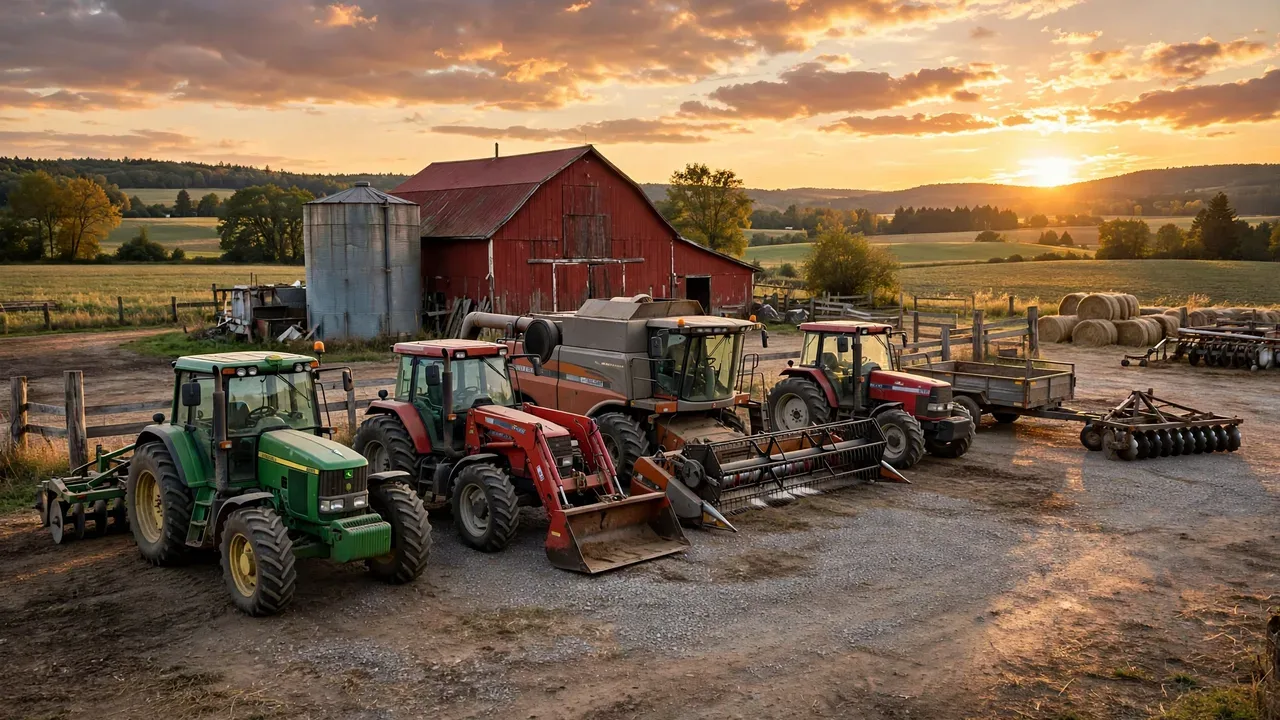
Las sembradoras de labranza cero nuevas cuestan $30,000-80,000 (ancho de 15-30 pies). Las sembradoras usadas en buen estado cuestan $15,000-40,000. Los servicios de siembra personalizados cobran $15-25/acre. Si tiene menos de 200 acres, la contratación personalizada o el intercambio de equipo con vecinos puede ser más económico que comprar.
Pulverizador
En la sin labranza, los herbicidas reemplazan a la labranza para el control de malezas. Un buen pulverizador es esencial. Características a buscar:
- Ancho de barra de 60-90 pies para eficiencia de campo
- Guiado GPS para aplicación precisa y menor solapamiento
- Control de secciones (encendido/apagado automático) para ahorrar químico y prevenir solapamientos
- Volumen de aspersión de 10-20 galones/acre para buena cobertura
- Boquillas de inducción de aire o reducción de deriva
Rodillo-Aplastador (Sin Labranza Orgánica)
Para los sistemas de sin labranza orgánica, un rodillo-aplastador mata los cultivos de cobertura mecánicamente sin herbicidas. Funciona mejor con centeno cereal en la etapa de floración (antesis). El rodillo aplasta los tallos, matando la planta y creando una capa gruesa de mantillo. Costo: $3,000-8,000 por un rodillo de 10-15 pies. El mejor para cultivos de hilera de 30 pulgadas (maíz, soya, hortalizas) donde el mantillo suprime las malezas entre hileras.
Rotación de Cultivos para Sin Labranza
Las rotaciones diversas de cultivos son aún más importantes en la sin labranza que en los sistemas labrados. Las rotaciones:
- Rompen los ciclos de plagas: El gusano de la raíz del maíz, el nematodo del quiste de la soya y otras plagas se acumulan en los monocultivos
- Diversifican el residuo: Diferentes relaciones C:N (maíz = alto C:N, soya = bajo C:N) equilibran la inmovilización/mineralización de N
- Distribuyen la carga de trabajo: Diferentes épocas de siembra/cosecha reducen las necesidades pico de mano de obra
- Mejoran el manejo de malezas: Diferentes cultivos permiten diferentes modos de acción de herbicidas y fechas de siembra
Rotaciones recomendadas:
- Maíz-Soya (2 años): La más común, pero volviéndose menos diversa. Añada trigo o cultivos de cobertura para mejores resultados.
- Maíz-Soya-Trigo (3 años): Excelente rotación. El trigo permite soya de doble cultivo o cultivos de cobertura. Rompe los ciclos de plagas mejor que la de 2 años.
- Maíz-Soya-Trigo-Alfalfa (4 años): La mejor para la salud del suelo. La alfalfa (legumbre perenne) añade 2-3 años de cobertura amigable con la sin labranza y raíces profundas. Las mayores ganancias de materia orgánica.
- Rotación diversa de hortalizas: Incluya cultivos de estación cálida (tomate, pimiento), estación fresca (lechuga, brócoli), cultivos de raíz (zanahoria, papa) y cultivos de cobertura.
Sin Labranza + Cultivos de Cobertura = Sinergia
La sin labranza y los cultivos de cobertura son una combinación poderosa. La sin labranza mantiene el suelo sin perturbar, y los cultivos de cobertura lo mantienen cubierto. Juntos:
- Maximizan el control de la erosión (reducción del 90%+)
- Construyen materia orgánica más rápido (residuo + raíces + sin oxidación)
- Suprimen las malezas sin herbicidas (efecto mantillo)
- Mejoran la infiltración y almacenamiento de agua
- Proporcionan nitrógeno (cultivos de cobertura de leguminosas)
- Crean hábitat para insectos benéficos y lombrices
La combinación es tan efectiva que muchos agricultores de sin labranza dicen que no volverían a la labranza incluso si los cultivos de cobertura no estuvieran disponibles. El suelo se vuelve más oscuro, más suave, más poroso y más productivo cada año.
Referencias
- USDA NRCS - Agricultura Sin Labranza
- FAO - Agricultura de Conservación
- Extensión de Penn State - Sistemas de Sin Labranza
Planee su transición a sin labranza: Use nuestra Calculadora de Fertilizante para ajustar las dosis de N por inmovilización de residuo, la Calculadora de Dosis de Siembra para cultivos de cobertura, la Calculadora de Fechas para calendarios de siembra, y nuestra Guía de Cultivos de Cobertura para la selección de cultivos de cobertura.
¿Es la Sin Labranza Adecuada para Usted?
La sin labranza funciona bien para:
- Agricultores de cultivos de hilera (maíz, soya, trigo, algodón)
- Cultivadores de hortalizas con el equipo adecuado
- Agricultores con suelos propensos a la erosión (en pendiente, arenosos, baja materia orgánica)
- Agricultores que buscan reducir los costos de combustible y mano de obra
- Agricultores dispuestos a invertir en equipo y aprender nuevas habilidades de manejo
La sin labranza puede ser desafiante para:
- Suelos muy mal drenados (el residuo mantiene los suelos más húmedos)
- Climas del norte con temporadas de crecimiento cortas (suelos más frescos retrasan la siembra)
- Agricultores con alta presión de malezas (especialmente malezas perennes como la correhuela)
- Cultivos de raíz que requieren suelo suelto y labrado (zanahorias, papas, cebollas)
- Agricultores no dispuestos a invertir en equipo de sin labranza o servicios personalizados
Si no está seguro, comience con la labranza en franjas (labrar solo una franja de 6-8 pulgadas donde se siembran las semillas) como sistema de transición. La labranza en franjas le da la zona de semilla más cálida y labrada de la labranza convencional con la cobertura de residuo y la conservación del suelo de la sin labranza. Muchos agricultores usan la labranza en franjas durante 2-3 años antes de pasar a la sin labranza completa.
Frequently Asked Questions
¿Qué es la siembra directa y cómo difiere de la labranza convencional?
La siembra directa deja el suelo sin disturbio desde cosecha hasta siembra, colocando semillas directamente a través de los residuos con una sembradora de siembra directa. La labranza convencional usa arados, discos y cultivadores para voltear y desmenuzar el suelo, enterrando residuos y creando una cama de siembra fina. La siembra directa preserva la estructura del suelo, aumenta la materia orgánica, reduce la erosión en más del 90% y conserva humedad. La contrapartida es mayor dependencia de herbicidas (especialmente en años de transición) y necesidad de equipo especializado que corte a través de residuos.
¿Cuánto tarda en verse los beneficios de la siembra directa?
Los beneficios se acumulan con el tiempo. Año 1–2: erosión reducida y ahorro de combustible (50–70% menos), pero rendimientos pueden ser 5–10% menores por presión de malezas, suelos más fríos y fijación de nutrientes en residuos. Año 3–5: materia orgánica aumenta 0.1–0.3% por año, poblaciones de lombrices se multiplican, infiltración mejora, rendimientos recuperan igualan o superan convencional. Año 5+: mejoras significativas de salud del suelo, costos de insumos reducidos, resistencia a sequía y beneficios de secuestro de carbono. La paciencia es crítica — el período de transición es la mayor barrera.
¿Cómo manejo malezas en un sistema de siembra directa?
El manejo de malezas se basa en múltiples estrategias: (1) Cultivos de cobertura — coberturas densas suprimen malezas por competencia y alelopatía (el centeno cereal es especialmente efectivo); (2) Rotación de cultivos — rotar entre cultivos de estación cálida y fría previene adaptación; (3) Herbicidas residuales — aplicar pre-emergencia en siembra para control de temporada; (4) Herbicidas de quema — matar vegetación existente antes de sembrar (glifosato, paraquat); (5) Cultivo de alto residuo — cultivadores de surco que trabajan entre hileras sin disturbio; (6) Control de semillas de maleza en cosecha — carros de cascarilla, destructores de semillas o quema controlada. Evite depender de un solo modo de acción para prevenir resistencia.
¿Qué cultivos de cobertura funcionan mejor en siembra directa?
Los mejores cultivos de cobertura: (1) Centeno cereal — más popular, excelente producción de biomasa (3–5 toneladas/acre), resistente al invierno, supresión efectiva de malezas por alelopatía, fácil de terminar; (2) Arveja velluda — fijadora de nitrógeno (80–150 lb N/acre), leguminosa resistente al invierno, excelente antes de maíz; (3) Trébol carmesí — fijadora de N (70–120 lb N/acre), buena biomasa, atractiva para polinizadores; (4) Rábanos/nabos — raíces pivotantes profundas rompen compactación, reciclan nutrientes, mueren por frío (sin terminación); (5) Avena — crecimiento rápido, supresión de malezas, muere por frío en climas fríos. Use mezclas (ej., centeno + arveja + rábano) para múltiples beneficios. Una calculadora de cultivos de cobertura ayuda a seleccionar especies y dosis.
¿Cómo configuro y calibro una sembradora de siembra directa?
La configuración es crítica para sembrar a través de residuos. Pasos clave: (1) Ajustar presión de descenso — suficiente para cortar residuos y colocar semilla a profundidad consistente (típicamente 100–200 lb por unidad de apertura); (2) Ajustar profundidad de siembra — 1–1.5 pulgadas para maíz, 0.5–1 pulgada para soja, 0.25–0.5 pulgada para granos pequeños; (3) Ajustar limpiadores de surco — mueven residuo fuera de la línea sin remover demasiado suelo; (4) Calibrar dosificación — operar la sembradora estacionaria, colectar semilla de cada abridor, verificar tasa por acre; (5) Verificar contacto semilla-suelo — las ruedas presionadoras deben firmar el suelo alrededor de la semilla. Una calculadora de calibración de sembradora ayuda a determinar ajustes correctos.
¿Cuáles son los beneficios económicos de la siembra directa?
La siembra directa reduce costos significativamente: (1) Ahorro de combustible — 50–70% menos diésel (sin arado, disco, cultivador), ahorrando $10–25/acre; (2) Ahorro de mano de obra — menos operaciones de campo, 30–50% menos tiempo de labor; (3) Ahorro de maquinaria — menos desgaste en equipo de labranza, menos horas de tractor; (4) Dividendos de salud del suelo — mejor capacidad de retención de agua reduce necesidades de riego, mayor materia orgánica reduce requerimientos de fertilizante con el tiempo; (5) Prevención de erosión — evita pérdida de capa arable que requeriría costosa remediación. Costos potenciales: compra de sembradora ($30,000–80,000), mayores costos de herbicida en transición, posible reducción de rendimiento en primeros 2–3 años. Una calculadora de presupuesto de finca ayuda a comparar.