Agriculture Sans Labour : Avantages, Transition et Équipement
L'agriculture sans labour signifie semer des cultures sans perturber le sol par le labour. Au lieu de cela, les semences sont placées directement à travers les résidus de culture ou le paillis de culture de couverture en utilisant un semoir sans labour. Les avantages incluent 80-90% moins d'érosion, 1-2% plus de matière organique sur 5 ans, 50% moins de consommation de carburant, une meilleure infiltration de l'eau et des besoins en main-d'œuvre réduits. La transition prend 3-5 ans et nécessite une gestion attentive des résidus, des mauvaises herbes et de la fertilité.
Qu'est-ce que l'Agriculture Sans Labour ?
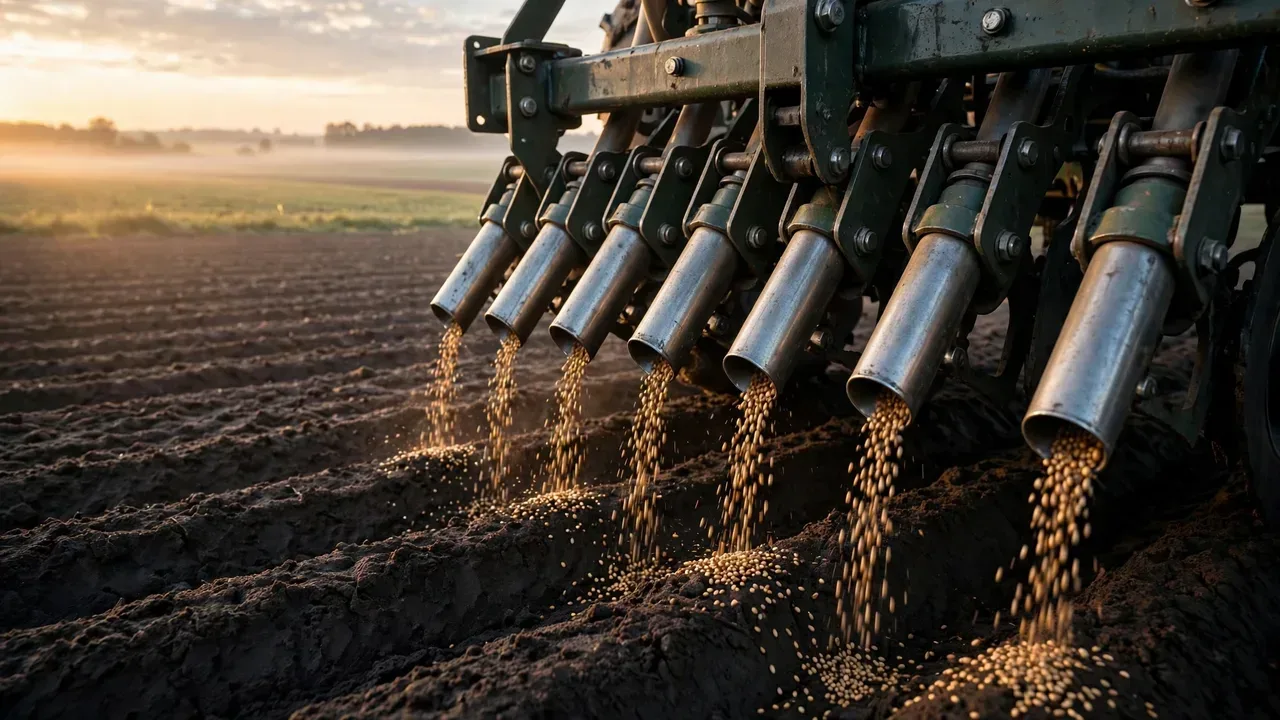
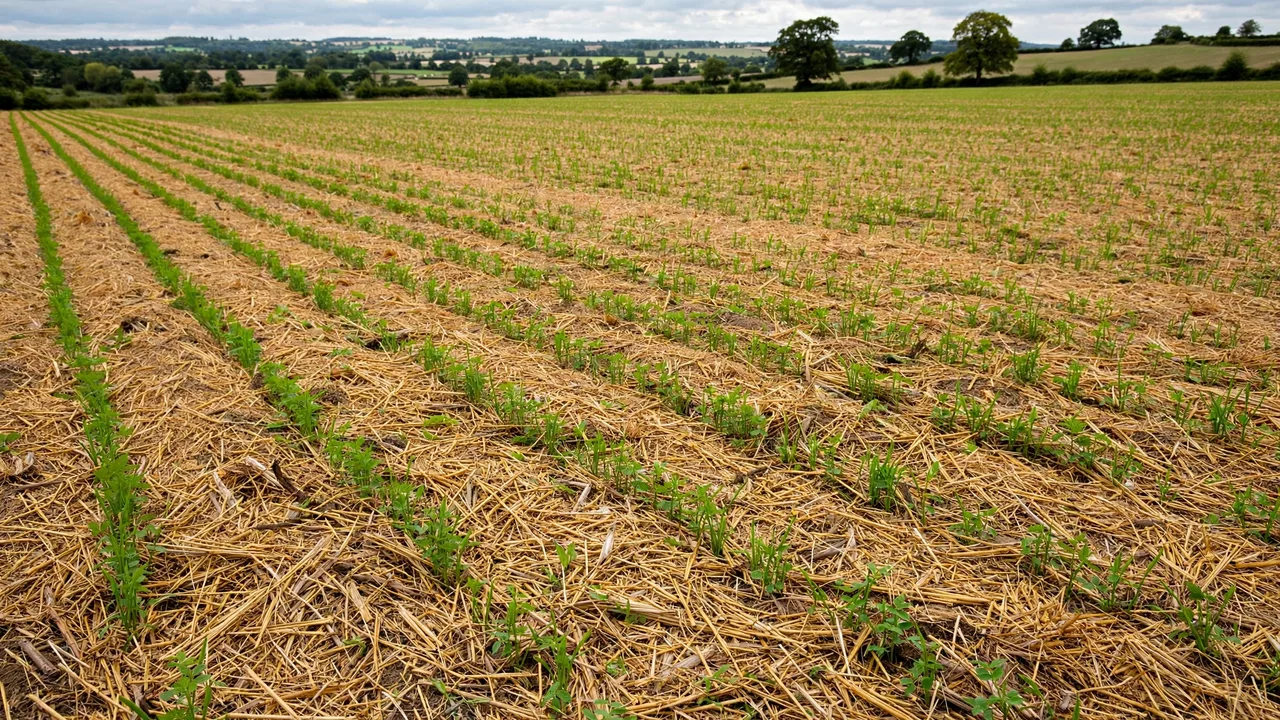
Le sans labour (aussi appelé labour zéro ou semis direct) est un système agricole où le sol n'est jamais retourné ni perturbé. Au lieu de labourer, de disquer ou de scarifier, les semences sont placées directement dans le sol non perturbé à travers une fente ou un sillon fin ouvert par un semoir sans labour. La surface du sol reste couverte par les résidus de la culture précédente ou un paillis de culture de couverture.
Le sans labour n'est pas seulement « ne pas labourer » — c'est un système complet qui inclut : une couverture permanente du sol (résidus ou cultures de couverture), des rotations de cultures diversifiées, une perturbation minimale du sol et une gestion intégrée des nutriments et des ravageurs. Le sans labour sans couverture de résidus n'est que du « semis direct dans un sol nu » et perd la plupart des avantages.
Avantages du Sans Labour
Contrôle de l'Érosion du Sol
C'est l'avantage le plus important et le plus immédiat. Les résidus de culture à la surface du sol absorbent l'impact des gouttes de pluie, ralentissent le ruissellement et maintiennent les particules de sol en place. Les données du USDA montrent que le sans labour réduit l'érosion hydrique de 80-90% et l'érosion éolienne de 70-80% par rapport au labour conventionnel. Sur les champs en pente, la différence peut être de tonnes de couche arable économisées par acre par an.
Matière Organique du Sol
Le labour oxyde la matière organique du sol — chaque fois que vous labourez, vous libérez du carbone sous forme de CO2. Le sans labour arrête cette perte et, avec l'ajout de résidus, construit progressivement la matière organique. La recherche montre une augmentation de 0.5-1% de matière organique sur 5-10 ans dans les systèmes de sans labour. Chaque augmentation de 1% de matière organique ajoute environ 20 000 gallons par acre de capacité de rétention d'eau et 20 lb/acre de N disponible pour les plantes par minéralisation.
Gestion de l'Eau
Les sols de sans labour ont une meilleure structure, plus de canaux de vers de terre et plus de macropores — tout cela améliore l'infiltration de l'eau. Des études montrent que les champs de sans labour peuvent absorber 1-3 pouces de pluie de plus par heure que les champs labourés. Cela signifie moins de ruissellement, plus d'eau stockée dans le profil du sol et une meilleure résistance à la sécheresse. Pendant les années sèches, les cultures de sans labour rendent souvent 5-15% mieux que les cultures labourées en raison d'une meilleure disponibilité en eau.
Économies de Carburant et de Main-d'œuvre
| Opération | Labour Conventionnel | Sans Labour | Économies |
|---|---|---|---|
| Labour primaire (charrue/scarificateur) | 1-2 passages | 0 passage | 15-30 $/acre |
| Labour secondaire (disque/cultivateur) | 1-2 passages | 0 passage | 10-20 $/acre |
| Semis | 1 passage | 1 passage (semoir sans labour) | — |
| Carburant total (gal/acre) | 5-8 | 2-3 | 3-5 gal/acre |
| Main-d'œuvre totale (hrs/acre) | 1.5-2.5 | 0.5-1.0 | 1-1.5 hrs/acre |
À 3,50 $/gallon de diesel et 20 $/heure de main-d'œuvre, les économies s'élèvent à 40-80 $/acre par an. Cela amortit souvent le semoir sans labour (qui coûte 30 000-80 000 $) en 3-5 ans. Les services de semis personnalisés sans labour facturent 15-25 $/acre, ce qui reste moins cher que de faire tous les passages de labour vous-même.
La Période de Transition (Années 1-3)
La transition vers le sans labour est la partie la plus difficile. Pendant les 1-3 premières années, vous pouvez observer :
- Sols plus frais et plus humides au printemps : Les résidus isolent le sol, le gardant 2-5°F plus frais au printemps. Cela peut retarder le semis et la croissance précoce, surtout dans les climats du nord. Solutions : semez plus tard, utilisez des nettoyeurs de rang sur le semoir pour déplacer les résidus loin du rang de semence, ou utilisez le labour en bandes comme système de transition.
- Évolution des mauvaises herbes : Le labour tue les mauvaises herbes et enterre les graines. Le sans labour permet aux mauvaises herbes de germer à la surface du sol. Vous pouvez voir plus de graminées annuelles et de dicotylédones à petites graines au début. Solutions : utilisez des cultures de couverture pour la suppression des mauvaises herbes, diversifiez les modes d'action des herbicides, et envisagez un labour stratégique occasionnel (une fois tous les 3-5 ans) pour les mauvaises herbes difficiles à contrôler.
- Immobilisation de l'azote : La décomposition des résidus par les microbes immobilise temporairement l'azote. C'est plus notable avec les résidus à haut C:N comme les tiges de maïs ou le seigle céréalier. Solutions : appliquez 20-40 lb/acre de N supplémentaire au semis, placez le N sous la couche de résidus, ou utilisez des cultures de couverture de légumineuses pour ajouter du N.
- Peuplements inégaux : Le sans labour nécessite une profondeur de semis précise et un bon contact sol-graine. Les résidus peuvent interférer avec le placement des semences. Solutions : investissez dans un bon semoir sans labour avec pression de descente, nettoyeurs de rang et jaugeurs de profondeur ; vérifiez fréquemment la profondeur de semence ; semez quand l'humidité du sol est optimale (pas trop humide ni trop sec).
La plupart des agriculteurs voient une baisse de rendement de 5-15% l'année 1, un retour aux rendements conventionnels vers l'année 2-3, et des avantages de rendement vers l'année 3-5. La clé est de persévérer — le sol s'améliore chaque année, et le système devient plus facile et plus productif avec le temps.
Équipement pour le Sans Labour
Semeur Sans Labour
C'est la pièce d'équipement la plus critique. Un bon semoir sans labour nécessite :
- Forte pression de descente : 200-500 lbs par unité de rang pour couper à travers les résidus et pénétrer le sol non perturbé
- Nettoyeurs de rang : Pour déplacer les résidus loin du rang de semence (surtout pour le maïs dans les résidus de maïs)
- Jaugeurs de profondeur : Contrôle précis de la profondeur (1.5-2 pouces pour le maïs, 1-1.5 pouces pour le soja)
- Roues de fermeture : Pour assurer un bon contact sol-graine dans le sillon
- Ouvreur d'engrais : Pour placer l'engrais de démarrage sous et à côté de la graine
Les semoirs sans labour neufs coûtent 30 000-80 000 $ (largeur de 15-30 pieds). Les semoirs d'occasion en bon état coûtent 15 000-40 000 $. Les services de semis personnalisés facturent 15-25 $/acre. Si vous avez moins de 200 acres, la location personnalisée ou le partage d'équipement avec des voisins peut être plus économique que l'achat.
Pulvérisateur
En sans labour, les herbicides remplacent le labour pour le contrôle des mauvaises herbes. Un bon pulvérisateur est essentiel. Caractéristiques à rechercher :
- Largeur de rampe de 60-90 pieds pour l'efficacité au champ
- Guidage GPS pour une application précise et moins de chevauchement
- Contrôle de sections (marche/arrêt automatique) pour économiser le produit et éviter les chevauchements
- Volume de pulvérisation de 10-20 gallons/acre pour une bonne couverture
- Buses à induction d'air ou à réduction de dérive
Rouleau Broyeur (Sans Labour Biologique)
Pour les systèmes de sans labour biologique, un rouleau broyeur tue les cultures de couverture mécaniquement sans herbicides. Il fonctionne mieux avec le seigle céréalier au stade de floraison (anthèse). Le rouleau écrase les tiges, tuant la plante et créant une épaisse couche de paillis. Coût : 3 000-8 000 $ pour un rouleau de 10-15 pieds. Idéal pour les cultures en rangées de 30 pouces (maïs, soja, légumes) où le paillis supprime les mauvaises herbes entre les rangs.
Rotation des Cultures pour le Sans Labour
Les rotations de cultures diversifiées sont encore plus importantes en sans labour que dans les systèmes labourés. Les rotations :
- Cassent les cycles de ravageurs : La chrysomèle des racines du maïs, le nématode à kyste du soja et d'autres ravageurs s'accumulent dans les monocultures
- Diversifient les résidus : Différents rapports C:N (maïs = haut C:N, soja = bas C:N) équilibrent l'immobilisation/minéralisation du N
- Répartissent la charge de travail : Différentes époques de semis/récolte réduisent les besoins de pointe en main-d'œuvre
- Améliorent la gestion des mauvaises herbes : Différentes cultures permettent différents modes d'action d'herbicides et dates de semis
Rotations recommandées :
- Maïs-Soja (2 ans) : La plus courante, mais devient moins diversifiée. Ajoutez du blé ou des cultures de couverture pour de meilleurs résultats.
- Maïs-Soja-Blé (3 ans) : Excellente rotation. Le blé permet du soja en double culture ou des cultures de couverture. Casse mieux les cycles de ravageurs que la rotation de 2 ans.
- Maïs-Soja-Blé-Luzerne (4 ans) : La meilleure pour la santé du sol. La luzerne (légumineuse pérenne) ajoute 2-3 ans de couverture favorable au sans labour et des racines profondes. Les plus forts gains de matière organique.
- Rotation diversifiée de légumes : Incluez des cultures de saison chaude (tomate, poivron), de saison fraîche (laitue, brocoli), des cultures racines (carotte, pomme de terre) et des cultures de couverture.
Sans Labour + Cultures de Couverture = Synergie
Le sans labour et les cultures de couverture forment une combinaison puissante. Le sans labour garde le sol non perturbé, et les cultures de couverture le gardent couvert. Ensemble, ils :
- Maximisent le contrôle de l'érosion (réduction de 90%+)
- Construisent la matière organique plus vite (résidus + racines + pas d'oxydation)
- Suppriment les mauvaises herbes sans herbicides (effet paillis)
- Améliorent l'infiltration et le stockage de l'eau
- Fournissent de l'azote (cultures de couverture de légumineuses)
- Créent un habitat pour les insectes utiles et les vers de terre
La combinaison est si efficace que beaucoup d'agriculteurs de sans labour disent qu'ils ne retourneraient pas au labour même si les cultures de couverture n'étaient pas disponibles. Le sol devient plus sombre, plus doux, plus poreux et plus productif chaque année.
Références
- USDA NRCS - Agriculture Sans Labour
- FAO - Agriculture de Conservation
- Extension de Penn State - Systèmes de Sans Labour
Planifiez votre transition sans labour : Utilisez notre Calculatrice d'Engrais pour ajuster les doses de N par immobilisation des résidus, la Calculatrice de Densité de Semis pour les cultures de couverture, la Calculatrice de Dates pour les calendriers de semis, et notre Guide des Cultures de Couverture pour la sélection des cultures de couverture.
Le Sans Labour est-il Adapté à Votre Exploitation ?
Le sans labour fonctionne bien pour :
- Les agriculteurs de cultures en rangées (maïs, soja, blé, coton)
- Les maraîchers avec l'équipement approprié
- Les agriculteurs avec des sols sujets à l'érosion (en pente, sableux, faible matière organique)
- Les agriculteurs cherchant à réduire les coûts de carburant et de main-d'œuvre
- Les agriculteurs prêts à investir dans l'équipement et à apprendre de nouvelles compétences de gestion
Le sans labour peut être difficile pour :
- Les sols très mal drainés (les résidus gardent les sols plus humides)
- Les climats du nord avec des saisons de croissance courtes (sols plus frais retardent le semis)
- Les agriculteurs avec une forte pression de mauvaises herbes (surtout les mauvaises herbes vivaces comme le liseron)
- Les cultures racines qui nécessitent un sol meuble et labouré (carottes, pommes de terre, oignons)
- Les agriculteurs non prêts à investir dans l'équipement de sans labour ou les services personnalisés
Si vous n'êtes pas sûr, commencez par le labour en bandes (labourer seulement une bande de 6-8 pouces où les semences sont plantées) comme système de transition. Le labour en bandes vous donne la zone de semis plus chaude et labourée du labour conventionnel avec la couverture de résidus et la conservation du sol du sans labour. Beaucoup d'agriculteurs utilisent le labour en bandes pendant 2-3 ans avant de passer au sans labour complet.
Frequently Asked Questions
Qu'est-ce que le semis direct et en quoi diffère-t-il du labour conventionnel?
Le semis direct laisse le sol non perturbé de la récolte à la plantation, avec les graines placées directement à travers les résidus de culture à l'aide d'un semoir sans labour. Le labour conventionnel utilise des charrues, des disques et des cultivateurs pour retourner et émietter le sol, enfouissant les résidus et créant un lit de semence fin. Le semis direct préserve la structure du sol, augmente la matière organique, réduit l'érosion de plus de 90% et conserve l'humidité. Le compromis est une plus grande dépendance aux herbicides (surtout pendant les années de transition) et le besoin d'équipement spécialisé capable de couper à travers les résidus.
Combien de temps faut-il pour voir les bénéfices du semis direct?
Les bénéfices s'accumulent avec le temps. Année 1–2: érosion réduite et économies de carburant (50–70% de moins), mais les rendements peuvent être 5–10% inférieurs en raison de la pression des adventices, de sols plus froids et de l'immobilisation des nutriments dans les résidus. Année 3–5: la matière organique augmente de 0,1–0,3% par an, les populations de vers de terre se multiplient, l'infiltration de l'eau s'améliore, les rendements reviennent à égaler ou dépasser le conventionnel. Année 5+: améliorations significatives de la santé du sol, coûts d'intrants réduits, résilience à la sécheresse et bénéfices de séquestration du carbone. La patience est critique — la période de transition est le principal obstacle à l'adoption.
Comment gérer les adventices dans un système de semis direct?
La gestion des adventices repose sur plusieurs stratégies: (1) Couverts végétaux — des couverts denses suppriment les adventices par compétition et allélopathie (le seigle céréalier est particulièrement efficace); (2) Rotation des cultures — alterner cultures de saison chaude et fraîche empêche l'adaptation; (3) Herbicides résiduels — application en pré-levée à la plantation pour un contrôle de saison; (4) Herbicides de brûlage — tuer la végétation existante avant la plantation (glyphosate, paraquat); (5) Binage à haut résidu — des bineurs qui travaillent entre les rangs sans perturber la ligne de semence; (6) Contrôle des graines d'adventices à la récolte — chariots à balle, destructeurs de graines ou brûlage contrôlé. Évitez de dépendre d'un seul mode d'action pour prévenir la résistance.
Quels couverts végétaux fonctionnent le mieux en semis direct?
Les meilleurs couverts: (1) Seigle céréalier — le plus populaire, excellente production de biomasse (3–5 tonnes/acre), rustique, suppression efficace des adventices par allélopathie, facile à détruire; (2) Vesce velue — fixatrice d'azote (80–150 lb N/acre), légumineuse rustique, excellente avant le maïs; (3) Trèfle incarnat — fixateur de N (70–120 lb N/acre), bonne biomasse, attrayant pour les pollinisateurs; (4) Radis/navettes — racines pivotantes profondes brisent la compaction, recyclent les nutriments, détruits par le gel (pas de destruction nécessaire); (5) Avoine — croissance rapide, suppression des adventices, détruite par le gel dans les climats froids. Utilisez des mélanges (ex., seigle + vesce + radis) pour des bénéfices multiples. Un calculateur de couverts aide à sélectionner les espèces et les densités.
Comment régler et calibrer un semoir sans labour?
Le réglage du semoir est critique pour réussir la plantation à travers les résidus. Étapes clés: (1) Régler la pression de descente — suffisante pour couper les résidus et placer la graine à profondeur constante (typiquement 100–200 lb par élément ouvreur); (2) Régler la profondeur de semis — 1–1,5 pouces pour le maïs, 0,5–1 pouce pour le soja, 0,25–0,5 pouce pour les petites céréales; (3) Régler les nettoyeurs de rang — déplacent les résidus hors de la ligne sans enlever trop de sol; (4) Calibrer le dosage — faire tourner le semoir à l'arrêt, collecter les graines de chaque ouvreur, vérifier le taux par acre; (5) Vérifier le contact graine-sol — les roues de pressage doivent raffermir le sol autour de la graine. Un calculateur de calibrage de semoir aide à déterminer les réglages corrects.
Quels sont les bénéfices économiques du semis direct?
Le semis direct réduit les coûts significativement: (1) Économies de carburant — 50–70% de diesel en moins (pas de labour, de disquage, de binage), économisant 10–25 $/acre; (2) Économies de main-d'œuvre — moins d'opérations au champ, 30–50% de temps de travail en moins; (3) Économies de machinerie — moins d'usure sur l'équipement de labour, moins d'heures de tracteur; (4) Dividendes de la santé du sol — meilleure capacité de rétention d'eau réduit les besoins d'irrigation, une matière organique accrue réduit les besoins en engrais avec le temps; (5) Prévention de l'érosion — évite la perte de terre arable qui nécessiterait une remédiation coûteuse. Coûts potentiels: achat de semoir (30 000–80 000 $), coûts d'herbicides plus élevés en transition, possible baisse de rendement les 2–3 premières années. Un calculateur de budget de ferme aide à comparer.