No hay cálculos aún
No hay favoritos aún
Enmienda del pH del Suelo
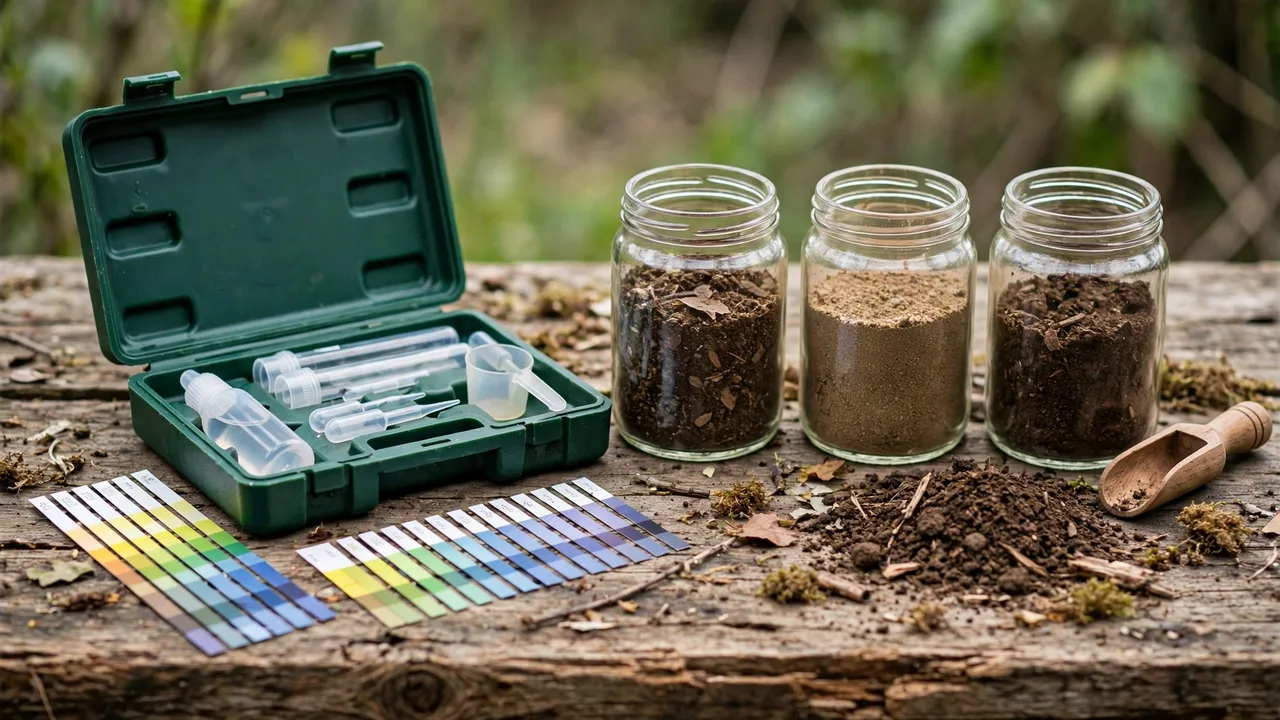
Calcular lime requirement for acidic soils or sulfur requirement for alkaline soils based on pH target and texture.
Resultados
Cómo Usar Esta Calculadora
Introduce los valores de entrada requeridos en los campos del formulario. Cada campo incluye valores predeterminados que puedes ajustar a tu situación específica. Haz clic en el botón Calcular para ver resultados instantáneos. Usa el interruptor Métrico/Imperial para cambiar entre sistemas de unidades. Los resultados se muestran en el panel de resultados y pueden usarse para la planificación y toma de decisiones agrícolas.
Acerca de Esta Herramienta
La Soil Ph está diseñada para ayudar a agricultores, agrónomos y estudiantes agrícolas a realizar cálculos rápidos y precisos para la gestión de la finca. Esta herramienta utiliza fórmulas agrícolas estándar basadas en recomendaciones de servicios de extensión y literatura científica. Ya sea que estés planificando insumos, estimando rendimientos o gestionando finanzas, esta calculadora proporciona estimaciones confiables.
Aplicabilidad: Aplicable a cultivos de América Latina, con especial relevancia para maíz, soja, café, banano y caña de azúcar. Adapte las dosis a su análisis de suelo.
Cómo Funciona el Cálculo
Esta calculadora utiliza fórmulas agrícolas establecidas para calcular resultados a partir de tus valores de entrada. La metodología de cálculo sigue prácticas estándar recomendadas por servicios de extensión agrícola e instituciones de investigación. Todas las fórmulas son transparentes y pueden verificarse en la literatura agrícola publicada. La calculadora considera factores de eficiencia estándar y tasas de pérdida cuando corresponde. Para recomendaciones precisas, consulta a tu servicio de extensión local o a un agrónomo calificado.
Ejemplo Práctico
Un agricultor usa esta calculadora para planificar soil ph en su operación. Al introducir sus datos específicos de campo, recibe cálculos instantáneos que le ayudan a tomar decisiones de gestión informadas. Los resultados le permiten comparar diferentes escenarios, optimizar insumos y estimar resultados antes de comprometer recursos. Esto ahorra tiempo, reduce desperdicio y mejora la eficiencia y rentabilidad general de la finca.
Consejos y Errores Comunes
Los errores comunes incluyen usar unidades incorrectas (verifica siempre métrico vs imperial), introducir datos estimados en lugar de medidos, ignorar las condiciones locales y recomendaciones de extensión, y sobreinterpretar los resultados (las calculadoras proporcionan estimaciones, no predicciones exactas). Para mejores resultados: usa entradas medidas y precisas, comprende los supuestos de la fórmula, verifica los resultados con tu experiencia, consulta a expertos locales para decisiones críticas, y usa análisis de escenarios.
Revisado por el Equipo Editorial de Agricalc — Ingenieros agrícolas y agrónomos con más de 10 años de experiencia en campo. Nuestro equipo verifica cada fórmula contra publicaciones de extensión revisadas por pares. Para asesoría específica, consulte a su agrónomo local.
Referencias
- FAO — Soil Fertility Management for Sustainable Agriculture
- USDA NRCS — Soil Health Management Guide
- University of Minnesota Extension — Soil pH and Liming Guide
Preguntas Frecuentes
How do I interpret soil test results for Soil Ph?
Interpreting soil test results for Soil Ph involves comparing measured values against established optimal ranges for your crops. Key parameters: pH (optimal 6.0-7.0 for most crops, 5.5-6.5 for potatoes/blueberries), organic matter (2-5% ideal for mineral soils), macronutrients (N, P, K — rated as Low/Medium/High/Very High), secondary nutrients (Ca, Mg, S), micronutrients (Fe, Mn, Zn, Cu, B, Mo), and cation exchange capacity (CEC — indicates soil fertility potential). Extension services provide interpretation guides with crop-specific recommendations. Always use a reputable lab and follow their sampling instructions for reliable results.
What is the optimal pH range for Soil Ph?
The optimal soil pH for Soil Ph depends on the crop: most vegetables and field crops prefer pH 6.0-7.0, potatoes prefer 5.0-5.5 (to suppress scab), blueberries and azaleas prefer 4.5-5.5, alfalfa prefers 6.5-7.5. Soil pH affects nutrient availability: at pH <5.5, aluminum and manganese become toxic while phosphorus, calcium, and magnesium become less available; at pH >7.5, iron, manganese, zinc, and boron become less available (causing chlorosis). Regular soil testing every 2-3 years monitors pH trends and guides liming or acidification decisions.
How does soil texture affect Soil Ph?
Soil texture (proportion of sand, silt, clay) affects Soil Ph through: water-holding capacity (sand holds 50-100 mm/m, loam 150-200 mm/m, clay 150-250 mm/m), nutrient retention (clay has high CEC and retains more nutrients, sand has low CEC and nutrients leach easily), drainage (sand drains quickly, clay drains slowly), aeration (sand has good aeration, clay may be poorly aerated when wet), and tilth/workability (loam has ideal structure for planting). Texture also affects amendment rates: sandy soils need less lime but more frequent fertilizer applications; clay soils need more lime but retain nutrients longer.
What organic matter level is ideal for Soil Ph?
Ideal soil organic matter (SOM) levels for Soil Ph are 2-5% for most mineral agricultural soils. Soils with <1% SOM are degraded and benefit from organic amendments. SOM improves: soil structure and aggregation, water-holding capacity (each 1% SOM increases water holding by ~15,000 L/ha), nutrient retention and supply (SOM contains 5-6% N and releases nutrients slowly), cation exchange capacity, biological activity (earthworms, beneficial microbes), and erosion resistance. Increase SOM through: cover cropping, crop rotation with perennials, manure/compost application, reduced tillage, and returning crop residues. Building 1% SOM typically takes 3-5 years of consistent management.
How often should I soil test for Soil Ph?
Soil testing frequency for Soil Ph depends on crop type and management intensity: annual field crops — every 2-3 years; high-value vegetable/fruit crops — every 1-2 years; greenhouse/nursery — every 6-12 months; after major amendments (lime, manure, compost) — retest after 6-12 months to evaluate effect. Always sample at the same time of year for consistent comparisons. Sample depth: 0-15 cm for routine testing, 0-60 cm for nitrate profiling, 0-30 cm for orchards. Collect 15-20 cores per field/management zone, mix thoroughly, and submit 500 g to a reputable lab. Proper sampling ensures accurate recommendations.