Pump Capacity & Energy Cost Calculator
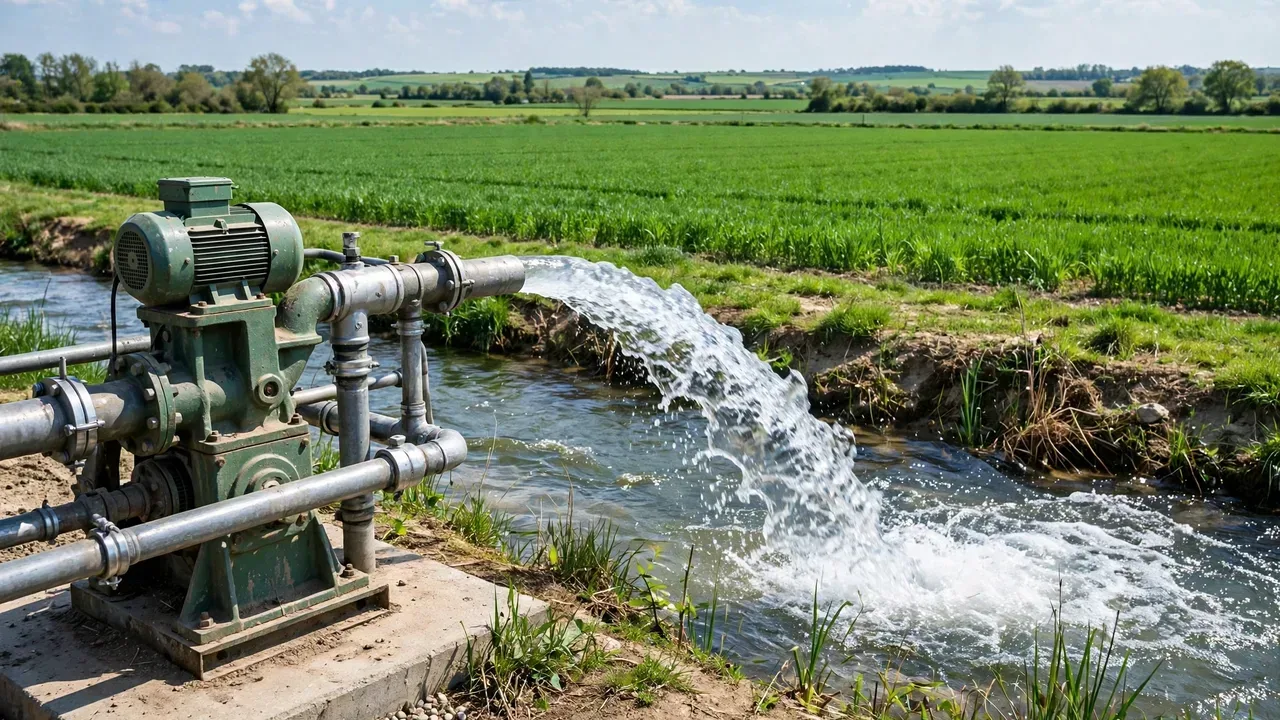
Size your irrigation pump by calculating water horsepower, brake horsepower, required motor size, and daily energy costs.
Results
Formula & How It Works
Water HP = (GPM × Head ft) ÷ 3960
3960 = 33,000 ft-lb/min per HP ÷ 8.34 lb/gal, the hydraulic power constant.
Brake HP = Water HP ÷ Pump Efficiency%
Motor kW = BHP × 0.7457 ÷ Motor Efficiency%
Motor Size = BHP × 1.25 (25% safety factor)
Calculation Example
500 GPM at 100 ft TDH: WHP = 50,000÷3960 = 12.63 HP. At 70% pump eff: BHP = 18.04 HP. Motor 90%: 14.95 kW. At $0.12/kWh × 8hr = $14.35/day. Motor size: 23 HP.
How to Use This Calculator
1. Required flow rate. 2. TDH (elevation + friction + pressure). 3. Pump/motor efficiency. 4. Electricity rate and hours. Calculate.
About This Tool
Proper pump sizing ensures flow and pressure while minimizing energy. TDH includes elevation lift, friction loss in pipes/fittings, and required operating pressure at the discharge.
Applicability: Suitable for irrigation planning in North America and Europe, adaptable to semi-arid and Mediterranean climates worldwide.
References & Sources:
- Source: USDA NRCS, Irrigation Water Management Guide, National Engineering Handbook, Part 652, 2024.
- Reference: FAO Irrigation and Drainage Paper 56, Crop Evapotranspiration: Guidelines for Computing Crop Water Requirements, 2023.
- Reference: ASABE Standard S437.1, Irrigation Scheduling and Water Application Efficiency.
Reviewed by Agricalc Editorial Team — Agricultural engineers and agronomists with 10+ years of field experience. Our team verifies every calculator formula against peer-reviewed extension publications. For site-specific advice, consult your local agronomist.
Common Mistakes & Tips
Ignoring friction loss in TDH. Using BEP flow for all conditions. Not accounting for voltage drop. Oversizing motors wastes energy.
References & Sources
- FAO (Food and Agriculture Organization) — Agricultural production and nutrition guidelines
- USDA NRCS — Field Office Technical Guide and conservation practice standards
- Land-Grant University Cooperative Extension System — crop and livestock recommendations
- FAO — Water for Agriculture
- USBR — Water Management