Drip Irrigation System Designer
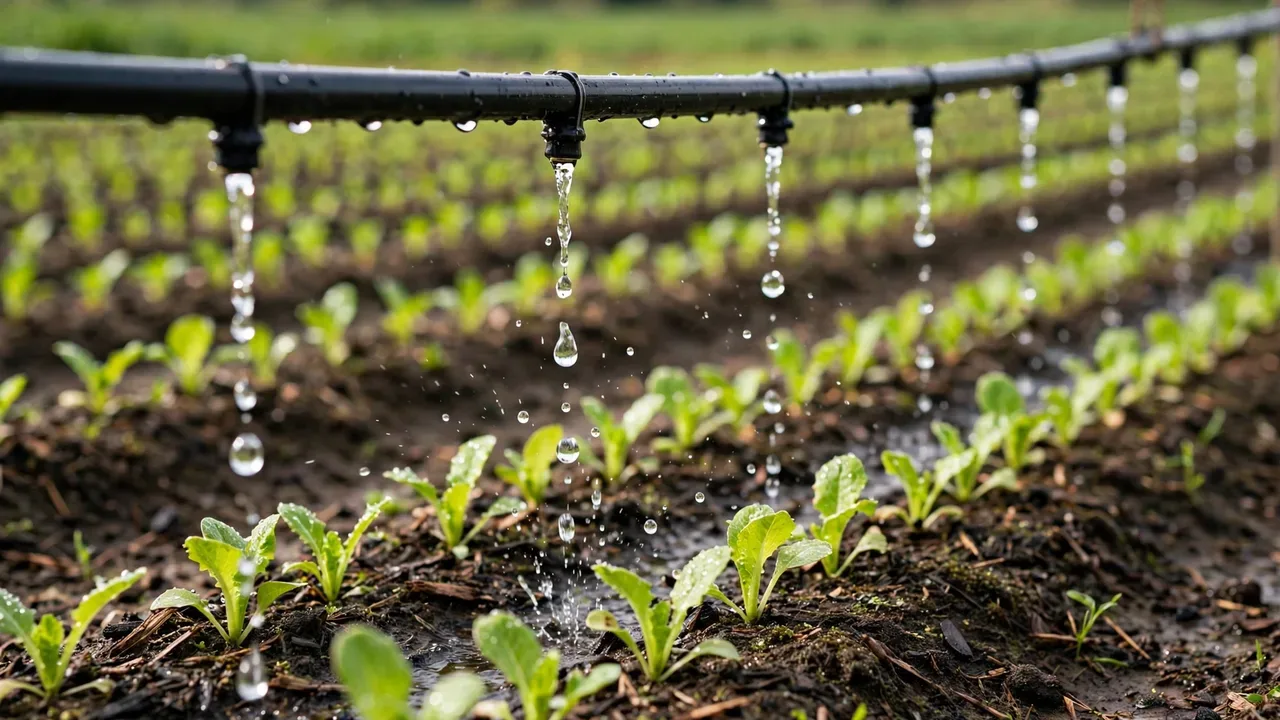
Design a drip irrigation system: calculate emitter count, spacing, flow rate, and pipe sizing.
Results
How to Use This Calculator
Enter the required input values in the form fields above. Each field includes default values you can adjust. Click Calculate to see instant results. Use the Metric/Imperial toggle to switch unit systems. Results are displayed in the results panel for farm planning.
About This Tool
The Drip System Designer helps farmers, agronomists, and agricultural students make quick, accurate calculations for farm management. This tool uses standard agricultural formulas based on extension service recommendations and scientific literature.
Applicability: Suitable for irrigation planning in North America and Europe, adaptable to semi-arid and Mediterranean climates worldwide.
How the Calculation Works
This calculator uses established agricultural formulas to compute results from your input values. The methodology follows standard practices recommended by agricultural extension services and research institutions. All formulas are transparent and verifiable against published literature. The calculator accounts for standard efficiency factors and loss rates where applicable.
Real-World Example
A farmer uses this calculator to plan drip system designer for their operation. By entering specific field data, they receive instant calculations that support informed management decisions. The results allow comparing scenarios, optimizing inputs, and estimating outcomes before committing resources.
Common Mistakes & Tips
Common mistakes include using incorrect units (always verify metric vs imperial), entering estimated rather than measured data, ignoring local conditions and extension recommendations, and over-interpreting results. For best results: use accurate measured inputs, understand formula assumptions, verify results against experience, consult local experts for critical decisions, and use scenario analysis.
Reviewed by Agricalc Editorial Team — Agricultural engineers and agronomists with 10+ years of field experience. Our team verifies every calculator formula against peer-reviewed extension publications. For site-specific advice, consult your local agronomist.
References
- FAO — Crop Evapotranspiration (Irrigation and Drainage Paper 56)
- USDA NRCS — Irrigation Water Management
- University of Minnesota Extension — Irrigation
Frequently Asked Questions
How do I determine crop water requirements for Drip System Designer?
Crop water requirement = ETc = ETo × Kc, where ETo is reference evapotranspiration (Penman-Monteith from weather data) and Kc is crop coefficient (0.3-0.5 initial, 1.0-1.2 mid-season, 0.6-0.9 late). Net irrigation = ETc − effective rainfall + leaching requirement. Gross application = Net ÷ irrigation efficiency. Local extension services provide ETo data and Kc values. Soil moisture sensors guide actual scheduling by measuring root-zone depletion. For example, corn in peak season uses 6-8 mm/day; a 70% efficient system needs to apply 9-11 mm/day.
What irrigation efficiency should I use for Drip System Designer?
Efficiency varies by system: drip/trickle 80-95% (minimal evaporation/runoff), sprinkler 60-80% (wind drift/evaporation losses), flood/furrow 40-60% (runoff/deep percolation). To calculate gross water: Gross = Net ÷ efficiency. If crop needs 40 mm and system is 70% efficient, apply 57 mm. Improving efficiency through maintenance, pressure regulation, and better scheduling saves water, energy, and money while reducing nutrient leaching. Drip systems on sandy soils may need 90%+ efficiency but require frequent flushing to prevent clogging.
How often should I irrigate using Drip System Designer?
Irrigation interval = (Available water × root depth × allowable depletion) ÷ daily ETc. Soil water-holding: sand 50-100 mm/m, loam 150-200, clay 150-250. Root depth: shallow 30-60 cm, deep 90-150 cm. Allowable depletion: 40-60% for most crops, 30-40% for sensitive crops. In peak summer, many crops need irrigation every 3-7 days; in cooler periods, 7-14 days. Drip systems on sandy soil may need daily irrigation; flood systems on clay may run every 10-14 days. Use soil moisture sensors to refine scheduling.
What is the best time of day for Drip System Designer?
Best irrigation time is early morning (4-9 AM) or late evening (after 6 PM). Morning minimizes evaporation (cooler, lower wind, higher humidity) and allows foliage to dry during the day, reducing disease. Evening also reduces evaporation but may leave foliage wet overnight, increasing fungal disease risk. Midday (10 AM-4 PM) has highest evaporation losses (15-20% for sprinklers) and is generally avoided except for cooling or when water delivery schedules require it. Drip irrigation can be run anytime since water goes directly to roots.
How do I know if my Drip System Designer is working properly?
Verify system performance: (1) Check pressure at pump and farthest zone — must be within manufacturer specs, (2) Perform uniformity test with catch cans in a grid — Christiansen's Uniformity Coefficient should be >80%, (3) Inspect for leaks, broken sprinklers, clogged emitters, worn nozzles, (4) Compare flow rate to design specifications, (5) Use soil moisture sensors to verify water reaches root zone. For drip systems, flush lines regularly and check emitter output. Weekly inspection during season, annual full maintenance. Poor uniformity wastes water and causes uneven crop growth.