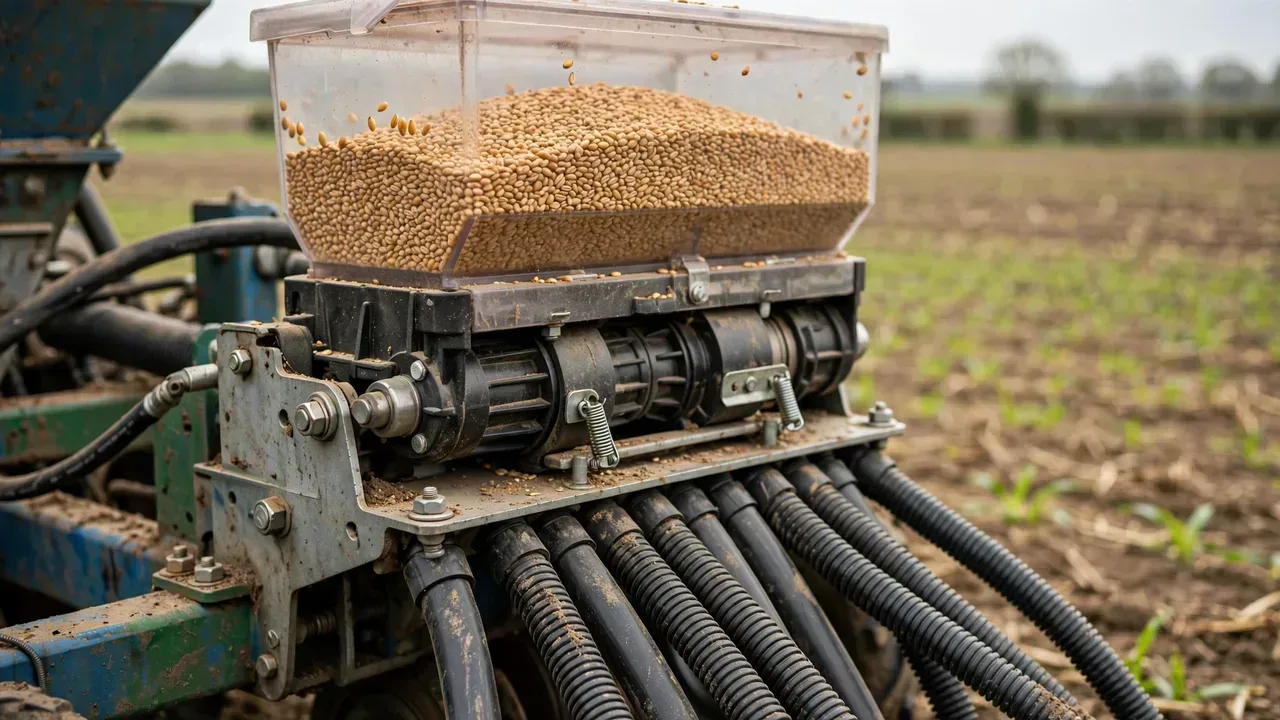
Seed Spacing Calculator

Find the exact in-row spacing needed to hit your target plant population.
Results
How to Use This Calculator
Enter the required input values in the form fields above. Each field includes default values that you can adjust to match your specific situation. Click the Calculate button (or simply change any input) to see instant results. Use the Metric/Imperial toggle to switch between unit systems. Results are displayed in the results panel and can be used for farm planning and decision-making.
About This Tool
This calculator is designed to help farmers, agronomists, and agricultural students make quick, accurate calculations for farm management. It uses standard agricultural formulas based on extension service recommendations and scientific literature. Whether you are planning inputs, estimating yields, or managing finances, this tool provides reliable estimates to support your decisions.
Applicability: Applicable to major field crops (corn, soybeans, wheat) in North America and Europe, adaptable worldwide.
How the Calculation Works
Field area in square inches = acres × 43,560 × 144. Total row length = area ÷ row spacing. In-row spacing (in) = 6,272,640 ÷ (row spacing in × target plants per acre) (6,272,640 = 43,560 × 144). Plants per foot = 12 ÷ spacing. Total plants = target population × acres.
Real-World Example
30,000 plants/acre at 30-inch rows: spacing = 6,272,640 ÷ (30 × 30,000) = 6.97 in ≈ 17.7 cm. Plants per foot = 12 ÷ 6.97 ≈ 1.72. For 100 acres: 3.0 million plants.
Common Mistakes & Tips
Common mistakes: confusing row spacing with in-row spacing; ignoring germination and emergence loss (add 5–10% to seeding rate); using a worn seed meter; mixing acres with hectares. Calibrate the planter with the calculated spacing.
Reviewed by Agricalc Editorial Team — Agricultural engineers and agronomists with 10+ years of field experience. Our team verifies every calculator formula against peer-reviewed extension publications. For site-specific advice, consult your local agronomist.
References
- UMN Extension — Corn Plant Population
- USDA — Seeding Rates & Plant Spacing
- FAO — Plant Spacing Guidelines
Frequently Asked Questions
How do I set my planter from this spacing?
Mark the calculated distance on a measured length of row, lower the planter, and count seeds dropped. Adjust the meter plate or gearbox until the count matches. Check 3–4 times across the field.
Why add extra seeds for germination?
Field emergence is rarely 100%. If germination is 90% and emergence 85%, only ~77% of planted seeds become plants. Set the target 10–15% higher than your desired final population.
How does row spacing affect yield?
Narrower rows often capture more light and yield 5–10% more, but at the same population they require tighter in-row spacing. The calculator keeps population constant while changing spacing.
What if my rows are in metric?
Enter row spacing in inches and read the cm result, or convert: 1 inch = 2.54 cm. For metric population (plants/ha), divide by 2.471 to get plants/acre.
What is a good target population?
Corn: 28,000–36,000 plants/acre (higher for irrigation, lower for dryland). Soybeans: 120,000–160,000 plants/acre. Wheat: drilled, target 25–35 plants/sq ft.