Plant Population & Seeding Rate Calculator
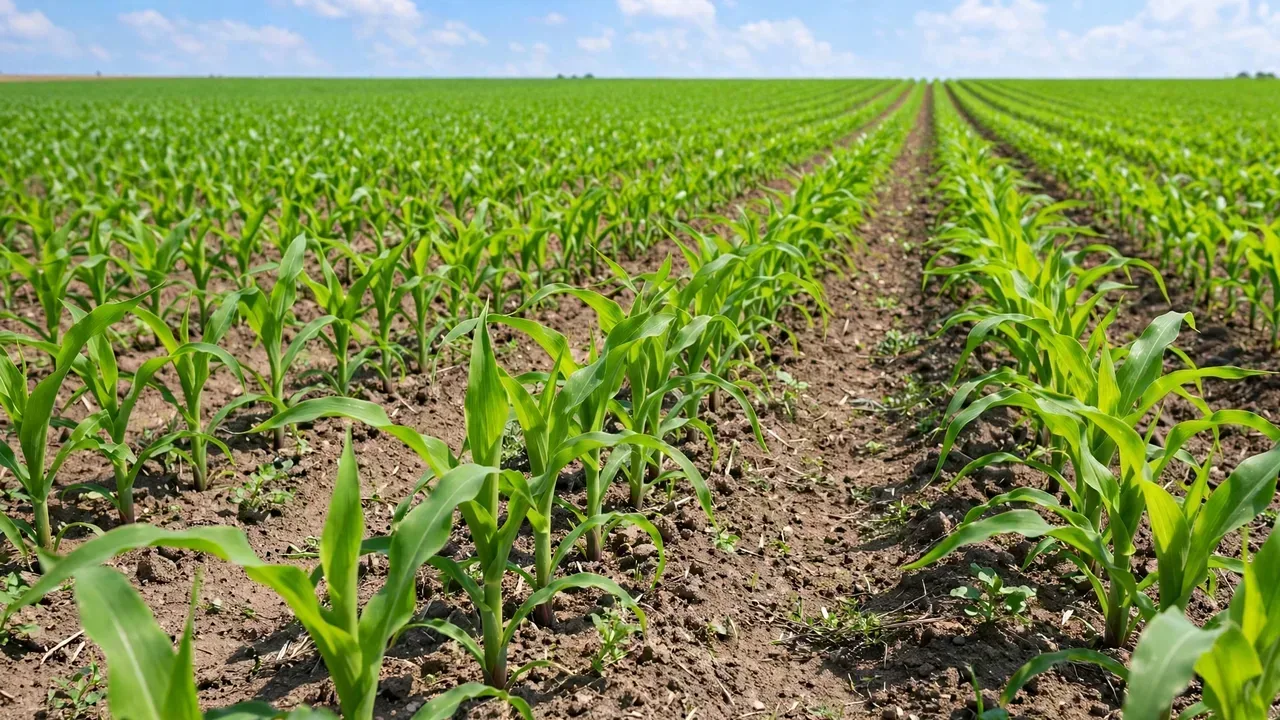
Calculate final plant population from row spacing and in-row seed spacing, or reverse-engineer the required seed spacing to hit a target population. Includes total seed needed adjusted for germination rate.
Results
Formula & How It Works
Plants per Acre = 43,560 ÷ (Row Spacing (ft) × Seed Spacing (ft))
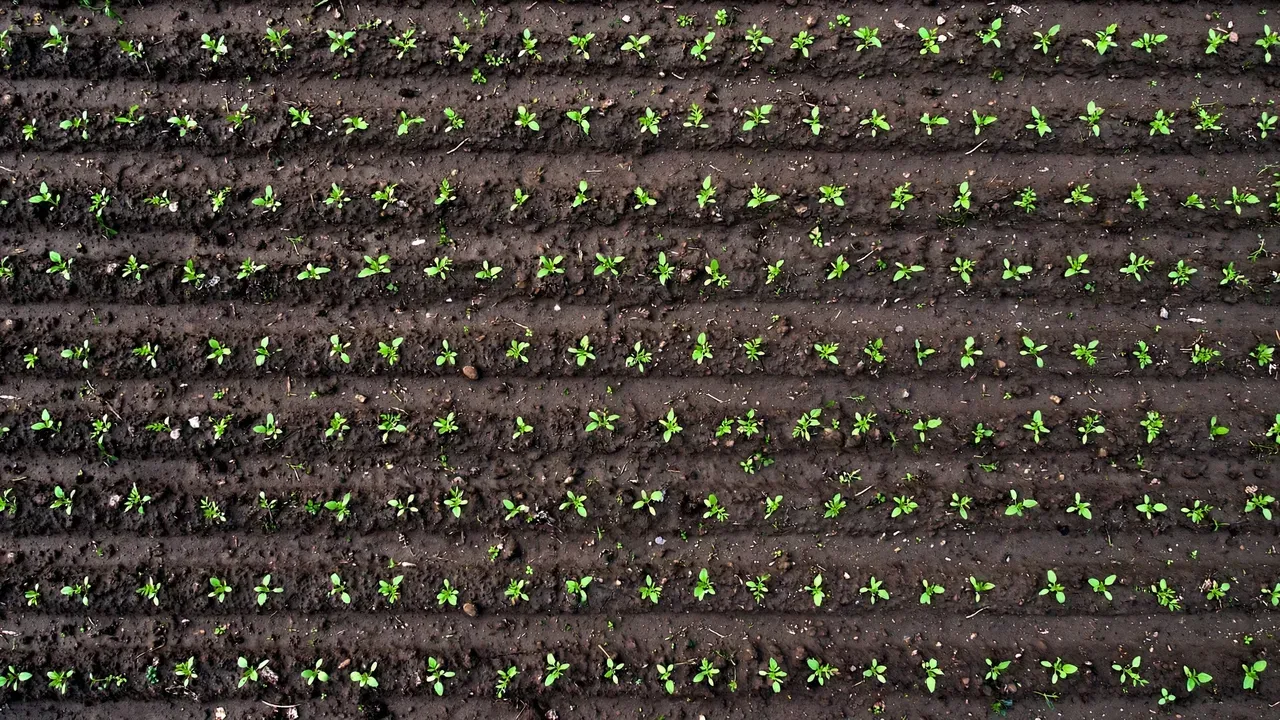
One acre = 43,560 square feet. Each plant occupies a rectangle of Row Spacing × Seed Spacing. Dividing the acre by the area per plant gives the total plant population.
Required Seed Spacing = 43,560 ÷ (Target Population × Row Spacing (ft)), then convert feet to inches (×12).
Seeds Needed = Total Plants ÷ (Germination % ÷ 100)
Calculation Example
With 30-inch rows (2.5 ft) and 8-inch seed spacing (0.667 ft): Plants/acre = 43,560 ÷ (2.5 × 0.667) = 43,560 ÷ 1.667 = 26,136 plants/acre.
For 40 acres: 26,136 × 40 = 1,045,440 plants. At 95% germination: 1,045,440 ÷ 0.95 = 1,100,463 seeds (~1,100K).
To hit 30,000 plants/acre on 30-inch rows: Seed spacing = 43,560 ÷ (30,000 × 2.5) × 12 = 6.97 inches.
How to Use This Calculator
1. Measure your row spacing in inches (common: 30" for corn, 15" for soybeans, 7-15" for small grains). 2. Set your in-row seed spacing from the planter settings. 3. Enter field area. 4. Optionally enter a target population to reverse-calculate spacing. 5. Set germination rate from the seed tag. Click Calculate.
About This Tool
Plant population directly affects yield, lodging risk, and resource use efficiency. Optimal populations vary by crop: corn 28,000-38,000 plants/acre, soybeans 100,000-160,000, wheat 1.0-1.5 million. Higher populations increase yield potential but also water demand and disease pressure. Uniform spacing (low coefficient of variation) is as important as average population.
Applicability: Applicable to major field crops (corn, soybeans, wheat) in North America and Europe, adaptable worldwide.
References & Sources:
- Source: ASABE Standard S496.1, Agricultural Machinery Management and Field Efficiency, 2024.
- Reference: University of Iowa State Extension, Farm Machinery Cost and Selection Guide, 2024.
- Reference: USDA NRCS, Agricultural Equipment Efficiency and Energy Management, 2024.
Reviewed by Agricalc Editorial Team — Agricultural engineers and agronomists with 10+ years of field experience. Our team verifies every calculator formula against peer-reviewed extension publications. For site-specific advice, consult your local agronomist.
Common Mistakes & Tips
Common mistakes: Confusing seed spacing with plant spacing — emergence is typically 90-95%, so final stands are lower than seeding rate. Using 30-inch row assumptions for narrow-row crops. Forgetting to account for skips and doubles from planter error, which can reduce effective population by 5-10%. Ignoring that final stands in dryland conditions may be 10-20% below seeding rate due to mortality.
References & Sources
- FAO (Food and Agriculture Organization) — Agricultural production and nutrition guidelines
- USDA NRCS — Field Office Technical Guide and conservation practice standards
- Land-Grant University Cooperative Extension System — crop and livestock recommendations
- FAO — Crop Production
- Extension — Field Crops