Bale Count & Storage Calculator
Calculate how many hay bales you need based on total hay requirement and individual bale weight. Estimates storage area needed.
Results
How to Use This Calculator
Enter the required input values in the form fields above. Each field includes default values you can adjust. Click Calculate to see instant results. Use the Metric/Imperial toggle to switch unit systems. Results are displayed in the results panel for farm planning.
About This Tool
The Bale Count helps farmers, agronomists, and agricultural students make quick, accurate calculations for farm management. This tool uses standard agricultural formulas based on extension service recommendations and scientific literature.
Applicability: This calculator is designed for global livestock operations, with particular relevance for North American and European cattle, pig, and poultry farms.
How the Calculation Works
This calculator uses established agricultural formulas to compute results from your input values. The methodology follows standard practices recommended by agricultural extension services and research institutions. All formulas are transparent and verifiable against published literature. The calculator accounts for standard efficiency factors and loss rates where applicable.
Real-World Example
A farmer uses this calculator to plan bale count for their operation. By entering specific field data, they receive instant calculations that support informed management decisions. The results allow comparing scenarios, optimizing inputs, and estimating outcomes before committing resources.
Common Mistakes & Tips
Common mistakes include using incorrect units (always verify metric vs imperial), entering estimated rather than measured data, ignoring local conditions and extension recommendations, and over-interpreting results. For best results: use accurate measured inputs, understand formula assumptions, verify results against experience, consult local experts for critical decisions, and use scenario analysis.
Reviewed by Agricalc Editorial Team — Agricultural engineers and agronomists with 10+ years of field experience. Our team verifies every calculator formula against peer-reviewed extension publications. For site-specific advice, consult your local agronomist.
References
- USDA — Grain Storage and Management
- Penn State Extension — Grain Storage
- University of Minnesota Extension — Grain Drying and Storage
Frequently Asked Questions
How do I calculate Bale Count capacity requirements?
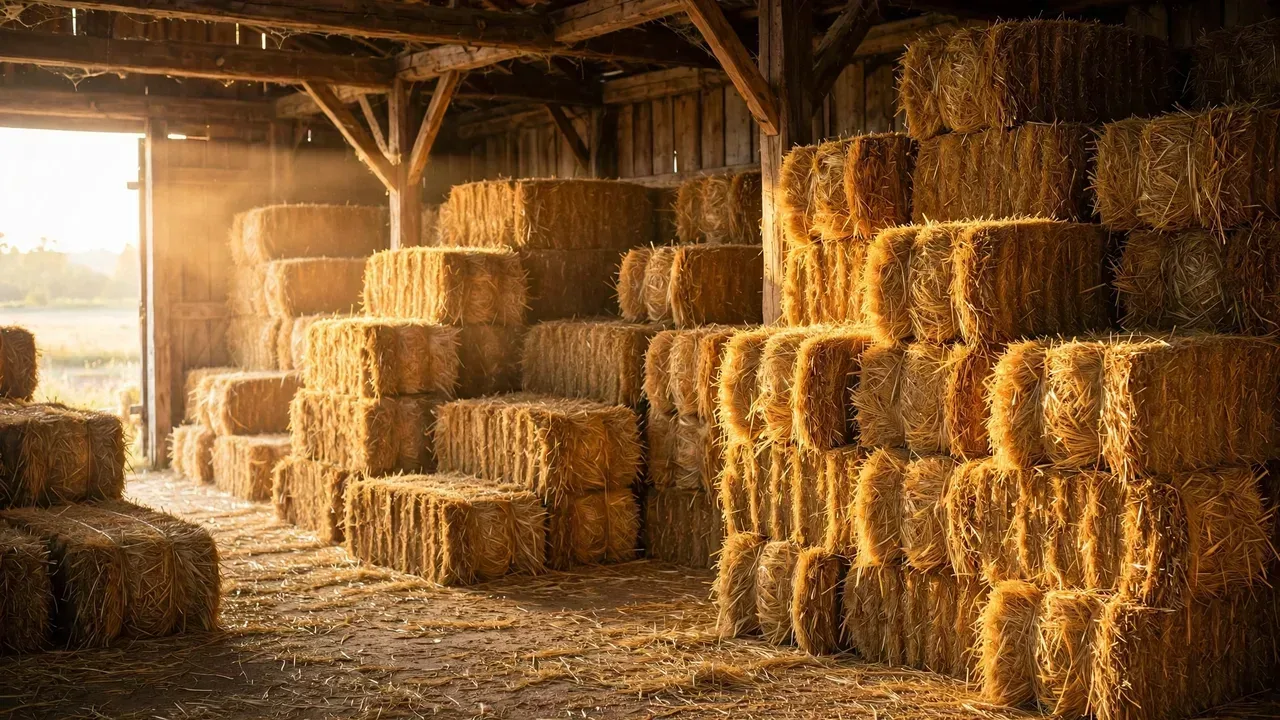
Calculate Bale Count capacity: (1) Estimate total production = acres × yield per acre, (2) Convert to storage units (bushels for grain, tons for hay, kg for produce), (3) Add safety margin (10-20% for yield above expectations, moisture shrink), (4) Account for storage period (longer storage needs better facilities), (5) Calculate physical space: grain bin capacity (bushels) = 0.803 × diameter(ft)² × height(ft) for corn; hay storage = bales × bale volume × 1.25 for handling space. Consider future expansion — oversize by 20-30% if you plan to increase acreage. Proper sizing avoids spoilage from overfilling and wasted capital from overbuilding.
What conditions are optimal for Bale Count?
Optimal Bale Count conditions vary by product: grain storage — moisture <14% for corn, <13% for wheat/soybeans, temperature <15°C for long-term, aeration to maintain uniform conditions; hay storage — moisture <15-18% (depending on bale type), protected from rain/ground moisture, good airflow; fruit/vegetable cold storage — temperature 0-5°C for most produce, humidity 85-95%, ethylene control for climacteric fruits. Monitor conditions with sensors. Poor storage causes: grain spoilage (mold, mycotoxins), hay fires from spontaneous combustion (moisture >20%), produce weight loss and decay. Check stored product regularly.
How much does Bale Count cost per unit?
Bale Count costs: grain bin construction — $2-5 per bushel capacity (larger bins cheaper per bushel), annual storage cost — $0.10-0.30 per bushel (including drying, aeration, handling, interest); hay storage — covered storage $5-15 per ton annually, outdoor storage causes 10-30% dry matter loss; cold storage — $0.50-2.00 per kg per month (depending on temperature, humidity, volume). Drying costs: $0.02-0.05 per point of moisture removed per bushel. Calculate break-even: store grain only if expected price increase exceeds storage cost + interest + shrink. On-farm storage typically pays for itself in 5-10 years through better marketing timing.
What are common Bale Count problems and how to prevent them?
Common Bale Count problems: grain — mold/mycotoxins (prevent by drying to safe moisture, aerating, monitoring temperature), insect infestation (clean bins, treat perimeters, monitor with probes), spoilage from moisture migration (aerate to equalize temperatures). Hay — spontaneous combustion (never bale above 18-20% moisture, monitor temperature), molding and nutrient loss (store under cover, on pallets), rodent damage. Produce — weight loss (maintain humidity), decay (cool promptly, remove damaged product), ethylene damage (separate ethylene producers from sensitive crops). Regular inspection (weekly for grain, bi-weekly for hay) catches problems early.
How do I estimate Bale Count losses and shrink?
Estimate Bale Count losses: grain — moisture shrink = (initial% − final%) ÷ (100 − final%) × 100 (e.g., 25% to 15% = 11.8% weight loss), storage losses 0.5-2% per month with good management, up to 5-10% with poor conditions; hay — dry matter losses 5-15% for covered storage, 15-30% for outdoor storage, plus feeding waste 10-20% without feeders; produce — post-harvest losses 5-15% for cold-stored, 20-40% without cooling. Track actual losses by weighing in and out. Reducing storage losses by 5% on 10,000 bushels of corn at $4/bushel = $2,000 saved — often more profitable than increasing yield.