Mastering Your Coffee Fertilizer Split Application Schedule
Coffee farming demands precise nutrient management to ensure healthy growth and bountiful harvests. A common challenge for growers is providing nutrients efficiently throughout the coffee plant's long growth cycle without waste or deficiency. Implementing an effective coffee fertilizer split application schedule is the key to overcoming this, ensuring your plants receive the right nutrients, at the right time, in the right amounts.
The Core Principle: Why Split Applications Matter for Coffee
Sustained Nutrition for Perennial Growth
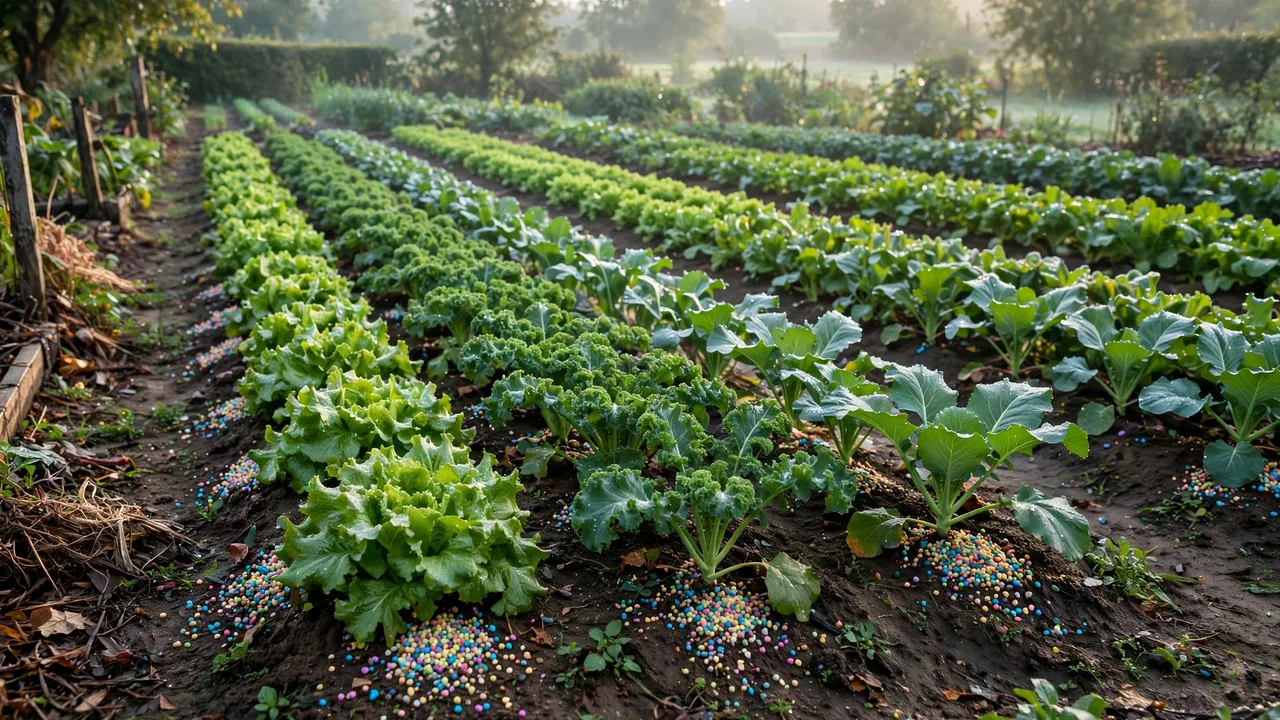
Coffee is a perennial crop with continuous nutrient demands, especially during critical stages like flowering, fruit development, and vegetative flush. Applying the entire annual fertilizer dose at once is inefficient and can lead to significant nutrient losses through leaching, volatilization, or runoff. Split applications, distributing the total annual nutrient requirement into several smaller doses, ensure a steady supply of essential elements, matching the plant's uptake patterns. This approach minimizes nutrient stress, promotes consistent growth, and supports higher yields and quality. It’s about feeding the plant regularly, much like providing regular meals rather than one large annual feast.
Beyond efficiency, split applications also offer environmental benefits by reducing the risk of nutrient pollution. Smaller doses are more readily absorbed by the plant, leaving less excess in the soil that could contaminate water sources. This strategy is particularly vital in regions with high rainfall or sandy soils, where nutrient mobility is high. By aligning nutrient availability with plant demand, farmers can achieve better fertilizer use efficiency, leading to economic savings and more sustainable agricultural practices.
Calculating Your Coffee Fertilizer Split Application Schedule
Step-by-Step Method for Optimal Dosing
Developing an effective split application schedule begins with understanding your crop's total annual nutrient needs. First, conduct a comprehensive soil analysis to determine existing nutrient levels and pH. Based on these results, along with your target yield and coffee variety, determine the total annual recommended amounts of Nitrogen (N), Phosphorus (P₂O₅), and Potassium (K₂O) per hectare. These recommendations are often provided by local agricultural extension services or research institutions. Once the total annual requirements are known, decide on the number of applications per year, typically ranging from 4 to 6 for coffee, spread strategically throughout the growing season.
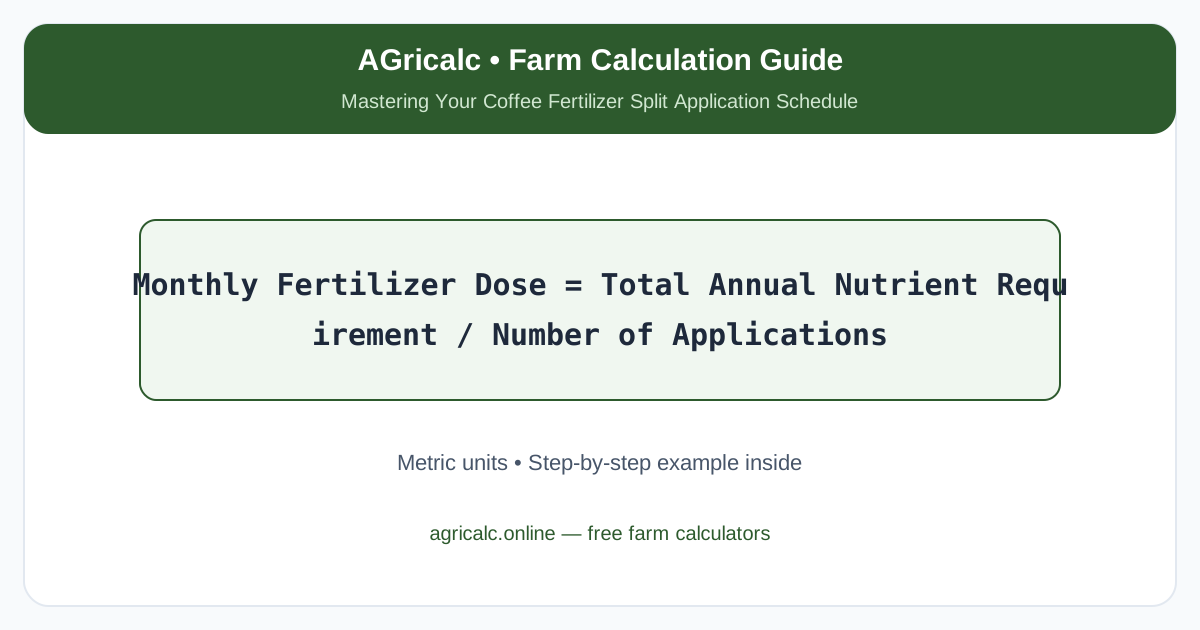
To calculate the dose for each application, simply divide the total annual nutrient requirement by the chosen number of applications. For example, if your coffee plants require 200 kg of Nitrogen per hectare annually, and you plan for 5 applications, each application would deliver 40 kg N/ha. Adjusting the timing and quantity of these doses to coincide with key physiological stages—such as flowering, fruit set, and berry development—is crucial. Higher nitrogen might be needed during vegetative growth and flowering, while potassium becomes more critical during fruit filling.
Worked Example: Monthly Doses for a 2.5 t/ha Coffee Farm
Applying the Principles to a Real-World Scenario
Consider a coffee farm aiming for a yield of 2.5 tons of green coffee per hectare. Based on soil analysis and general recommendations for this yield level, the annual nutrient requirements are determined as follows: 200 kg N/ha, 60 kg P₂O₅/ha, and 220 kg K₂O/ha. The farmer decides to implement a bimonthly (every two months) application schedule, totaling 6 applications per year, to ensure consistent nutrient availability. According to FAO guidelines, tailoring fertilizer application to specific growth stages is crucial for perennial crops like coffee, making this frequent splitting highly beneficial.
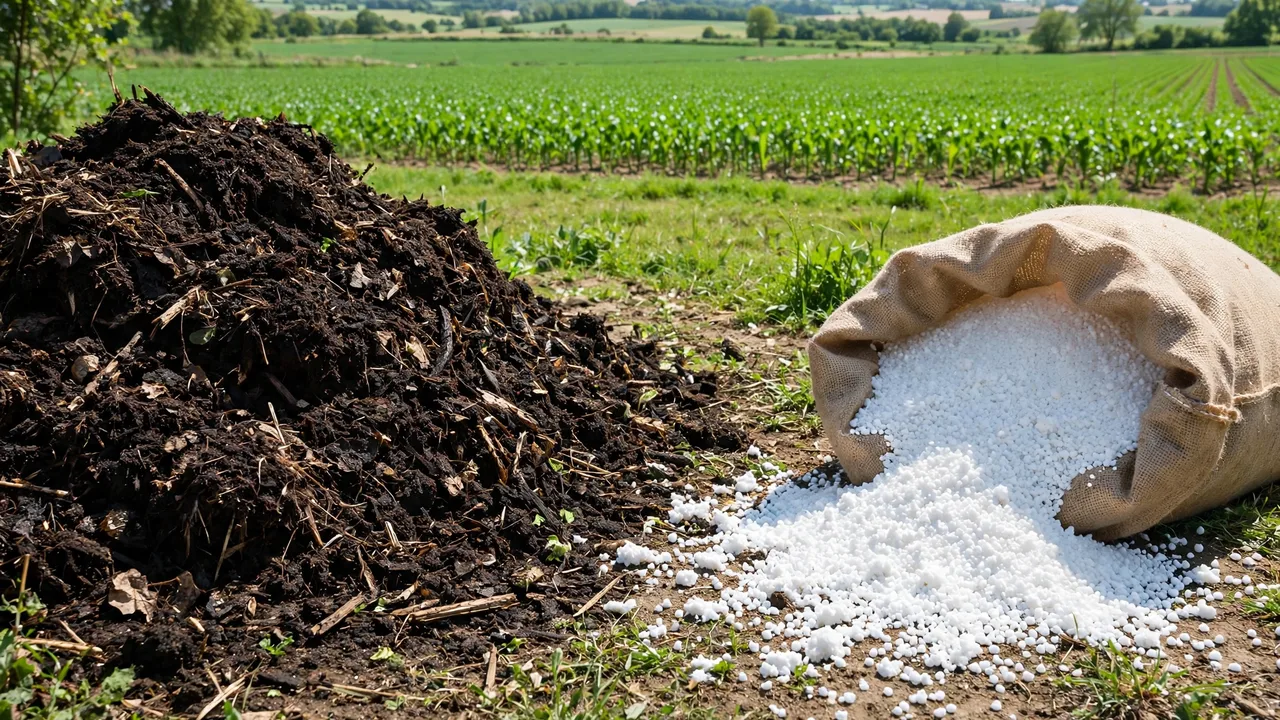
Now, let's calculate the nutrient dose for each application: * **Nitrogen (N):** 200 kg/ha per year / 6 applications = 33.33 kg N per hectare per application. * **Phosphorus (P₂O₅):** 60 kg/ha per year / 6 applications = 10.00 kg P₂O₅ per hectare per application. * **Potassium (K₂O):** 220 kg/ha per year / 6 applications = 36.67 kg K₂O per hectare per application. This schedule provides a consistent supply of nutrients, preventing deficiencies and supporting robust plant development throughout the year. The farmer would then select appropriate fertilizer blends (e.g., urea for N, triple superphosphate for P, muriate of potash for K) to deliver these specific amounts at each bimonthly application.
Practical Notes and Avoiding Common Mistakes
Optimizing Application and Preventing Pitfalls
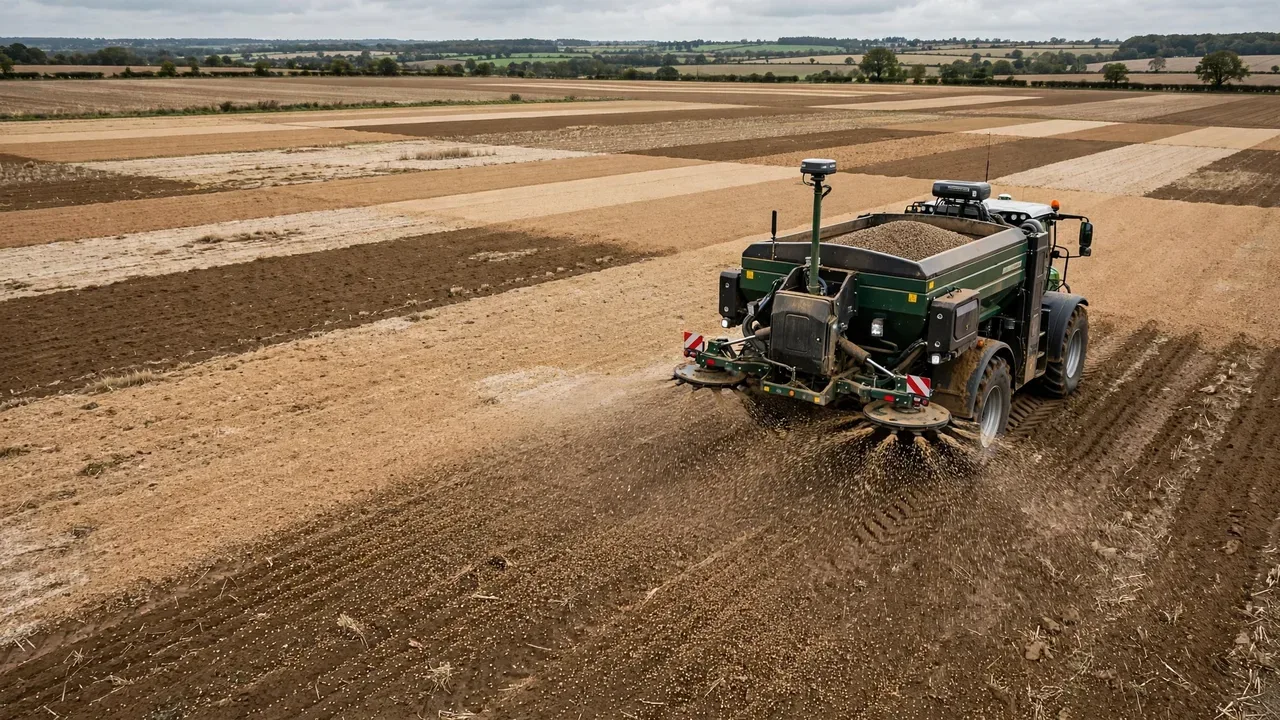
Successful split applications depend not only on accurate calculations but also on proper execution. Always apply fertilizers when the soil is moist to facilitate nutrient dissolution and uptake; avoid application during drought conditions or immediately before heavy rains that could lead to runoff. Consider the method of application – broadcasting, band application, or fertigation – and choose what best suits your farm's topography, labor availability, and irrigation system. Band application, placing fertilizer near the drip line, is often more efficient for perennial crops like coffee.
Common mistakes include neglecting micronutrients, which are often overlooked but critical for coffee health and yield. Incorporate zinc, boron, and magnesium as needed, often through foliar sprays or specific soil amendments. Another error is failing to re-evaluate the fertilizer schedule annually or biannually based on new soil tests and yield performance. Soil nutrient levels change over time, and a static schedule can quickly become suboptimal. Finally, avoid applying fertilizer when plants are under severe stress (e.g., pest infestation, disease, extreme weather), as this can worsen the situation rather than improve it.
Frequently Asked Questions
How often should coffee fertilizer be applied?
For optimal results, coffee fertilizer should typically be applied 4 to 6 times per year. This split application strategy ensures a continuous nutrient supply, matching the plant's ongoing demands throughout its various growth stages, from vegetative flush to fruit development.
What are the main benefits of split applications for coffee?
Split applications enhance nutrient use efficiency, reduce nutrient losses from leaching or runoff, and provide a steady supply of nutrients tailored to critical growth phases. This leads to healthier plants, improved yields, better coffee quality, and can reduce environmental impact.
Can I apply all coffee nutrients at once?
Applying all coffee nutrients at once is generally not recommended. It can lead to nutrient imbalances, increased losses due to leaching or volatilization, and potential phytotoxicity. Split applications are far more effective for perennial crops like coffee, ensuring steady nutrient availability.
How does soil type affect the split application schedule?
Soil type significantly impacts nutrient retention and availability. Sandy soils, with low cation exchange capacity, require more frequent, smaller applications due to higher leaching potential. Clay soils, with better retention, might accommodate slightly fewer applications. Soil analysis guides these adjustments.
By meticulously planning and executing your coffee fertilizer split application schedule, you can significantly enhance nutrient efficiency, boost yields, and ensure the long-term health of your coffee plants. This strategic approach moves beyond guesswork, providing your crop with precisely what it needs, when it needs it. To simplify this complex process and accurately calculate your farm's specific needs, make sure to utilize the powerful coffee fertilizer calculator available on agricalc.online.