High Tunnel vs Greenhouse: Cost Comparison and Which to Choose
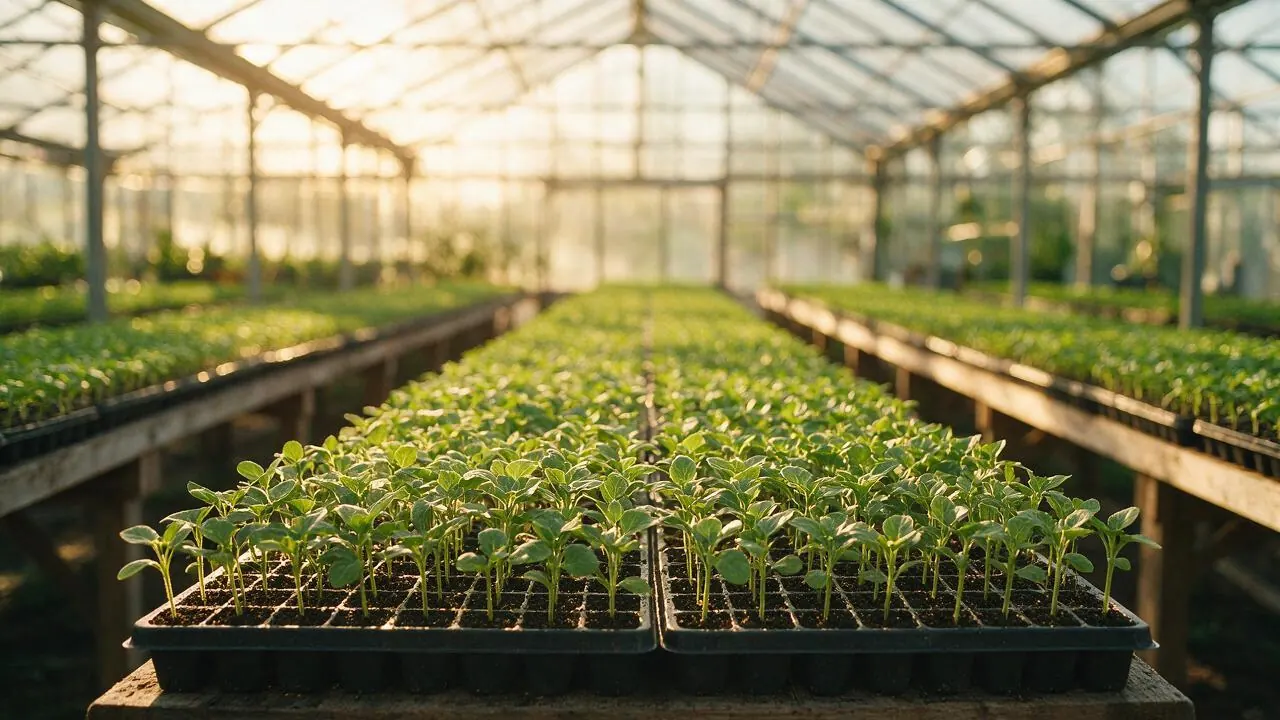
The decision between a high tunnel and a greenhouse is one of the most common dilemmas for farmers looking to extend their growing season. Both structures capture solar heat and protect crops, but they differ dramatically in cost, climate control, croptions, and operating complexity. This article compares the two across every important dimension to help you choose the right structure for your operation.
Related calculators:
Defining the Structures
High Tunnel (Hoop House)
A high tunnel is a Quonset-style or gable-roofed frame of metal hoops covered with a single layer of 6-mil greenhouse plastic. It is typically unheated, relies on passiventilation through roll-up sides and end-wall doors, and is designed to be moved orelocated every few years. High tunnels are considered "season extension" structures rather than fully controlled environments.
Greenhouse
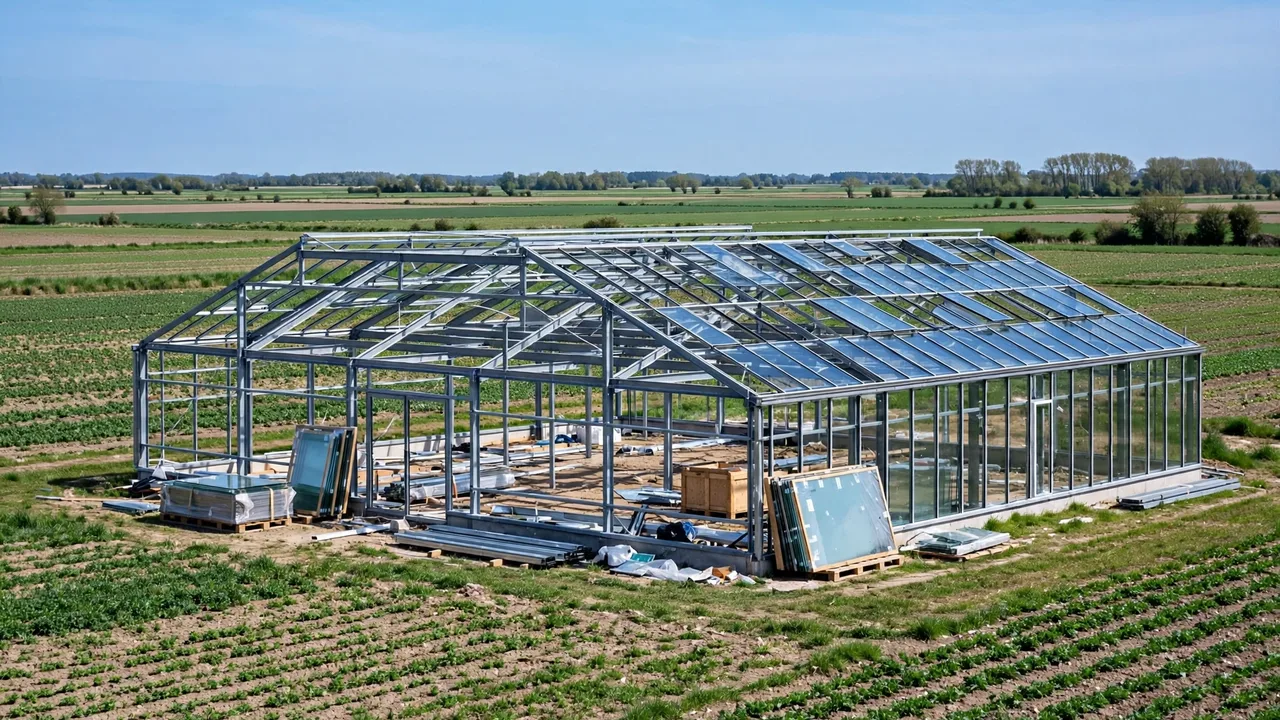
A greenhouse is a more permanent structure with a rigid frame (galvanized steel or aluminum), double-layer polyethylene, polycarbonate, or glass glazing, and activenvironmental controls including heating, fan-and-pad or exhaust ventilation, and often automated climate systems. Greenhouses are designed for year-round production of high-value crops in any climate.
Cost Comparison
Construction Cost (30×96 ft / 2,880 sq ft)
- High tunnel: $5,000–$12,000 ($1.75–$4.20/sq ft). DIY kits are available; professional installation adds $2,000–$4,000.
- Polyethylene greenhouse: $23,000–$43,000 ($8–$15/sq ft). Includes heater, fans, end walls, and double-layer glazing.
- Polycarbonate greenhouse: $72,000–$173,000 ($25–$60/sq ft). Permanent structure with automated controls.
Annual Operating Costs
- High tunnel: $500–$2,000/year. Plastic replacement every 3–5 years ($1,000–$2,000), minorepairs, no heating or electricity.
- Heated greenhouse: $5,000–$15,000/year. Heating ($3,000–$8,000), electricity ($500–$2,000), maintenance ($1,000–$3,000), plastic replacement ($1,000–$3,000 every 3–5 years).
Performance Comparison
Temperature Control
High tunnels raise nighttime temperatures by 5–15°F over ambienthrough solar heat retention, but offer no protection against hard freezes without supplemental heat. Crops in a high tunnel still experience temperature swings. Greenhouses with heaters maintain a precisetpoint year-round, allowing production of warm-season crops even in winter. A greenhouse can maintain 70°F indoors when it is 20°F outside; a high tunnel cannot.
Ventilation and Humidity
High tunnels rely on roll-up sides and endoors for ventilation, which is adequate in spring and fall but insufficient on hot summer days. Internal temperatures can exceed 100°F on sunny days, requiring manual monitoring. Greenhouses use powered exhaust fans, evaporative cooling pads, and automated ridge vents to maintain optimal temperature and humidity, reducing disease pressure and heat stress.
Crop Options
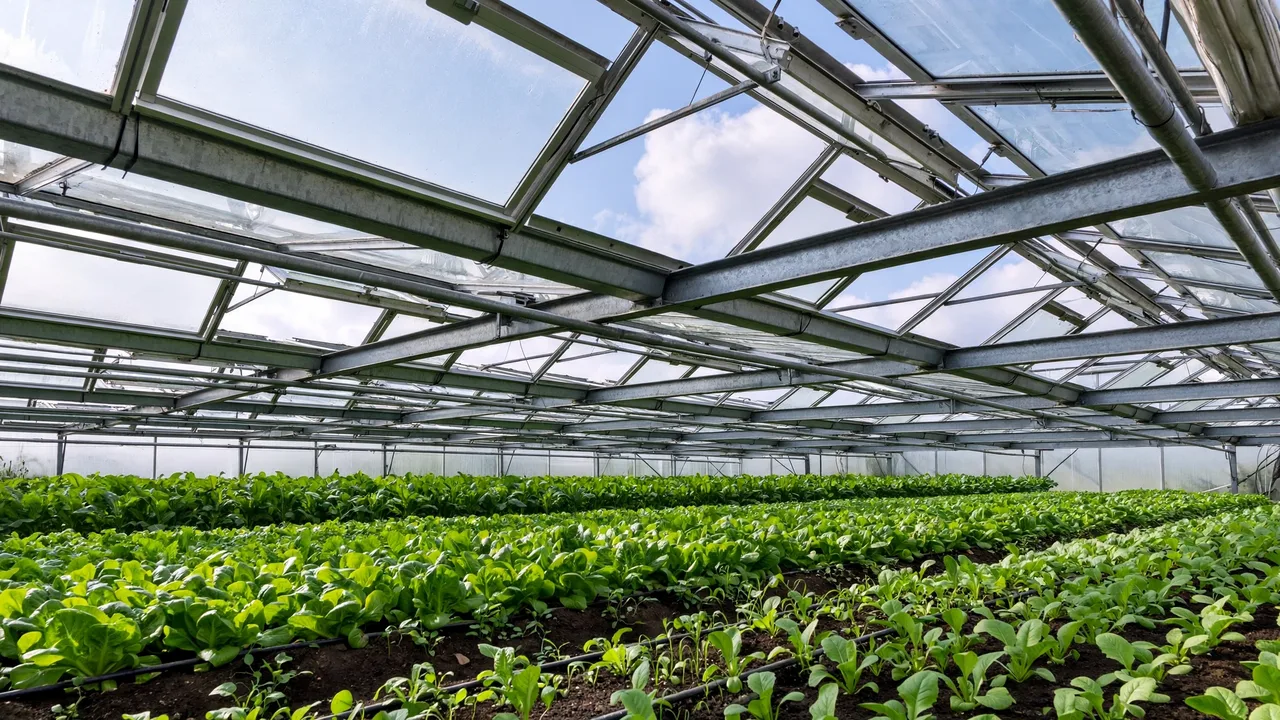
High tunnels are ideal for cool-season crops (lettuce, spinach, kale, radishes) in early spring and late fall, and for warm-season crops (tomatoes, peppers, cucumbers) during the normal growing season with earlier planting and later harvest. Greenhouses enable year-round production of any crop, including heat-loving tomatoes, peppers, cucumbers, herbs, and flowers, even in northern climates.
Durability and Lifespan
High tunnel frames last 10–20 years, buthe plastic covering needs replacement every 3–5 years. The structures are designed to be semi-permanent and may not withstand extreme snow loads without reinforcement. Greenhouse frames last 20–30+ years, and polycarbonate or glass glazing lasts 15–25 years. Greenhouses arengineered for permanent installation and can handle heavier snow and wind loads.
Which Should You Choose?
Choose a High Tunnel If:
- Your budget is under $15,000
- You primarily wanto extend the spring and fall seasons by 4–8 weeks
- You grow cool-season crops or warm-season crops that fit within the normal growing season
- You want minimal operating costs and no utility bills
- You are testing season-extension production for the first time
- You qualify for USDA EQIP high tunnel cost-share (covers up to 90% of costs)
Choose a Greenhouse If:
- You need year-round production, especially in winter
- You grow high-value crops that justify the investment (herbs, microgreens, specialty tomatoes, flowers)
- You have a reliable direct market (restaurants, CSAs, farmers markets) that pays premium prices
- You need precise climate control for disease-sensitive crops
- Your budget exceeds $25,000 and you can manage heating costs
The Hybrid Approach
Many successful farms use both: a high tunnel for season extension of field crops and a smaller heated greenhouse for starting transplants and producing high-value winter crops. A 20×48 ft heated greenhouse ($12,000–$20,000) dedicated to transplant production and winter greens can supply multiple high tunnels, creating an efficient integrated system. Use our Greenhouse Cost & Payback Calculator to model both options and compare their financial returns.
Ventilation Matters More Than You Think
Poor ventilation is the number-one cause of crop failure in both structures. In high tunnels, roll-up sides must be opened on sunny days above 50°F and closed at night. In greenhouses, automated fan systems should provide at least one air exchange per minute. For guidance on sizing ventilation fans, use our Greenhouse Ventilation Calculator. Proper ventilation reduces humidity, prevents fungal diseases, and avoids heat stress that can reduce yields by 30% or more.
Related Tools
Pland optimize your protected growing structure.
- Greenhouse Cost & Payback Calculator — Compare costs and ROI for high tunnels and greenhouses.
- Greenhouse Ventilation Calculator — Size exhaust fans and airflow for your structure.
Frequently Asked Questions
What is the main difference between a high tunnel and a greenhouse?
The primary difference is climate control. A high tunnel is an unheated, passively ventilated structure that extends the growing season by capturing solar heat. A greenhouse has active heating, powered ventilation, and automated controls for year-round production in any climate.
How mucheaper is a high tunnel than a greenhouse?
A high tunnel costs roughly 60–80% less than a comparable heated polyethylene greenhouse. For a 30×96 ft structure, a high tunnel runs $5,000–$12,000 vs. $23,000–$43,000 for a heated greenhouse. Annual operating costs are also 5–10 times lower for high tunnels.
Can I grow tomatoes in a high tunnel in winter?
No. Tomatoes require consistentemperatures above 50°F and will not survive freezing nights in an unheated high tunnel. High tunnels are best for cool-season crops in winter (lettuce, kale, spinach) and for earlier planting of warm-season crops in spring.
Does the USDA help pay for high tunnels?
Yes. The USDA NRCS Environmental Quality Incentives Program (EQIP) provides financial assistance for high tunnel construction, covering up to 90% of costs for eligible producers. Contact your local NRCS office for application details and deadlines.
Can I add heato a high tunnelater?
Yes, but it is not always cost-effective. A high tunnel'single-layer plastic and lack of insulation make heating inefficient. If you anticipate needing heat, invest in a double-layer greenhouse from the start — the energy savings will offsethe higher construction cost within a few heating seasons.
References & Sources
- FAO (Food and Agriculture Organization) - Irrigation and Drainage Paper 56: Crop Evapotranspiration
- USDA (United States Department of Agriculture) - Natural Resources Conservation Service (NRCS) Guidelines
- IPCC (Intergovernmental Panel on Climate Change) - 2019 Refinement to the 2006 IPCC Guidelines for National Greenhouse Gas Inventories
- NRC (National Research Council) - Nutrient Requirements of Domestic Animals Series
- Extension Services - Land-Grant University Cooperative Extension System
This content is for informational purposes only. Always consult with local agricultural experts and extension services for site-specific recommendations.