Certificación Orgánica: Guía Completa
La certificación orgánica le permite etiquetar y vender productos como "orgánicos", obteniendo típicamente primas de precio del 20-100% sobre los productos convencionales. La certificación requiere 3 años de transición (sin insumos prohibidos), registros detallados estrictos e inspecciones anuales por un certificador acreditado por el USDA. Esta guía cubre los requisitos de certificación, el proceso de transición, los costos y si lo orgánico es adecuado para su finca.
¿Qué es la Certificación Orgánica?
La certificación orgánica es una certificación basada en procesos — verifica que usted sigue los estándares de producción orgánica, no que su producto final sea "libre de químicos" (los productos orgánicos pueden contener trazas de sustancias prohibidas por deriva o contaminación). En EE.UU., la certificación orgánica está regulada por el Programa Nacional Orgánico (NOP) del USDA. Solo los agentes certificadores acreditados por el USDA pueden certificar fincas como orgánicas.
Lo que Prohíbe lo Orgánico
- Fertilizantes sintéticos: Sin fertilizantes manufacturados de nitrógeno, fósforo o potasio. Use compost, estiércol, harina de huesos, harina de sangre, fosfato de roca, arena verde, etc.
- Pesticidas sintéticos: Sin herbicidas, insecticidas, fungicidas o rodenticidas sintéticos. Los pesticidas permitidos deben estar en la Lista Nacional (por ejemplo, cobre, azufre, neem, Bt, piretrinas).
- Organismos genéticamente modificados (OGM): Sin semillas, alimentos o insumos GM. Debe usar semillas certificadas orgánicas o verificadas como no-OGM.
- Lodos de depuradora: Sin biosólidos del tratamiento de aguas residuales.
- Irradiación: Sin irradiación de alimentos para conservación.
- Antibióticos y hormonas de crecimiento (ganado): Sin uso rutinario de antibióticos ni hormonas de crecimiento. Los animales deben tener acceso al exterior y alimento orgánico.
Lo que Requiere lo Orgánico
- Fertilidad del suelo: Mantener o mejorar la materia orgánica del suelo, la estructura y la actividad biológica. Use rotaciones de cultivos, cultivos de cobertura, compost y fertilizantes aprobados.
- Manejo de plagas: Use primero métodos culturales, mecánicos y biológicos (rotación de cultivos, variedades resistentes, insectos benéficos, trampas). Pesticidas solo como último recurso, y solo de la lista aprobada.
- Manejo de malezas: Cultivo, mantillo, cultivos de cobertura, deshierbe manual, deshierbe con llama. Sin herbicidas sintéticos.
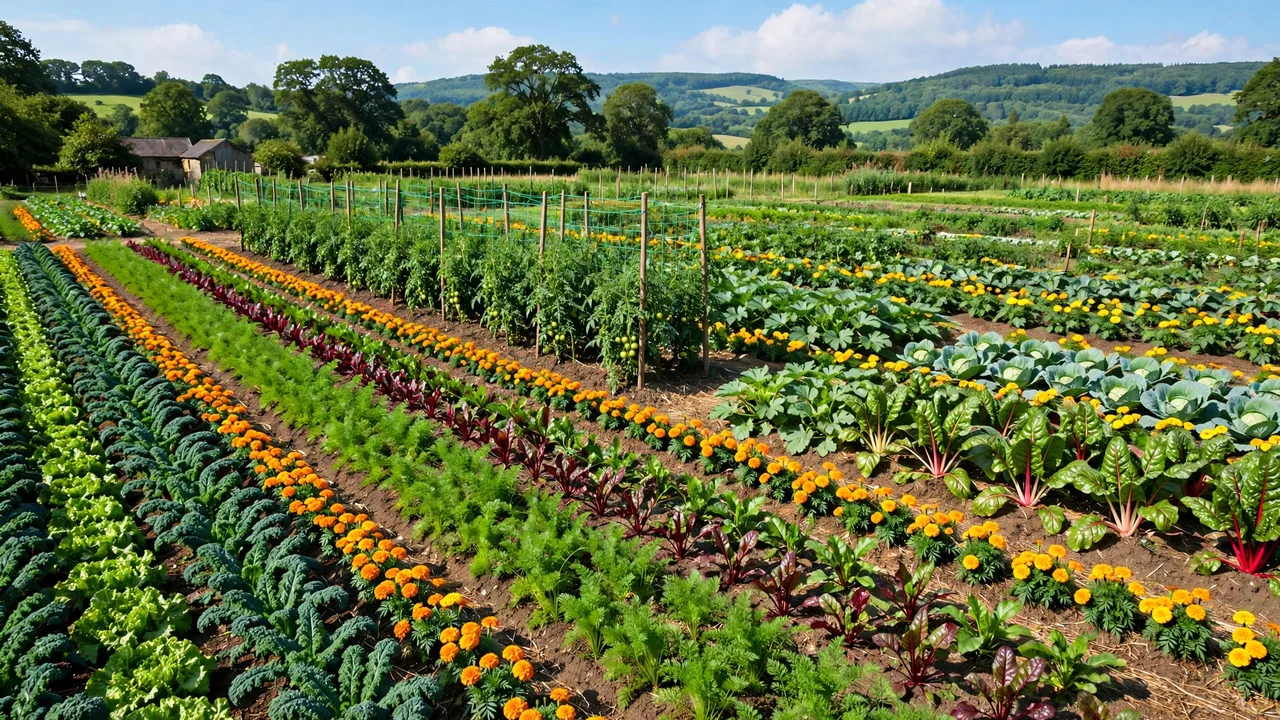
- Biodiversidad: Mantener o mejorar los hábitats naturales, corredores de polinizadores y poblaciones de insectos benéficos.
- Registro de datos: Registros detallados de todos los insumos, cosechas, ventas y prácticas. Los registros deben mantenerse durante 5 años y estar disponibles para inspección.
- Zonas de amortiguamiento: Barreras físicas o distancia (típicamente 8-30 pies) entre campos orgánicos y convencionales para prevenir deriva y contaminación.
El Proceso de Certificación
Paso 1: Período de Transición (3 Años)
La tierra no debe tener sustancias prohibidas aplicadas durante 36 meses (3 años) antes de la primera cosecha orgánica. Esto se llama el "período de transición". Durante la transición:
- Siga todas las prácticas orgánicas (sin insumos sintéticos, rotaciones de cultivos, cultivos de cobertura, etc.)
- Mantenga registros detallados (igual que el orgánico certificado)
- Aún no puede vender como "orgánico", pero puede vender como "en transición a orgánico" (algunos compradores pagan una pequeña prima)
- Considere certificarse en el año 3 — la inspección puede cubrir el período de transición, y puede ser certificado al final de los 36 meses
La transición de 3 años es la mayor barrera de entrada. Durante este tiempo, incurre en costos más altos (insumos orgánicos, más mano de obra) pero no puede cobrar primas orgánicas. Planifique financieramente para esta transición — muchas fincas pierden dinero en los años 1-2, alcanzan el punto de equilibrio en el año 3 y se vuelven rentables después de la certificación.
Paso 2: Elegir un Certificador
Seleccione un agente certificador acreditado por el USDA. Hay más de 80 certificadores acreditados en EE.UU. Considere:
- Costo: Las tarifas anuales de certificación van desde $400 hasta $2,000+ según el tamaño y complejidad de la finca. Algunos certificadores cobran tarifas fijas, otros un porcentaje de las ventas.
- Experiencia: Elija un certificador familiarizado con su tipo de cultivo y escala de finca. Pida referencias de fincas similares.
- Certificaciones adicionales: Algunos certificadores también ofrecen Demeter (biodynamic), Regenerative Organic u otras certificaciones. Si las desea, elija un certificador que las ofrezca.
- Mercados internacionales: Si exporta, asegúrese de que su certificador tenga acuerdos de equivalencia con los mercados objetivo (UE, Japón, etc.).
Los certificadores populares incluyen: CCOF (California Certified Organic Farmers), Oregon Tilth, QAI (Quality Assurance International), MOSA (Midwest Organic Services Association), VOF (Vermont Organic Farmers) y TDA (Texas Department of Agriculture).
Paso 3: Presentar la Solicitud
Complete la solicitud del certificador, que típicamente incluye:
- Plan del Sistema Orgánico (OSP): Descripción detallada de su finca, prácticas, insumos y manejo. Este es el documento central — describe cómo cumple con los estándares orgánicos.
- Mapa de la finca: Mapa aéreo o dibujado a mano que muestre todos los campos, zonas de amortiguamiento, fuentes de agua, edificios y uso de suelo adyacente.
- Historial de campos: 3+ años de historial de cultivos, registros de insumos y datos de cosecha para cada campo.
- Lista de insumos: Todos los fertilizantes, pesticidas y otros insumos utilizados, con nombres de marca, ingredientes activos y verificación de fuente (listado OMRI o confirmación del fabricante).
- Fuentes de semilla: Documentación de que las semillas son orgánicas o, si la semilla orgánica no está disponible, no-OGM y sin tratar con sustancias prohibidas.
- Registros de ganado (si aplica): Registros de salud animal, fuentes de alimento, acceso a pastoreo, registros de sacrificio/procesamiento.
- Registros de ventas: Ventas del año anterior, incluyendo información del comprador y etiquetas de productos.
Paso 4: Inspección
Un inspector visita su finca anualmente (pueden ocurrir inspecciones sin aviso). La inspección incluye:
- Recorrido por todos los campos, edificios, áreas de almacenamiento y equipo
- Revisión de todos los registros (registros de insumos, registros de cosecha, recibos de ventas, facturas de semillas)
- Verificación de que las prácticas coinciden con el Plan del Sistema Orgánico
- Comprobación de riesgos de contaminación (deriva de campos vecinos, equipo compartido, mezcla)
- Muestreo de suelo, tejido o producto (si se requiere o se sospecha incumplimiento)
- Entrevista con el operador de la finca y los trabajadores
El inspector escribe un informe pero no toma la decisión de certificación — esa la toma el comité de revisión del certificador basándose en el informe de inspección.
Paso 5: Decisión de Certificación
El certificador revisa el informe de inspección y la solicitud. Posibles resultados:
- Certificado: Recibe un certificado orgánico, válido por 1 año. Puede etiquetar y vender productos como orgánicos.
- Certificado con condiciones: Debe corregir problemas específicos (por ejemplo, mejorar el registro de datos, instalar zonas de amortiguamiento) dentro de un plazo especificado.
- Aviso de incumplimiento: Violaciones graves. Debe corregir el problema y puede estar sujeto a suspensión o revocación.
- Denegado: No cumple con los estándares orgánicos. Puede volver a solicitar después de corregir los problemas.
Costos de la Certificación Orgánica
| Partida de Costo | Finca Pequeña (<$50k ventas) | Finca Mediana ($50k-$500k) | Finca Grande (>$500k) |
|---|---|---|---|
| Tarifa anual de certificación | $400-800 | $800-1,500 | $1,500-3,000+ |
| Tarifa de inspección | Incluida o $200-500 | $300-800 | $500-1,500 |
| Mano de obra para registros | 20-50 hrs/año | 50-150 hrs/año | 150-500 hrs/año |
| Prima de insumos orgánicos | $500-2,000/año | $2,000-10,000/año | $10,000-50,000/año |
| Mano de obra adicional (deshierbe, etc.) | $1,000-5,000/año | $5,000-20,000/año | $20,000-100,000/año |
| Costo anual total | $2,000-8,000 | $8,000-30,000 | $30,000-150,000 |
El Programa de Compartir Costos de Certificación Orgánica del USDA (OCCSP) reembolsa el 75% de los costos de certificación, hasta $750 por categoría (cultivos, ganado, manejo, cultivos silvestres). La mayoría de los estados ofrecen programas adicionales de costo compartido. Solicite a través del departamento de agricultura de su estado.
¿Es lo Orgánico Adecuado para su Finca?
Buenos Candidatos para lo Orgánico
- Cultivos de alto valor (hortalizas, frutas, hierbas, nueces) donde las primas orgánicas son del 30-100%
- Comercialización directa (CSA, mercados de agricultores, restaurantes) donde los clientes buscan orgánico
- Fincas que ya usan prácticas de bajos insumos o sostenibles (transición más corta)
- Fincas con buena salud del suelo y baja presión de plagas (más fácil de manejar sin insumos sintéticos)
- Fincas pequeñas a medianas donde la mano de obra adicional es manejable
Malos Candidatos para lo Orgánico
- Cultivos de commodities (maíz, trigo, soya) donde las primas orgánicas son del 10-30% pero las caídas de rendimiento son del 20-40%
- Fincas con presión severa de plagas, malezas o enfermedades (difícil de manejar orgánicamente)
- Fincas adyacentes a campos convencionales con uso intensivo de pesticidas (riesgo de contaminación por deriva)
- Grandes fincas donde los costos de mano de obra orgánica son prohibitivos
- Fincas que necesitan ingresos inmediatos (la transición de 3 años es financieramente desafiante)
Alternativas a la Certificación Orgánica Completa
- Certified Naturally Grown (CNG): Certificación liderada por agricultores, más simple y económica ($150-300/año). Reconocida por muchos mercados directos pero no por el USDA ni grandes minoristas.
- Regenerative Organic Certification (ROC): Estándar más alto que el orgánico, incluye bienestar animal y trabajo justo. Las primas pueden ser mayores. Requiere certificación orgánica primero.
- Non-GMO Project Verified: Solo verifica el estado no-OGM, no las prácticas orgánicas. Más fácil y económico. Bueno para cultivos de granos.
- "Beyond Organic" / "Sustainably Grown": Autoetiquetado, sin verificación de terceros. Basado en la confianza, funciona para la comercialización directa pero no para el mayoreo.
- Salad Savvy / Food Alliance: Certificaciones alternativas de sostenibilidad con diferentes estándares.
Referencias
Planee su transición orgánica: Use nuestra Calculadora de Fertilizante para la planificación de nutrientes orgánicos, la Calculadora de Fertilizante Orgánico para insumos aprobados, la Calculadora de Herbicidas para productos aprobados, y la Calculadora de Presupuesto Agrícola para estimar los costos de transición y las primas orgánicas.
Consejos para una Transición Exitosa
- Comience el registro de datos desde el día 1: Incluso antes de la certificación, mantenga registros detallados. Esto hace que el proceso de solicitud sea mucho más fácil.
- Únase a una red de agricultores orgánicos: Asociaciones orgánicas locales, NOFA (Northeast Organic Farming Association), MOSES (Midwest Organic and Sustainable Education Service) y otros grupos brindan mentoría, talleres y recursos.
- Hable con su certificador antes de solicitar: La mayoría de los certificadores ofrecen consultas previas a la solicitud gratuitas. Pueden identificar problemas potenciales y ayudarle a prepararse.
- Construya la salud del suelo durante la transición: La transición de 3 años es el momento perfecto para construir materia orgánica, mejorar la estructura del suelo y establecer rotaciones de cultivos. Suelo sano = menos problemas de plagas = manejo orgánico más fácil.
- Encuentre compradores antes de la certificación: Alinee compradores orgánicos durante la transición. Muchos compradores comprarán productos "en transición" a una pequeña prima, y se comprometerán a comprar orgánico certificado a prima completa.
- Comience pequeño: Si tiene una finca grande, considere certificar una porción primero (por ejemplo, campos de hortalizas) mientras transiciona el resto. Esto genera ingresos orgánicos antes.
- Invierta en el manejo de malezas: Las malezas son el desafío #1 en la agricultura orgánica. Desarrolle una estrategia integral de malezas: rotación de cultivos, cultivos de cobertura, lecho de semilla falso, cultivo, mantillo, deshierbe con llama.
Frequently Asked Questions
¿Cómo obtengo la certificación orgánica USDA para mi finca?
El proceso de certificación: (1) Desarrollar un Plan de Sistema Orgánico (OSP) documentando todas las prácticas, insumos y procedimientos; (2) Elegir un agente certificador acreditado por USDA (hay ~80 en EE.UU.); (3) Enviar solicitud, OSP y tarifas ($500–$2,000 según tamaño); (4) Someterse a inspección en sitio por el inspector del certificador (revisa campos, registros, almacenamiento, manejo); (5) El certificador revisa el informe y OSP, emite el certificado si cumple. El período de transición requiere 3 años de manejo orgánico antes de la primera cosecha certificada. Usa una calculadora de compost para asegurar que tus enmiendas cumplan los estándares.
¿Cuánto cuesta la certificación orgánica?
Los costos varían según tamaño y certificador. Costos típicos: tarifa de solicitud $200–$500, tarifa anual de certificación $500–$2,000 (basada en ventas brutas orgánicas), tarifa de inspección $300–$800 (viaje + tiempo), costo total primer año $1,000–$3,500. Fincas pequeñas (menos de $5,000 en ventas) pueden calificar para tarifas reducidas. El Programa de Compartición de Costos de Certificación Orgánica de USDA reembolsa hasta 75% de los costos (hasta $750/año) en estados participantes. Considera que los productos orgánicos típicamente tienen primas de precio de 20–100%, que usualmente compensan los costos en 1–2 años.
¿Qué insumos están permitidos en la agricultura orgánica?
Los insumos permitidos están en la Lista Nacional del Programa Orgánico Nacional (NOP) de USDA. Permitidos: la mayoría de fertilizantes minerales (piedra caliza, yeso, fosfato de roca, greensand), compost (debe cumplir estándares NOP), estiércol crudo (con restricciones — intervalos de 90/120 días antes de cosecha), pesticidas botánicos (neem, piretro, rotenona con restricciones), controles biológicos (insectos benéficos, Bt), fungicidas de cobre y azufre (con restricciones). Prohibidos: fertilizantes sintéticos, la mayoría de pesticidas sintéticos, organismos genéticamente modificados (OGM), lodos de depuradora, radiación ionizante. Siempre verifica la lista OMRI antes de usar cualquier insumo. Una calculadora de fertilizante orgánico ayuda a planificar.
¿Cómo construyo fertilidad del suelo en un sistema orgánico?
La fertilidad orgánica se basa en procesos biológicos en lugar de fertilizantes sintéticos. Prácticas clave: (1) Rotación de cultivos — alternar leguminosas fijadoras de N con cultivos demandantes; (2) Cultivos de cobertura — coberturas leguminosas (trébol, arveja, chícharo) fijan 50–150 lb N/acre; coberturas de gramíneas añaden materia orgánica; (3) Aplicación de compost — compost terminado provee nutrientes de liberación lenta y mejora estructura (5–20 toneladas/acre cada 2–3 años); (4) Abonos verdes — incorporar coberturas mientras están suculentas para liberación rápida; (5) Minerales de roca — fosfato de roca (P), greensand (K), piedra caliza (Ca/Mg); (6) Manejo de residuos. Una calculadora de compost ayuda a determinar tasas.
¿Cuáles son los requisitos de mantenimiento de registros?
Las fincas orgánicas deben mantener registros detallados por al menos 5 años. Registros requeridos: (1) Historia de campo — rotaciones, fechas de siembra, variedades, aplicaciones de insumos; (2) Registros de insumos — facturas, etiquetas, listado OMRI, fechas y tasas de aplicación; (3) Registros de cosecha — rendimientos, fechas, números de lote; (4) Registros de almacenamiento y manejo — dónde se almacena, procedimientos de limpieza; (5) Registros de ventas — facturas mostrando ventas orgánicas certificadas; (6) Registros de manejo de plagas, malezas y enfermedades; (7) Registros de semilla — fuente, estado orgánico, tratamiento. Los registros deben demostrar cumplimiento y permitir trazabilidad de semilla a venta. Muchos agricultores usan software de gestión de fincas u hojas de cálculo.
¿Puedo usar estiércol en agricultura orgánica y cuáles son las reglas?
Sí, el estiércol crudo está permitido con reglas estrictas para prevenir contaminación por patógenos. Para cultivos destinados a consumo humano: (1) Estiércol crudo sin tratar debe aplicarse al menos 120 días antes de la cosecha de cultivos cuya parte comestible contacta el suelo (ej., lechuga, zanahorias); (2) Al menos 90 días antes de la cosecha de cultivos cuya parte comestible no contacta el suelo (ej., manzanas, maíz); (3) Estiércol compostado (que cumple estándares NOP — relación C:N 25:1–40:1, mantenido a 131–170°F por 3 días en recipiente o 15 días en hilera con 5 volteos) no tiene restricción de intervalo de cosecha; (4) El estiércol no puede aplicarse sobre suelo congelado o cubierto de nieve. Usa una calculadora de compost para asegurar que tu proceso cumpla los estándares NOP.