Organic Farming Certification: A Complete Guide
Organic certification allows you to label and sell products as "organic," typically commanding 20-100% price premiums over conventional products. Certification requires 3 years of transition (no prohibited inputs), strict record-keeping, and annual inspections by a USDA-accredited certifier. This guide covers certification requirements, the transition process, costs, and whether organic is right for your farm.
What Is Organic Certification?
Organic certification is a process-based certification — it verifies that you follow organic production standards, not that your final product is "chemical-free" (organic products may contain trace amounts of prohibited substances from drift or contamination). In the US, organic certification is regulated by the USDA National Organic Program (NOP). Only USDA-accredited certifying agents can certify farms as organic.
What Organic Prohibits
- Synthetic fertilizers: No manufactured nitrogen, phosphorus, or potassium fertilizers. Use compost, manure, bone meal, blood meal, rock phosphate, green sand, etc.
- Synthetic pesticides: No synthetic herbicides, insecticides, fungicides, or rodenticides. Allowed pesticides must be on the National List (e.g., copper, sulfur, neem, Bt, pyrethrins).
- Genetically modified organisms (GMOs): No GM seeds, feed, or inputs. Must use certified organic or non-GMO verified seeds.
- Sewage sludge: No biosolids from wastewater treatment.
- Irradiation: No food irradiation for preservation.
- Antibiotics and growth hormones (livestock): No routine antibiotic use or growth hormones. Animals must have outdoor access and organic feed.
What Organic Requires
- Soil fertility: Maintain or improve soil organic matter, tilth, and biological activity. Use crop rotations, cover crops, compost, and approved fertilizers.
- Pest management: Use cultural, mechanical, and biological methods first (crop rotation, resistant varieties, beneficial insects, traps). Pesticides only as last resort, and only from approved list.
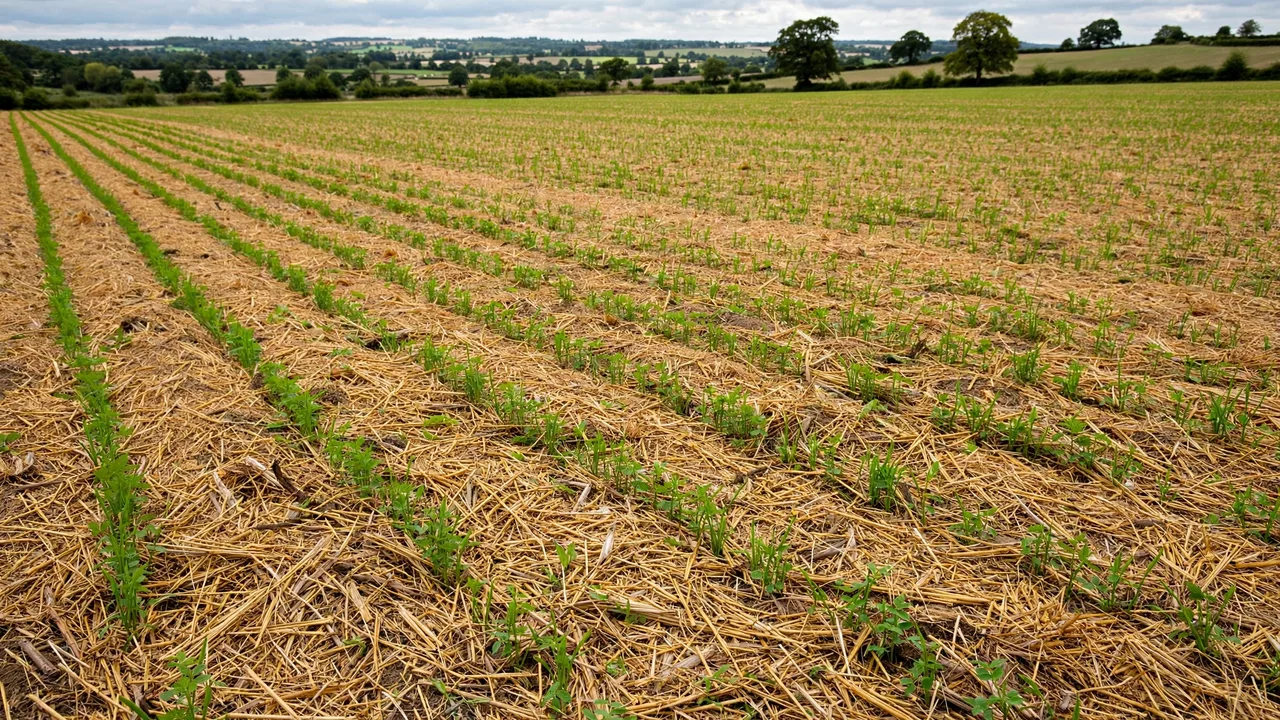
- Weed management: Cultivation, mulching, cover crops, hand weeding, flame weeding. No synthetic herbicides.
- Biodiversity: Maintain or enhance natural habitats, pollinator corridors, and beneficial insect populations.
- Record-keeping: Detailed records of all inputs, harvests, sales, and practices. Records must be maintained for 5 years and available for inspection.
- Buffer zones: Physical barriers or distance (typically 8-30 feet) between organic and conventional fields to prevent drift and contamination.
The Certification Process
Step 1: Transition Period (3 Years)
Land must have no prohibited substances applied for 36 months (3 years) before the first organic harvest. This is called the "transition period." During transition:
- Follow all organic practices (no synthetic inputs, crop rotations, cover crops, etc.)
- Keep detailed records (same as certified organic)
- You cannot sell as "organic" yet, but can sell as "transitioning to organic" (some buyers pay a small premium)
- Consider getting certified in year 3 — the inspection can cover the transition period, and you can be certified at the end of 36 months
The 3-year transition is the biggest barrier to entry. During this time, you incur higher costs (organic inputs, more labor) but cannot charge organic premiums. Plan financially for this transition — many farms lose money in years 1-2, break even in year 3, and become profitable after certification.
Step 2: Choose a Certifier
Select a USDA-accredited certifying agent. There are 80+ accredited certifiers in the US. Consider:
- Cost: Annual certification fees range from $400 to $2,000+ depending on farm size and complexity. Some certifiers charge flat fees, others percentage of sales.
- Experience: Choose a certifier familiar with your crop type and farm scale. Ask for references from similar farms.
- Additional certifications: Some certifiers also offer Demeter (biodynamic), Regenerative Organic, or other certifications. If you want these, choose a certifier that offers them.
- International markets: If exporting, ensure your certifier has equivalence agreements with target markets (EU, Japan, etc.).
Popular certifiers include: CCOF (California Certified Organic Farmers), Oregon Tilth, QAI (Quality Assurance International), MOSA (Midwest Organic Services Association), VOF (Vermont Organic Farmers), and TDA (Texas Department of Agriculture).
Step 3: Submit Application
Complete the certifier's application, which typically includes:
- Organic System Plan (OSP): Detailed description of your farm, practices, inputs, and management. This is the core document — it describes how you comply with organic standards.
- Farm map: Aerial or hand-drawn map showing all fields, buffer zones, water sources, buildings, and adjacent land use.
- Field history: 3+ years of cropping history, input records, and harvest data for each field.
- Input list: All fertilizers, pesticides, and other inputs used, with brand names, active ingredients, and source verification (OMRI listing or manufacturer confirmation).
- Seed sources: Documentation that seeds are organic or, if organic seed is unavailable, non-GMO and untreated with prohibited substances.
- Livestock records (if applicable): Animal health records, feed sources, pasture access, slaughter/processing records.
- Sales records: Previous year'sales, including buyer information and product labels.
Step 4: Inspection
An inspector visits your farm annually (unannounced inspections may occur). The inspection includes:
- Walk-through of all fields, buildings, storage areas, and equipment
- Review of all records (input logs, harvest records, sales receipts, seed invoices)
- Verification that practices match the Organic System Plan
- Check for contamination risks (drift from neighboring fields, shared equipment, commingling)
- Soil, tissue, or product sampling (if required or suspected non-compliance)
- Interview with farm operator and workers
The inspector writes a report but does not make the certification decision — that is done by the certifier's review committee based on the inspection report.
Step 5: Certification Decision
The certifier reviews the inspection report and application. Possible outcomes:
- Certified: You receive an organic certificate, valid for 1 year. You can label and sell products as organic.
- Certified with conditions: You must correct specific issues (e.g., improve record-keeping, install buffer zones) within a specified timeframe.
- Notice of non-compliance: Serious violations. You must correct the issue and may be subject to suspension or revocation.
- Denied: You do not meet organic standards. You can reapply after correcting issues.
Costs of Organic Certification
| Cost Item | Small Farm (<$50k sales) | Medium Farm ($50k-$500k) | Large Farm (>$500k) |
|---|---|---|---|
| Annual certification fee | $400-800 | $800-1,500 | $1,500-3,000+ |
| Inspection fee | Included or $200-500 | $300-800 | $500-1,500 |
| Record-keeping labor | 20-50 hrs/year | 50-150 hrs/year | 150-500 hrs/year |
| Organic input premium | $500-2,000/yr | $2,000-10,000/yr | $10,000-50,000/yr |
| Additional labor (weeding, etc.) | $1,000-5,000/yr | $5,000-20,000/yr | $20,000-100,000/yr |
| Total annual cost | $2,000-8,000 | $8,000-30,000 | $30,000-150,000 |
The USDA Organic Certification Cost Share Program (OCCSP) reimburses 75% of certification costs, up to $750 per category (crops, livestock, handling, wild crops). Most states offer additional cost-share programs. Apply through your state agriculture department.
Is Organic Right for Your Farm?
Good Candidates for Organic
- High-value crops (vegetables, fruits, herbs, nuts) where organic premiums are 30-100%
- Direct marketing (CSA, farmers markets, restaurants) where customers seek organic
- Farms already using low-input or sustainable practices (shorter transition)
- Farms with good soil health and low pest pressure (easier to manage without synthetic inputs)
- Small to medium farms where additional labor is manageable
Poor Candidates for Organic
- Commodity crops (corn, wheat, soybeans) where organic premiums are 10-30% but yield drops are 20-40%
- Farms with severe pest, weed, or disease pressure (hard to manage organically)
- Farms adjacent to conventional fields with heavy pesticide use (drift contamination risk)
- Large farms where organic labor costs are prohibitive
- Farms needing immediate income (3-year transition is financially challenging)
Alternatives to Full Organic Certification
- Certified Naturally Grown (CNG): Farmer-led certification, simpler and cheaper ($150-300/year). Recognized by many direct markets but not by USDA or large retailers.
- Regenerative Organic Certification (ROC): Higher standard than organic, includes animal welfare and fair labor. Premiums can be higher. Requires organic certification first.
- Non-GMO Project Verified: Only verifies non-GMO status, not organic practices. Easier and cheaper. Good for grain crops.
- "Beyond Organic" / "Sustainably Grown": Self-labeled, no third-party verification. Trust-based, works for direct marketing but not wholesale.
- Salad Savvy / Food Alliance: Alternative sustainability certifications with different standards.
References
Plan your organic transition: Use our Fertilizer Calculator for organic nutrient planning, Organic Fertilizer Calculator for approved inputs, Pesticide Safety Interval Calculator for approved products, and Farm Budget Calculator to estimate transition costs and organic premiums.
Tips for a Smooth Transition
- Start record-keeping from day 1: Even before certification, keep detailed records. This makes the application process much easier.
- Join an organic farmer network: Local organic associations, NOFA (Northeast Organic Farming Association), MOSES (Midwest Organic and Sustainable Education Service), and other groups provide mentorship, workshops, and resources.
- Talk to your certifier before applying: Most certifiers offer free pre-application consultations. They can identify potential issues and help you prepare.
- Build soil health during transition: The 3-year transition is the perfect time to build organic matter, improve soil structure, and establish crop rotations. Healthy soil = fewer pest problems = easier organic management.
- Find buyers before certification: Line up organic buyers during transition. Many buyers will purchase "transitioning" product at a small premium, and will commit to buying certified organic at full premium.
- Start small: If you have a large farm, consider certifying a portion first (e.g., vegetable fields) while transitioning the rest. This generates organic income sooner.
- Invest in weed management: Weeds are the #1 challenge in organic farming. Develop a comprehensive weed strategy: crop rotation, cover crops, stale seedbed, cultivation, mulch, flame weeding.
Frequently Asked Questions
How do I get USDA organic certification for my farm?
The USDA organic certification process: (1) Develop an Organic System Plan (OSP) documenting all practices, inputs, and procedures; (2) Choose a USDA-accredited certifying agent (there are ~80 in the US); (3) Submit application, OSP, and fees ($500–$2,000 depending on farm size); (4) Undergo an on-site inspection by the certifier's inspector (inspects fields, records, storage, handling); (5) Certifier reviews inspection report and OSP, issues certificate if compliant. The transition period requires 3 years of organic management before the first certified harvest. Use a compost calculator to ensure your soil amendments meet organic standards.
How much does organic certification cost?
Certification costs vary by farm size and certifier. Typical costs: application fee $200–$500, annual certification fee $500–$2,000 (based on gross organic sales), inspection fee $300–$800 (inspector travel + time), total first-year cost $1,000–$3,500. Small farms (under $5,000 organic sales) may qualify for reduced fees. The USDA Organic Certification Cost-Share Program reimburses up to 75% of certification costs (up to $750/year) in participating states. Consider that organic products typically command 20–100% price premiums, which usually offset certification costs within 1–2 years.
What inputs are allowed in organic farming?
Allowed inputs are listed on the USDA National Organic Program (NOP) National List. Allowed: most mined fertilizers (limestone, gypsum, rock phosphate, greensand), compost (must meet NOP compost standards), raw manure (with restrictions — 90/120 day intervals before harvest), botanical pesticides (neem, pyrethrum, rotenone with restrictions), biological controls (beneficial insects, Bt), copper and sulfur fungicides (with restrictions). Prohibited: synthetic fertilizers, most synthetic pesticides, genetically modified organisms (GMOs), sewage sludge, ionizing radiation. Always check the OMRI (Organic Materials Review Institute) list before using any input. An organic fertilizer calculator helps plan nutrient inputs within organic constraints.
How do I build soil fertility in an organic system?
Organic soil fertility relies on biological processes rather than synthetic fertilizers. Key practices: (1) Crop rotation — alternate nitrogen-fixing legumes with nitrogen-demanding crops; (2) Cover crops — leguminous covers (clover, vetch, peas) fix 50–150 lb N/acre; grass covers add organic matter; (3) Compost application — well-finished compost provides slow-release nutrients and improves soil structure (apply 5–20 tons/acre every 2–3 years); (4) Green manures — incorporate cover crops while succulent for rapid nutrient release; (5) Rock minerals — rock phosphate (P), greensand (K), limestone (Ca/Mg) for long-term nutrient supply; (6) Crop residue management — leave residue to decompose. A compost calculator helps determine application rates based on nutrient content and crop needs.
What are the record-keeping requirements for organic certification?
Organic farms must maintain detailed records for at least 5 years. Required records: (1) Field history — crop rotations, planting dates, varieties, input applications; (2) Input records — invoices, product labels, OMRI listing, application dates and rates; (3) Harvest records — yields, harvest dates, lot numbers; (4) Storage and handling records — where certified product is stored, cleaning procedures; (5) Sales records — invoices showing certified organic sales; (6) Pest, weed, and disease management records — monitoring and actions taken; (7) Seed records — source, organic status, treatment. Records must demonstrate compliance and allow traceability from seed to sale. Many farmers use farm management software or simple spreadsheets.
Can I use manure in organic farming and what are the rules?
Yes, raw manure is allowed in organic farming with strict rules to prevent pathogen contamination. For crops intended for human consumption: (1) Untreated raw manure must be applied at least 120 days before harvest of crops whose edible portion contacts soil (e.g., lettuce, carrots); (2) At least 90 days before harvest of crops whose edible portion does not contact soil (e.g., apples, corn); (3) Composted manure (meeting NOP compost standards — C:N ratio 25:1–40:1, maintained at 131–170°F for 3 days in-vessel or 15 days windrow with 5 turnings) has no harvest interval restriction; (4) Manure cannot be applied to frozen or snow-covered ground. Use a compost calculator to ensure your composting process meets NOP standards.