Drip Irrigation: How Long to Run Your System
Drip irrigation runtime = (Water needed per plant ÷ Emitter flow rate) × Number of emitters. For a tomato plant needing 2 liters/day with 2 emitters of 2 L/h each: runtime = 2 ÷ (2 × 2) = 0.5 hours (30 minutes). Adjust for soil type (sand needs more frequent, shorter sessions; clay needs less frequent, longer sessions) and crop growth stage.
Why Drip Irrigation?
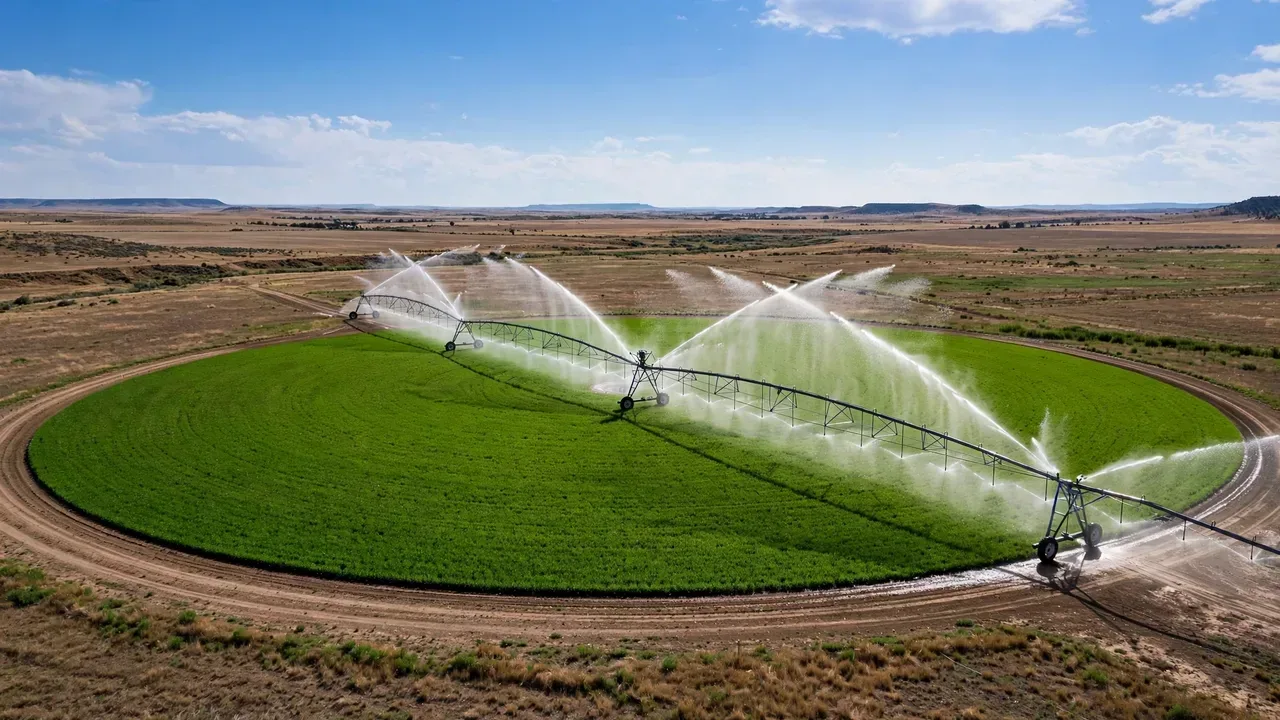
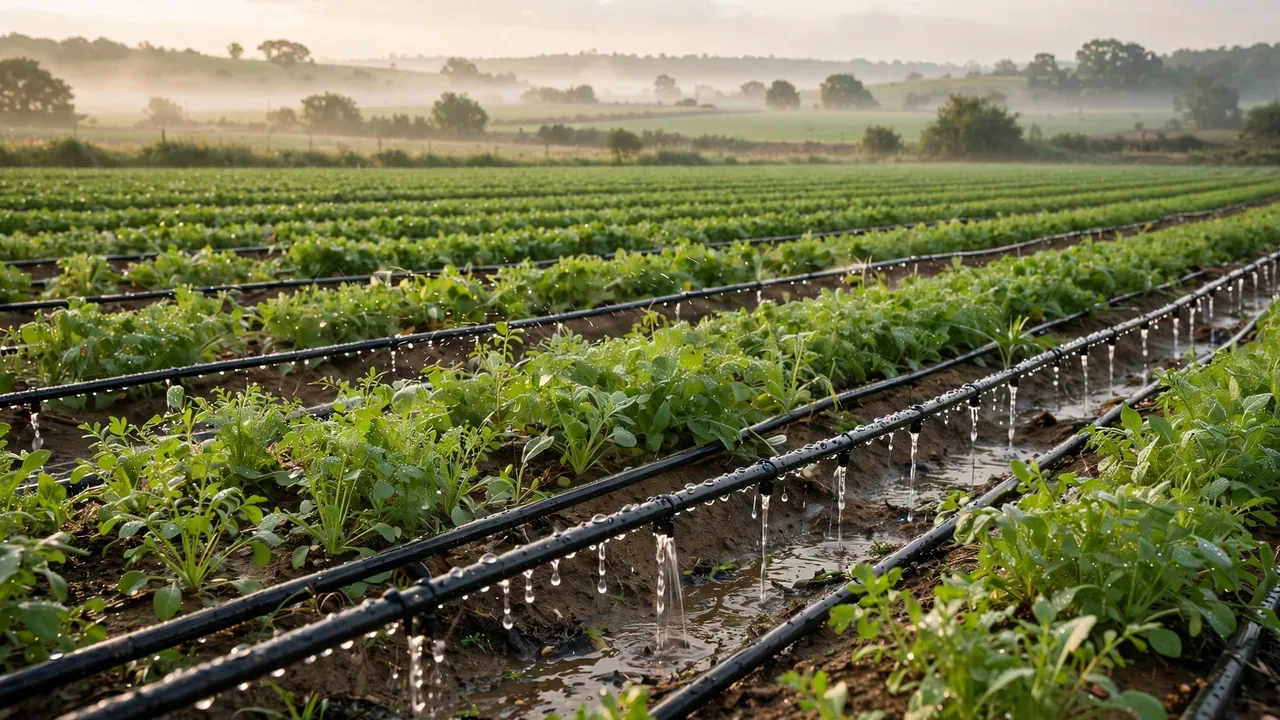
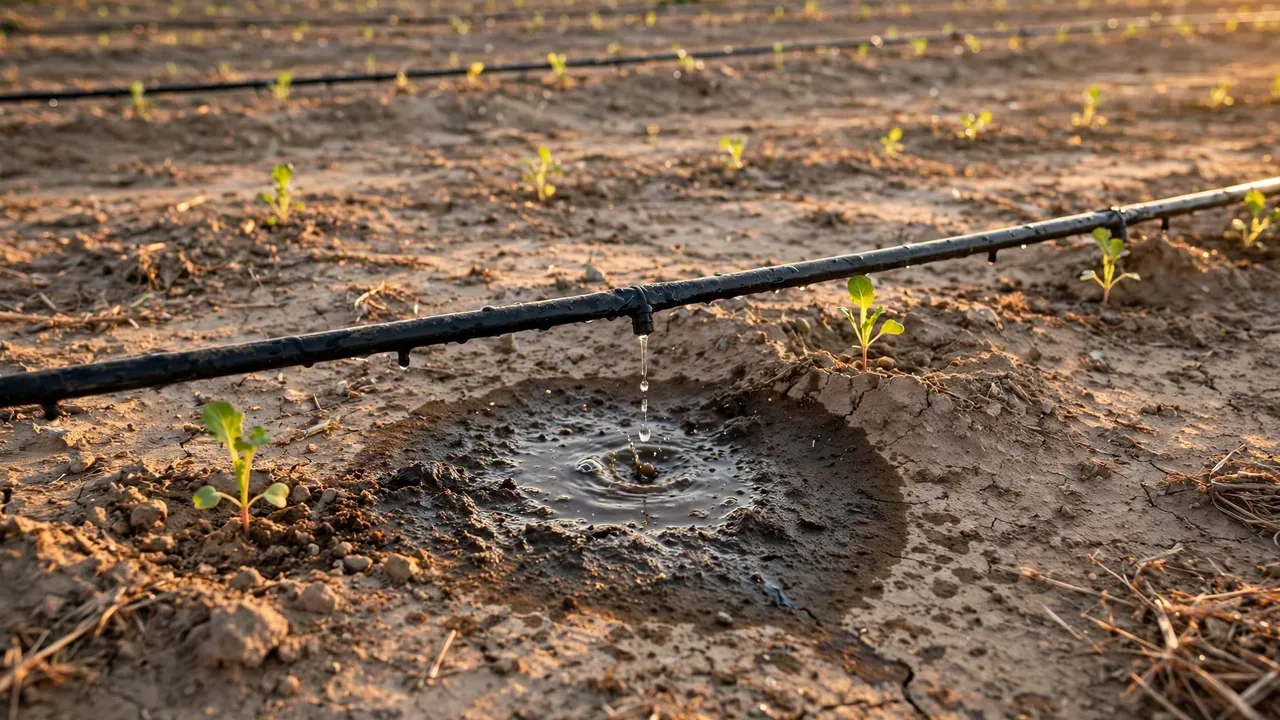
Drip irrigation delivers water directly to the root zone through emitters, with 85-95% efficiency — compared to 75-85% for sprinklers and 50-70% for flood/furrow. Benefits: 30-60% water savings, reduced weed growth (water only where crops grow), less disease (foliage stays dry), nutrient application through fertigation, and automation potential. Drip is ideal for vegetables, orchards, vineyards, and high-value row crops. It is less suitable for closely spaced crops like wheat orice (unless using drip tape). This guide covers irrigation run time calculator and related agricultural calculations to help you optimize your farm operations.
Key Components and Specifications
Emitter Flow Rate
Common emitter flow rates: 0.5 GPH (2 L/h) — for sandy soils, close spacing, small plants. 1 GPH (4 L/h) — standard for most vegetables and medium soils. 2 GPH (8 L/h) — for clay soils, wide spacing, large plants (trees, vines). 4 GPH (16 L/h) — for mature trees, high water demand. Pressure-compensating emitters maintain consistent flow regardless of pressure variations (important for long rows or hilly terrain). Non-compensating emitters are cheaper but flow varies with pressure.
Emitter Spacing
Spacing depends on crop and soil: Sandy soil: 20-30 cm (water moves down, not sideways). Loam: 30-50 cm. Clay: 50-75 cm (water movesideways more). Close-spaced crops (lettuce, strawberries): 15-30 cm. Row crops (tomato, pepper): 30-50 cm (one or two emitters per plant). Orchards/vineyards: 50-100 cm (multiplemitters per tree). The goal is overlapping wetting patterns — each plant's root zone should be fully wetted.
Pressure and Filtration
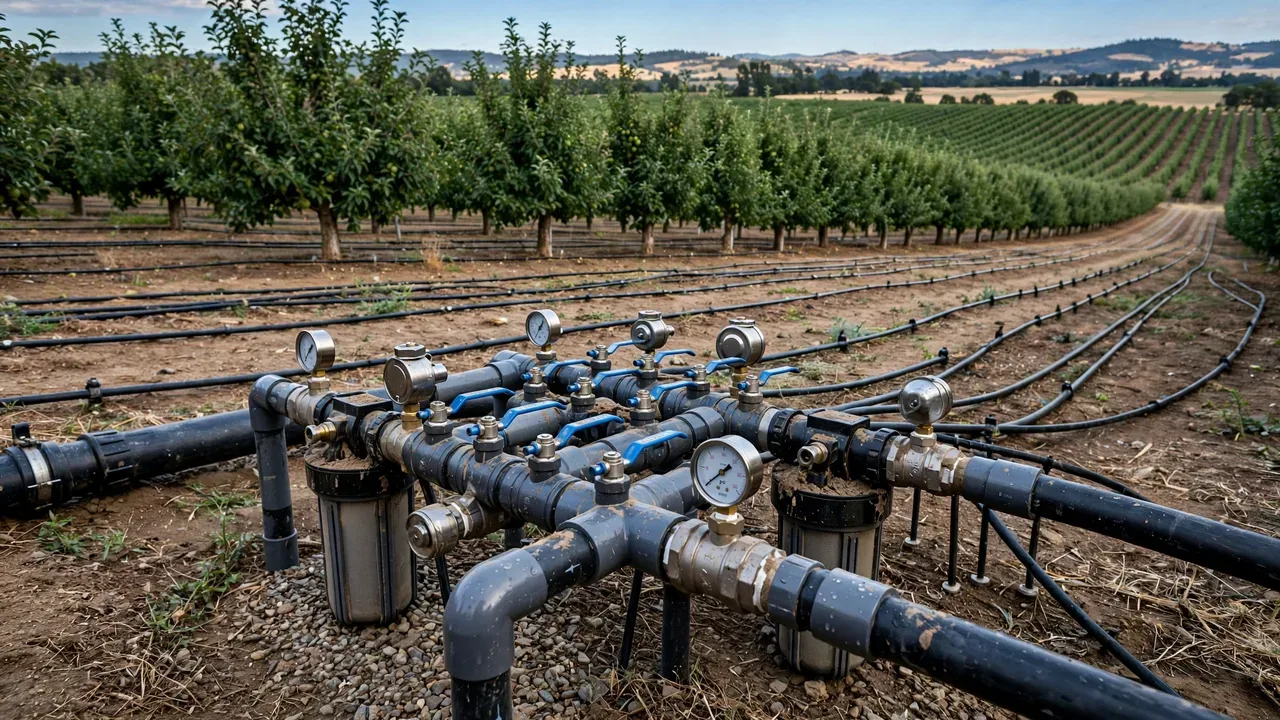
Most drip systems operate at 10-15 psi (0.7-1.0 bar). Too high pressure = emitter damage, uneven flow, misting. Too low = insufficient flow, uneven watering. Use a pressuregulator at the system inlet. Filtration is critical — emitters clog easily. Use: Screen filter (150 mesh) for clean water (municipal, well). Disc filter (120-150 mesh) for surface water (pond, canal). Sand/media filter for dirty water (canal, river with sediment). Flush lines monthly and inspect emitters quarterly.
Calculating Runtime
Step-by-Step Method
1. Determine daily crop water requirement (ETc = ETo × crop coefficient). Use local weather station data or evapotranspiration charts.
2. Calculate water needed per plant: Daily water (L) = ETc (mm/day) × plant area (m²) × 0.85 (efficiency). Example: tomato at peak demand (6 mm/day), plant spacing 0.5m × 1m = 0.5 m²: 6 × 0.5 × 0.85 = 2.55 L/day/plant.
3. Calculate total emitter output per plant: Total L/h = Number of emitters × Flow rate per emitter. Example: 2 emitters × 2 L/h = 4 L/h.
4. Calculate runtime: Hours = Water needed (L) ÷ Total emitter output (L/h). Example: 2.55 ÷ 4 = 0.64 hours = 38 minutes.
5. Adjust for soil type: Sandy soil: split into 2-3 shorter sessions (e.g., 15 min × 3) to reduce leaching. Clay soil: one longer session is fine, but don't exceed infiltration rate. Loam: one or two sessions.
Peak Water Requirements by Crop
Tomato: 4-7 mm/day (peak fruit production). Corn: 5-8 mm/day (tasseling/silking). Lettuce: 3-5 mm/day. Strawberry: 3-5 mm/day. Grape: 3-6 mm/day (veraison to harvest). Apple: 4-6 mm/day (fruit expansion). Alfalfa: 5-8 mm/day (regrowth after cutting). These are peak demands — reduce by 30-50% during establishment and late maturity stages.
Common Mistakes and Solutions
Over-Watering
Symptoms: yellow leaves, root rot, wilting despite wet soil, nutrient leaching (especially N), algae growth on soil surface. Causes: running too long, too frequent, wrong emitter size. Fix: reduce runtime by 20-30%, increase interval between waterings, check soil moisture with a probe or shovel (wet at 15-30 cm = adequate). Over-watering is more common and more damaging than under-watering in drip systems.
Under-Watering
Symptoms: wilting during hottest part of day (recovers at night = mild stress; doesn't recover = severe), small fruit, premature flowering, leaf curl. Causes: too short runtime, clogged emitters, insufficient pressure, wrong ET estimate. Fix: increase runtime by 20-30%, check and clean emitters, verify pressure, use local ET data. Mild water stress (wilting that recovers overnight) can actually improve fruit quality in some crops (grapes, tomatoes) but reduces yield.
Uneven Watering
Symptoms: some plants thrive, otherstruggle; streaks in the field; varying crop maturity. Causes: pressure variations (slope, long rows), clogged emitters, improper design (too many emitters one line), elevation changes. Fix: install pressuregulators, use pressure-compensating emitters, flush lines, redesign with shorterows or multiple zones, check elevation (each 1m elevation change = 1.4 psi pressure change).
Maintenance Schedule
Daily: check pressure gauge, look for leaks or broken lines, verify controller is running correctly. Weekly: inspect emitters for clogging, check soil moisture in 2-3 locations, flush end caps briefly. Monthly: flush main lines and submains, clean filters, check fertilizer injector ifertigating. Seasonally: pressure test system, replace damaged tubing, calibratemitter flow, winterize (blow out lines with compressed air in freezing climates). A well-maintainedrip system lasts 10-15 years; a neglected one may fail in 2-3 years.
Calculate your irrigation: Use our Irrigation Calculator for field-level water requirements. Check Temperature & Humidity to monitor evapotranspiration conditions.
Related Calculators
Related Guides
Frequently Asked Questions
How do I calculate water requirements for a drip irrigation system?
Calculate crop water requirement using: ETc = ETo × Kc, where ETo is reference evapotranspiration (from local weather station) and Kc is the crop coefficient (varies by growth stage: 0.3-0.5 initial, 0.8-1.2 mid-season, 0.6-0.8 late). For a tomato crop in mid-season with ETo = 0.25 inches/day and Kc = 1.1: ETc = 0.275 inches/day. Adjust for irrigation efficiency (drip = 90-95%): Net water needed = ETc / efficiency. Account for effective rainfall: subtract rain from irrigation requirement. Use a crop water requirement calculator to determine daily, weekly, and seasonal water needs for your specific crop and location.
What emitter flow rate and spacing should I use for drip irrigation?
Emitter selection depends on crop type, soil texture, and water availability. For row crops (vegetables, strawberries): 0.5-1.0 GPH (2-4 L/h) emitters spaced 12-24 inches (30-60 cm) apart, with one drip line per 2-4 crop rows. For orchards/vineyards: 1-4 GPH (4-16 L/h) emitters, 2-4 emitters per tree/vine, placed in a wetted pattern covering 30-50% of the root zone. For sandy soils: closer spacing (12 inches) and higher flow rates; for clay soils: wider spacing (24-36 inches) and lower flow rates to avoid runoff. Use a drip system designer calculator to match emitter specifications to your crop and soil conditions.
How do I size the pipes and pump for a drip irrigation system?
Pipe sizing: Calculate total flow rate (GPM) = number of emitters × emitter flow rate (GPH) / 60. For 1,000 emitters at 1 GPH: 1,000 × 1 / 60 = 16.7 GPM. Size mainline and submain pipes to keep velocity below 5 ft/s (1.5 m/s) and friction loss below 5-10% of operating pressure. Use the Hazen-Williams equation or a drip system designer calculator. Pump sizing: Required pressure = emitter operating pressure (typically 10-25 PSI for drip) + friction loss in pipes + elevation difference + filter pressure loss (5-10 PSI) + safety margin. Required flow = total system GPM. Use an irrigation pump size calculator to match pump capacity to your system's combined GPM and pressure requirements.
How do I create an irrigation schedule for drip systems throughout the season?
A drip irrigation schedule adjusts with crop growth stage and weather. Initial stage (first 2 weeks after planting): light, frequent applications — 15-30 minutes every 1-2 days, applying 0.1-0.2 inches (3-5 mm) to keep the top 6 inches moist. Vegetative growth: increase to 30-60 minutes every 2-3 days, 0.3-0.5 inches (8-13 mm). Flowering/fruiting (peak water use): 60-120 minutes every 1-2 days, 0.5-1.0 inches (13-25 mm). Maturation/ripening: reduce by 30-50% to improve fruit quality and sugar content. Calculate daily ET = ETo × Kc and adjust schedule weekly. Use an irrigation schedule calculator to generate a season-long calendar. Install soil moisture sensors to automate and validate scheduling — irrigate when soil moisture drops to 50-60% of field capacity.
What filtration is required for drip irrigation and how do I maintain it?
Filtration is critical for drip systems — emitter clogging is the #1 maintenance problem. Required filtration level depends on water source: Surface water (pond, canal, river): 100-150 mesh (100-150 micron) screen or disc filter, plus a sand media filter for algae and organic matter. Well water: 150-200 mesh (75-100 micron) screen filter. Municipal water: 200 mesh screen. Maintenance: Flush filters weekly (screen filters) or backwash daily (sand media filters). Clean screens with a soft brush — never use wire brushes that damage the screen. Replace damaged screens immediately. Install a pressure gauge before and after the filter — a pressure difference >5 PSI indicates the filter needs cleaning. Use a filter sized for 2x your peak flow rate to reduce cleaning frequency.
How do I prevent and fix emitter clogging in drip irrigation?
Emitter clogging causes: physical (sand, silt, organic debris), chemical (precipitation of calcium, iron, manganese from fertilizer injection), biological (algae, bacterial slime, biofilm). Prevention: Proper filtration (matched to water source), regular flushing of lateral lines (flush 2-4 times per season, or monthly during heavy use), acid injection (phosphoric or nitric acid at pH 5.5-6.0 to dissolve mineral precipitates, 1-2 times per season), chlorine injection (1-2 ppm free chlorine for biological growth, monthly), and avoid injecting incompatible fertilizers (e.g., calcium + phosphate = precipitation). Fix: For clogged emitters, first flush laterals, then perform acid/chlorine treatment. Severely clogged emitters may need replacement. Use a drip system designer to plan maintenance access points (flushing valves at the end of each lateral).