How to Read a Soil Test Report
A soil test reportells you exactly what your soil needs — if you know how to read it. The key numbers are pH, phosphorus (P), potassium (K), organic matter, and cation exchange capacity (CEC). Match these to your crop's requirements, then calculate fertilizer with our calculator. This guide walks you through every section.
Why Soil Testing Matters
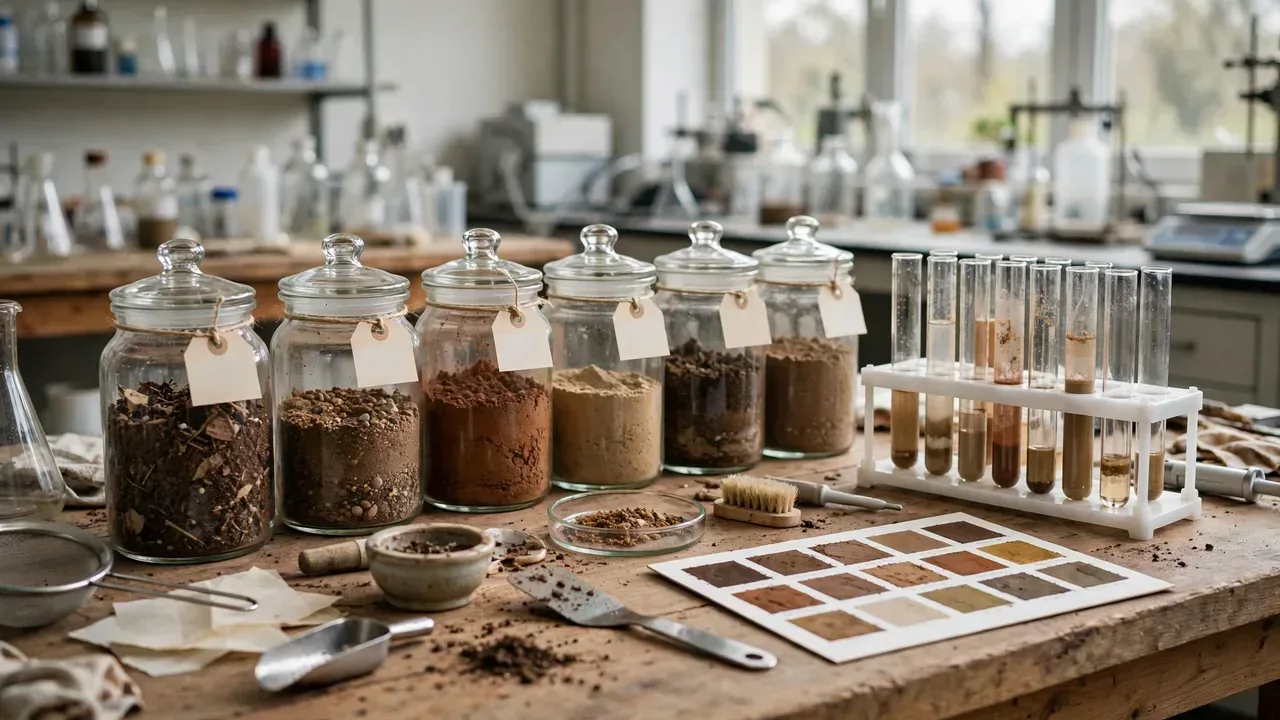
Soil testing is the foundation of nutrient management. Without test results, you are guessing — and guessing costs money. Over-fertilization wastes input dollars and pollutes waterways. Under-fertilization limits yield. A $20-30 soil test can save hundreds in unnecessary fertilizer and uncover hidden problems like low pH or micronutrient deficiencies.
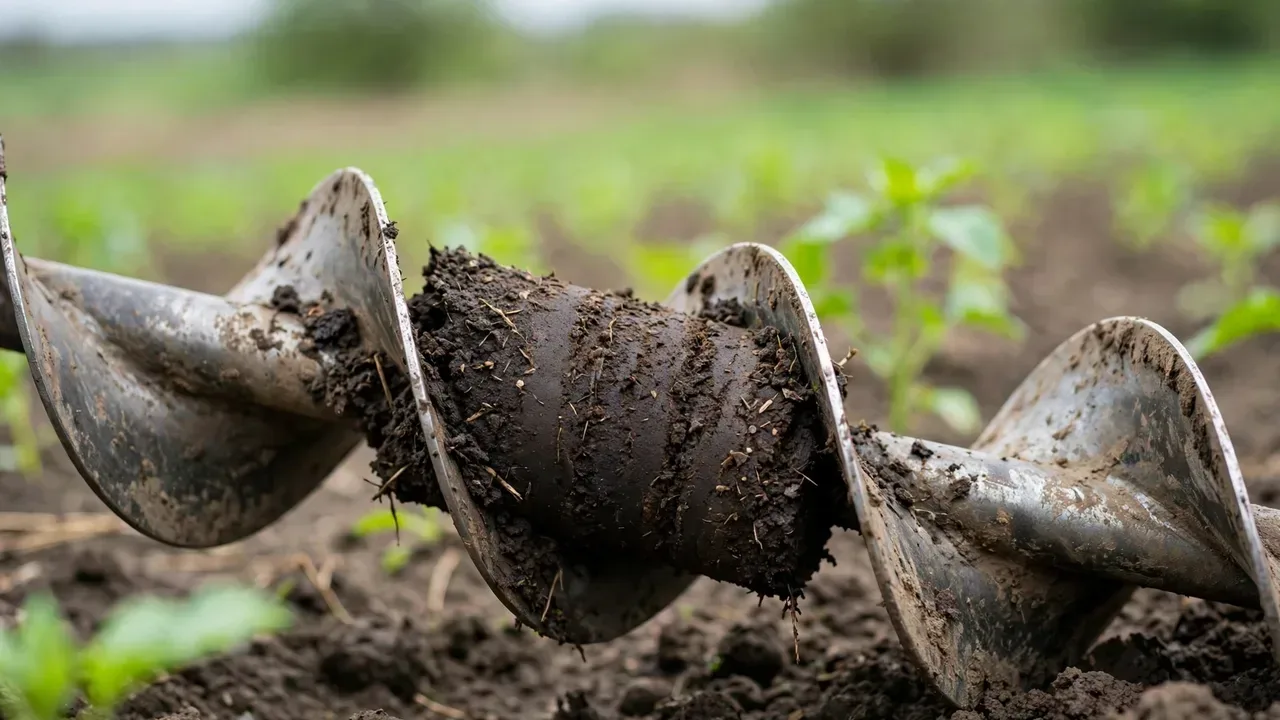
Test every 2-3 years for established fields, and annually for high-value vegetable crops or fields with known problems. Sample in fall after harvest, or early spring before fertilization. Take 10-15 cores from each uniform area, mix thoroughly, and submit 1-2 cups. Avoid sampling near fertilizer bands, lime piles, or field edges.
Understanding the Basic Numbers
pH: The Master Variable
Soil pH measures acidity on a 1-14 scale. Most crops prefer 6.0-7.0. Below 5.5, phosphorus locks up and aluminum becomes toxic. Above 7.5, iron, zinc, and manganese become unavailable. pH is the firsthing to fix — no fertilizer program works well at the wrong pH. Use our Soil pH Calculator to determine lime or sulfur needs.
N-P-K: The Big Three
Nitrogen (N): Most soil tests do not measure N reliably because it changes constantly. Instead, labs give N recommendations based on crop, yield goal, and previous crop. Organic matter content helps estimate N mineralization potential.
Phosphorus (P): Reported as ppm (parts per million) or Bray P1 / Olsen P. Critical levels: 10-15 ppm for most crops. Below 10 ppm = responsive to P fertilizer. Above 30 ppm = no P needed (and potential runoff risk).
Potassium (K): Reported as ppm. Critical levels: 100-150 ppm for most crops. Below 80 ppm = definitely need K. Above 200 ppm = maintenance only. Sandy soils need more frequent K testing because it leaches.
Organic Matter: The Soil Health Indicator
Organic matter (OM) is the single best indicator of overall soil health. Target: 3-5% for most agricultural soils. Each 1% increase in OM adds about 20 kg/ha of plant-available N annually through mineralization. OM improves water-holding capacity (each 1% holds ~150,000 L/ha of water), soil structure, microbial activity, and nutrient retention. Building OM takes years — cover crops, reduced tillage, and manure/compost additions are the most effective practices.
Advanced Metrics
Cation Exchange Capacity (CEC)
CEC measures the soil's ability to hold and release positively charged nutrients (Ca, Mg, K, Na, H). Reported in meq/100g. Sandy soils: 5-10, loams: 10-20, clays: 20-40, organic soils: 40+. Higher CEC = more nutrient-holding capacity = less frequent fertilizationeeded. Low CEC soils need split applications because nutrients leach quickly.
Base Saturation
Base saturation shows the percentage of CEC occupied by each cation. Ideal ranges: Calcium 60-70%, Magnesium 10-20%, Potassium 2-5%, Hydrogen 10-20% (acid soils). The "ideal soil" concept (60% Ca, 20% Mg, 10% K) is debated — most agronomists now focus on sufficient levels rather than exact ratios. But if Mg is below 10% or K below 2%, deficiencies are likely.
Micronutrients
Most basic tests include: Boron (B), Zinc (Zn), Manganese (Mn), Iron (Fe), Copper (Cu), Sulfur (S). Deficiencies are most common in: high pH soils (Fe, Zn, Mn), sandy soils (B, S), and high organic matter soils (Mn, Cu). Micronutrients are needed in tiny amounts — over-application can be toxic. Always confirm deficiency with a tissue test before applying.
Putting It All Together
1. Check pH first — amend if outside 6.0-7.0 for most crops.
2. Check P and K levels — apply if below critical threshold.
3. Estimate N needs based on crop, yield goal, OM, and previous crop (legume credit).
4. Check micronutrients — addresspecific deficiencies.
5. Use our Fertilizer Calculator to convert nutrient needs into actual fertilizer products and amounts.
6. Apply in split doses for N (basal + topdress) to improve efficiency and reduce losses.
7. Re-test in 2-3 years to monitor trends and adjust your program.
Next step: Use our Fertilizer Calculator to turn your soil test numbers into a precise fertilizer plan. Or check Organic Fertilizer Calculator for manure and compost nutrient values.
Frequently Asked Questions
What do the numbers on a soil test report mean?
A standard soil test report includes: (1) pH — measure of acidity/alkalinity (1–14 scale, 7 = neutral); (2) Buffer pH (or lime requirement index) — measures soil's resistance to pH change, used to calculate lime needs; (3) Phosphorus (P) — reported as ppm (Bray-1 or Olsen method); (4) Potassium (K) — ppm; (5) Calcium (Ca) and Magnesium (Mg) — ppm; (6) Cation Exchange Capacity (CEC) — meq/100g, measures soil's nutrient holding capacity; (7) Base saturation — % of CEC occupied by Ca, Mg, K, H; (8) Organic matter — %; (9) Nitrate-N (if tested) — ppm. Each lab uses different extractants and rating scales (Low, Medium, High, Very High) — always compare to that lab's specific recommendations. A soil test calculator helps interpret these numbers.
How do I interpret soil pH and buffer pH?
Soil pH indicates current acidity: below 5.5 = strongly acidic (aluminum toxicity risk, nutrient imbalance); 5.5–6.0 = moderately acidic (may need lime for some crops); 6.0–7.0 = ideal for most crops; 7.0–7.5 = slightly alkaline (acceptable for most, but micronutrient availability declines); above 7.5 = alkaline (iron, zinc, manganese deficiency risk). Buffer pH (or SMP buffer, Sikora buffer) measures how much lime is needed — a lower buffer pH (e.g., 6.2) means the soil resists pH change more and needs more lime than a soil with the same water pH but higher buffer pH (e.g., 6.8). The difference between water pH and buffer pH determines lime requirement. Use a lime application rate calculator with your buffer pH for precise recommendations.
What is CEC and why does it matter for fertilizer planning?
Cation Exchange Capacity (CEC) measures the soil's ability to hold and exchange positively charged nutrients (Ca²⁺, Mg²⁺, K⁺, NH₄⁺, H⁺). CEC is determined primarily by clay content and organic matter: Sandy soils: 1–5 meq/100g (low CEC, low nutrient holding, frequent light fertilizer applications needed); Loam soils: 5–15 meq/100g (moderate); Clay soils: 15–30+ meq/100g (high CEC, high nutrient holding, less frequent but larger applications). Each 1% organic matter adds ~1–2 meq/100g CEC. High CEC soils can hold more nutrients but may need more lime to change pH. Low CEC soils are prone to nutrient leaching (especially K and nitrate) and benefit from split applications. A soil organic matter calculator helps track CEC improvements.
How do I convert soil test ppm to fertilizer application rates?
To convert soil test results to fertilizer needs: (1) Determine the crop's nutrient requirement (lb/acre) based on yield goal and soil test level; (2) Soil test rating tells you how much of the nutrient is already available — Low = full recommendation, Medium = 50–75% recommendation, High = 25–50% or none, Very High = none; (3) For P: 1 ppm Bray-1 P ≈ 2 lb/acre available P₂O₅ (rough conversion); (4) For K: 1 ppm exchangeable K ≈ 2 lb/acre available K₂O; (5) Calculate fertilizer needed: Fertilizer (lb/acre) = Nutrient needed (lb/acre) ÷ (Nutrient % in fertilizer ÷ 100). Example: Need 100 lb P₂O₅/acre, using 0-46-0 (DAP): 100 ÷ 0.46 = 217 lb/acre DAP. A fertilizer calculator automates these conversions for any fertilizer grade.
What is base saturation and what are the ideal ratios?
Base saturation expresses the percentage of CEC occupied by each base cation: Calcium (Ca): 60–80% is ideal; Magnesium (Mg): 10–20%; Potassium (K): 2–5%; Hydrogen (H): remainder (indicates acidity). The so-called 'ideal' ratios (Ca 60–70%, Mg 10–15%, K 2–5%) are sometimes promoted as the 'base cation saturation ratio' (BCSR) method, but most university agronomists recommend the 'sufficiency level' (SLAN) approach instead — ensuring each nutrient is above the minimum sufficiency level rather than targeting exact ratios. Ratios matter most when one cation is severely excessive (e.g., high K can interfere with Mg uptake, high Mg can interfere with Ca). Use a soil test calculator to check if your ratios are within acceptable ranges.
How often should I soil test and what's the best sampling method?
Soil test every 2–3 years for established fields, and annually for high-value vegetable crops or when making major management changes. Best sampling method: (1) Sample when soil is moist but not wet (avoid frozen or extremely dry soil); (2) Use a soil probe or auger to collect cores from 0–6 inches (plow layer) or 0–8 inches for no-till/pasture; (3) Collect 15–20 cores from a uniform area (one sample = one management zone, not the whole farm); (4) Avoid sampling near fertilizer bands, old fence rows, wet spots, or field edges; (5) Mix cores thoroughly in a clean bucket, remove rocks and debris, take 1–2 cups subsample; (6) Label with field ID, date, and crop history; (7) Send to a reputable lab within 24–48 hours (air-dry if shipping delayed). Consistent sampling depth and method are critical for meaningful trend comparison over years.