Soil Volume & Weight Calculator
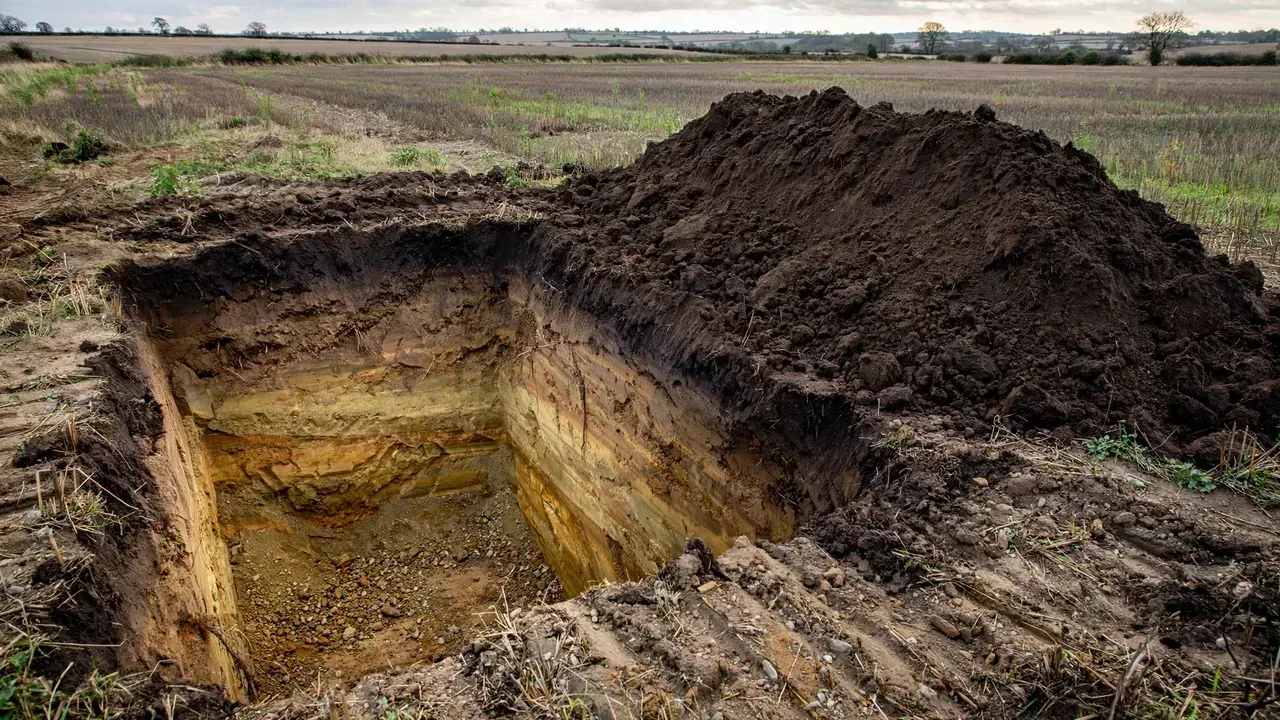
Calculate the volume of soil needed for raised beds, garden plots, or landscaping projects, and estimate the total soil weight using bulk density. Essential for ordering topsoil, compost, or fill dirt.
Results
Formula & How It Works
Volume (cubic feet) = Length (ft) × Width (ft) × Depth (ft), where Depth (ft) = Depth (inches) ÷ 12
Volume (cubic yards) = Cubic Feet ÷ 27 (since 1 cubic yard = 3 ft × 3 ft × 3 ft = 27 cu ft)
Soil Weight (lb) = Volume (cu ft) × Bulk Density (lb/cu ft)
Bulk density varies by material: topsoil ~75-90 lb/cu ft, compost ~50-65 lb/cu ft, sand ~90-100 lb/cu ft, clay ~80-100 lb/cu ft. Moisture significantly increases weight.
Calculation Example
A raised bed 100 ft long, 50 ft wide, filled 6 inches deep (0.5 ft): Volume = 100 × 50 × 0.5 = 2,500 cu ft = 92.59 cu yd.
At 80 lb/cu ft bulk density: Weight = 2,500 × 80 = 200,000 lb = 100 tons. A typical dump truck carries 10-15 cu yd, so this would need ~7 truckloads.
How to Use This Calculator
1. Measure the length and width of the area in feet. 2. Determine the desired soil depth in inches (6-12" for raised beds, 2-4" for topdressing). 3. Enter the bulk density of your soil material — use 80 for general topsoil, 55 for compost, 95 for sand. 4. Click Calculate to see volume and weight.
About This Tool
Soil volume calculations are critical for ordering the right amount of material. Bulk density measures the mass of dry soil per unit volume, including pore space. Compacted soils have higher bulk density (1.4-1.8 g/cm³) while well-structured topsoils are lower (1.0-1.3 g/cm³). One cubic yard of typical topsoil weighs approximately 1.0-1.3 tons depending on moisture content.
Applicability: Designed for temperate and subtropical soils, applicable to farming systems across North America and Europe.
References & Sources:
- Source: USDA NRCS, Soil Health and Nutrient Management Guide, National Agronomy Manual, 2024.
- Reference: University of Minnesota Extension, Soil Fertility and Nutrient Management, 2024.
- Reference: ASABE Standard S394.1, Soil Testing and Fertilizer Recommendations.
Reviewed by Agricalc Editorial Team — Agricultural engineers and agronomists with 10+ years of field experience. Our team verifies every calculator formula against peer-reviewed extension publications. For site-specific advice, consult your local agronomist.
Common Mistakes & Tips
Common mistakes: Ordering by weight instead of volume — soil weight varies wildly with moisture (a cu yd can weigh 1.0 tons dry vs 1.5 tons wet). Forgetting compaction — delivered soil fluffs up during transport and settles 15-25% after spreading, so order 20% extra. Using garden soil bulk density for compost — compost is much lighter, roughly half the weight per cubic yard.
References & Sources
- FAO (Food and Agriculture Organization) — Agricultural production and nutrition guidelines
- USDA NRCS — Field Office Technical Guide and conservation practice standards
- Land-Grant University Cooperative Extension System — crop and livestock recommendations
- USDA NRCS — Soils
- FAO — Soils Portal