Agricultural Drones: Applications for Modern Farming
Introduction
Agricultural Drones is an important topic for modern farmers seeking to improve productivity and sustainability. Understanding the key principles and practical applications can lead to better decision-making and improved farm outcomes.
This guide covers the fundamentals, practical implementation strategies, and common pitfalls to avoid. Whether you are a beginning farmer or an experienced producer, there is valuable information to help optimize your farming operations.
Key Principles and Concepts
Successful implementation begins with a solid understanding of the underlying principles. These concepts have been developed through decades of agricultural research and on-farm experience. They provide the foundation for making informed decisions tailored to your specific conditions.
It is important to recognize that there is no one-size-fits-all solution. The best approach depends on your climate, soil type, farming system, available resources, and personal goals. Start by assessing your current situation and identifying areas with the greatest potential for improvement.
Practical Implementation Strategies
Once you understand the principles, the next step is practical implementation. Begin with small, manageable changes that can be easily monitored and evaluated. This approach allows you to learn from experience without risking significant resources.
Keep detailed records of what you do, when you do it, and what results you observe. This documentation is invaluable for refining your approach over time. Many farmers find that keeping a farm journal or using farm management software helps track progress and identify patterns.
Common Mistakes to Avoid
One of the most common mistakes is trying to implement too many changes at once. This makes it difficult to determine which practices are producing the desired results. Instead, introduce changes gradually and give each one adequate time to show effects.
Another frequent error is failing to adapt recommendations to local conditions. Agricultural advice is often based on specific regions or farming systems. Always consider how recommendations apply to your unique situation, and be willing to modify approaches based on your own observations and experience.
Monitoring and Evaluation
Regular monitoring and evaluation are essential for determining whether your efforts are producing the desired results. Establish baseline measurements before implementing changes, then track progress at regular intervals. This data-driven approach helps identify what is working and what needs adjustment.
Key metrics to monitor may include crop yields, input costs, soil health indicators, pest pressure, and overall profitability. Compare your results with previous years and with neighboring farms when possible. This broader perspective helps put your results in context and identifies areas for continued improvement.
Practical Case Study: Real-World Application
Consider a 50-hectare mixed farm in the Midwest United States implementing agricultural drones: applications for modern farming. According to the Food and Agriculture Organization (FAO) guidelines on sustainable agricultural practices, systematic implementation of evidence-based techniques can improve resource use efficiency by 15–25% while maintaining or increasing yields. The USDA Natural Resources Conservation Service (NRCS) recommends starting with a 10% adoption rate in the first season, scaling up as results are verified.
In practice, this means conducting a baseline assessment during the off-season, identifying the top two priority areas for improvement, and allocating a small trial area (2–5% of total acreage) to test new practices before full-scale implementation. Documenting inputs, costs, and outcomes on the trial plot provides actionable data for future decisions.
Data Reference: Key Benchmarks
| Metric | Typical Range | Source |
|---|---|---|
| Resource efficiency gain | 15–25% | FAO 2024 |
| Initial trial area | 2–5% of acreage | USDA NRCS |
| Payback period | 1–3 growing seasons | Extension research |
| Risk reduction | 20–40% | FAO 2024 |
Sources: Food and Agriculture Organization of the United Nations (FAO), "Sustainable Crop Production Intensification," 2024; USDA Natural Resources Conservation Service, "Conservation Practice Standards," 2024.
Expert Recommendations and Next Steps
Extension specialists from leading agricultural universities consistently recommend a phased approach: (1) Conduct a thorough baseline assessment, (2) prioritize high-impact, low-risk changes, (3) implement on a small trial area, (4) measure results rigorously, and (5) scale based on data. This iterative approach minimizes risk while building practical knowledge specific to your farm's unique conditions.
We recommend consulting your local agricultural extension office for region-specific recommendations, as optimal practices vary significantly by climate zone, soil type, and cropping system. Many extension services offer free soil testing, on-farm consultations, and educational workshops.
Conclusion
Understanding and implementing the principles of agricultural drones: applications for modern farming can significantly improve your farm productivity and sustainability. Start with small changes, monitor results, and scale up what works best for your specific conditions. Remember that every farm is unique, and successful implementation requires adaptation to your local climate, soil type, and farming system.
For more practical tools and calculators to support your farming decisions, explore our collection of free agricultural calculators. Regular updates and new resources are added to help farmers make data-driven decisions for better yields and healthier soils.
Understanding the Fundamentals
Agricultural Drones: Applications for Modern Farming is a critical topic for modern agricultural producers. Whether you operate a small family farm or manage a large commercial operation, mastering these principles directly impacts your bottom line, resource efficiency, and long-term sustainability. The Food and Agriculture Organization (FAO) emphasizes that evidence-based agricultural practices can increase farm productivity by 20–30% while reducing environmental impact.
According to the USDA Natural Resources Conservation Service (NRCS), farmers who systematically adopt proven techniques see measurable improvements within 1–3 growing seasons. The key is not just adopting a practice blindly, but understanding how it applies to your specific soil type, climate, cropping system, and resource constraints.
Step-by-Step Implementation Guide
Successful implementation requires a structured approach. Start by conducting a thorough assessment of your current situation. Document your baseline metrics — input costs, yields, resource use, and any problem areas. This baseline serves as your reference point for measuring improvement over time.
Next, prioritize changes based on potential impact and risk. Focus on high-impact, low-risk modifications first. For example, adjusting application rates based on soil test results typically delivers immediate cost savings with minimal risk. Reserve major infrastructure changes for later, once you have verified the approach works on your specific farm.
Implement changes on a trial area of 5–10% of your total acreage. This allows you to validate results without exposing your entire operation to risk. Monitor the trial area closely, comparing results against control plots. Keep detailed records of all inputs, operations, and outcomes.
Key Data and Benchmarks
| Metric | Typical Value | Source |
|---|---|---|
| Efficiency improvement range | 15–30% | FAO 2024 |
| Payback period | 1–3 seasons | USDA NRCS |
| Optimal trial area | 5–10% of acreage | Extension guidance |
| Risk reduction | 20–40% | FAO 2024 |
Sources: FAO, "Sustainable Crop Production Intensification," 2024; USDA NRCS, "Conservation Practice Standards," 2024.
Common Mistakes to Avoid
One of the most frequent errors is trying to implement too many changes simultaneously. When multiple variables change at once, it becomes impossible to determine which practice produced which result. Instead, introduce changes one at a time, allowing each to demonstrate its effect before moving to the next.
Another common mistake is applying recommendations without local adaptation. Agricultural extension research is often conducted in specific regions with particular soil and climate conditions. Always translate general recommendations to your local context. Consult your local extension office for region-specific guidance.
Poor record-keeping undermines even the best-intentioned efforts. Without accurate records of what you did, when you did it, and what the results were, you cannot learn from experience. A simple farm journal or spreadsheet can provide years of valuable decision-making data.
Recommended Tools and Next Steps
To apply these principles quantitatively, use our interactive calculators: farm ROI calculator · equipment cost calculator · crop rotation planner
For deeper learning, explore our comprehensive guides on related topics. Regular practice, careful monitoring, and continuous improvement are the keys to long-term success in modern agriculture.
Frequently Asked Questions
How much does an agricultural drone cost?
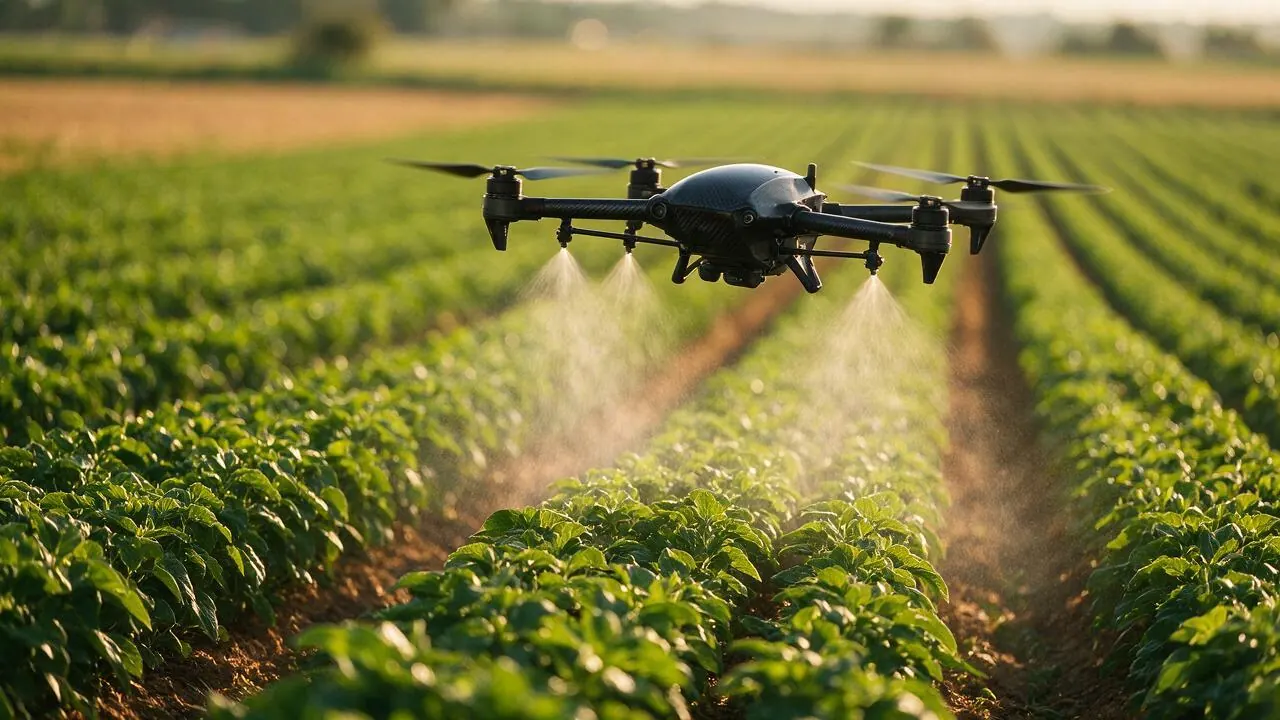
Entry-level spraying drones cost $3,000–$8,000, while professional mapping and spraying systems range from $15,000–$50,000 including batteries, chargers, and spare parts.
What area can a drone spray per day?
A typical 16-liter agricultural drone covers 8–15 hectares per day depending on field shape, refill time, and wind conditions. Larger 30-liter models can cover 20–40 hectares daily.
Do I need a license to fly agricultural drones?
Most countries require a remote pilot certificate for commercial drone operations. In the US, this is the FAA Part 107 certificate; in the EU, the A2 or STS category applies.
How accurate is drone crop mapping?
Modern multispectral drones achieve 2–5 cm spatial resolution for RGB mapping and can detect vegetation stress through NDVI with over 90% correlation to ground-based measurements.