Soil pH Correction: How to Calculate Lime Application Rates
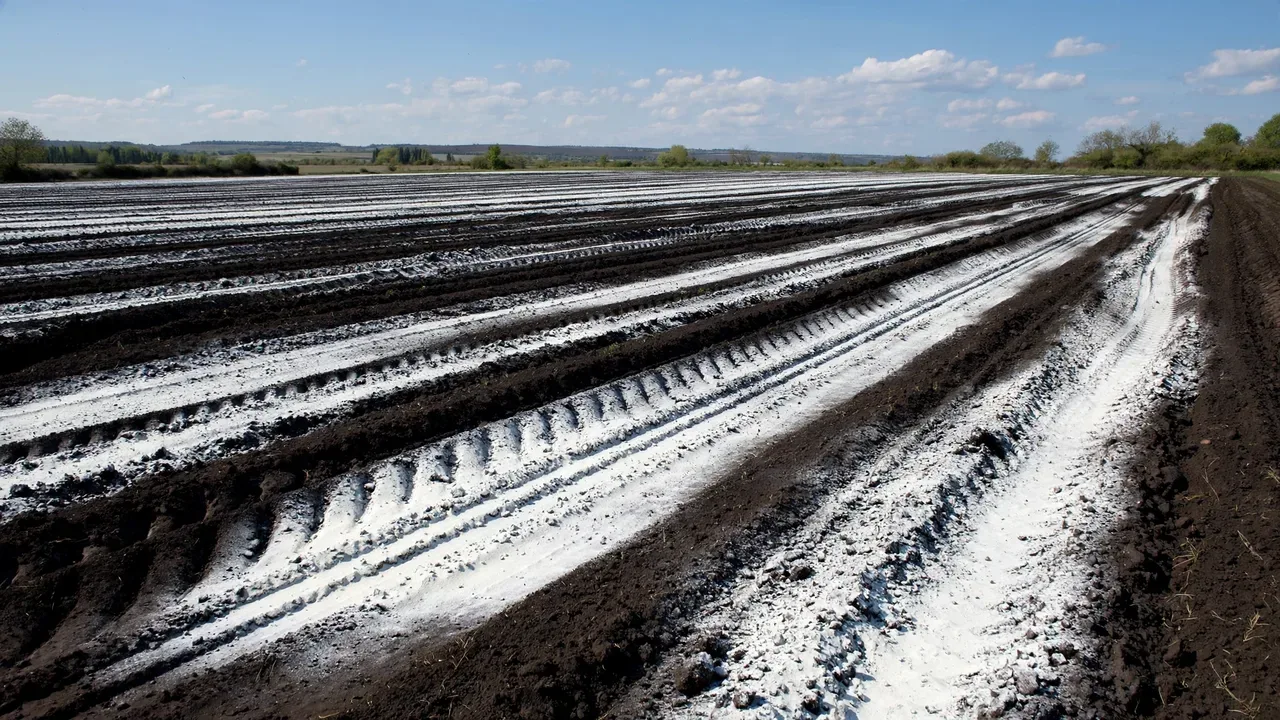
Soil pH is the master variable of soil fertility. When pH drops below the optimal range for your crop, nutrients become unavailable, toxic elements like aluminum and manganese become soluble, and beneficial soil organisms struggle. Applying agricultural lime is the most effective way to correct soil acidity, but getting the rate right is essential — too little wastes money and leaves the problem unresolved, while too much can overcorrect and create new nutrient imbalances. This guide explains how to calculate lime application rates accurately.
Understanding Soil pH and Why It Matters
Soil pH measures the concentration of hydrogen ions in soil solution a logarithmic scale of 0–14. A pH of 7.0 is neutral; below 7.0 is acidic, above 7.0 is alkaline. Most field crops prefer a slightly acidic to neutral pH of 6.0–7.0. At pH below 5.5, aluminum toxicity can stunt root growth, and essential nutrients like phosphorus, calcium, magnesium, and molybdenum become less available. At pH above 7.5, iron, manganese, zinc, and boron can become deficient.
It is important to note that soil pH is not the same as the soil's total acidity. A soil with pH 5.5 and high organic matter or clay content may have much more reserve acidity than a sandy soil at the same pH. This why a simple pH measurement alone is not enough to calculate lime needs — you also need a measure of the soil's buffering capacity.
Buffer pH: The Key to Lime Rate Calculation
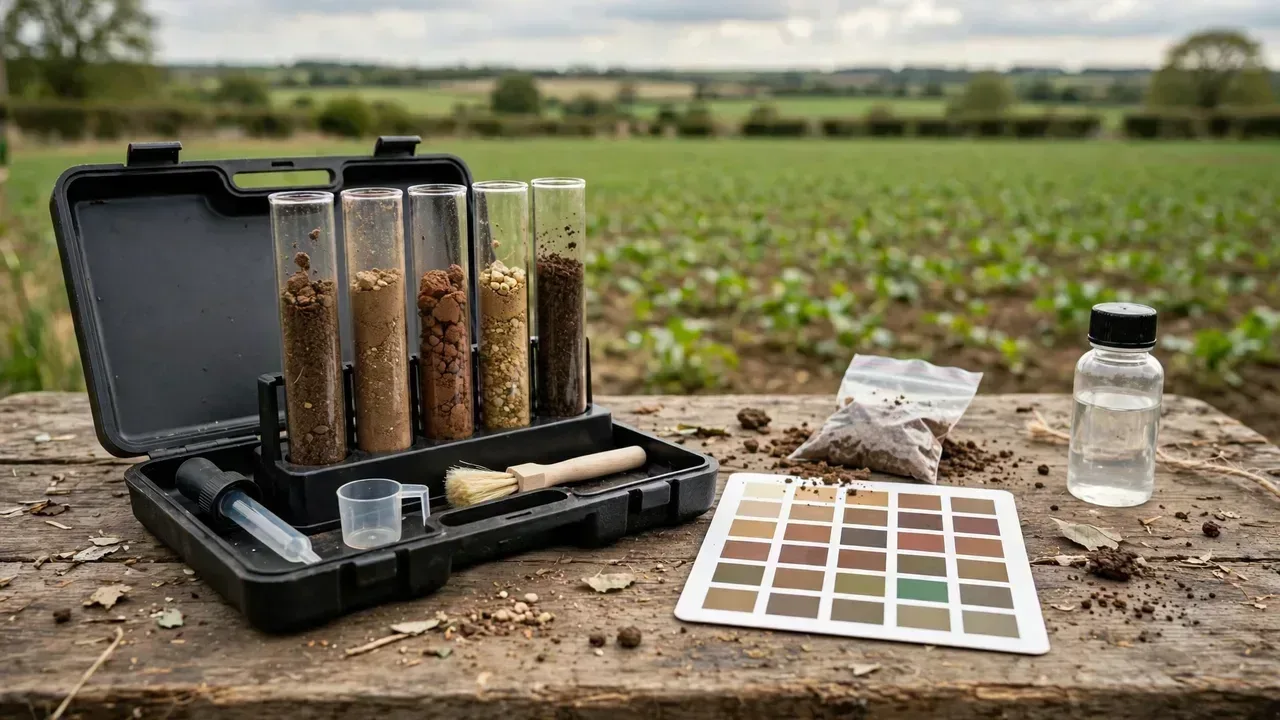
Buffer pH (also called lime requirement index or SMP buffer pH) measures the soil's resistance to pH change — its buffering capacity. A soil test laboratory mixes the soil with a buffered solution and measures how much the solution's pH drops. A larger drop means the soil has more reserve acidity and requires more lime to raise pH.
The relationship between buffer pH and lime requirement is calibrated by each lab. For example, using the commonly referenced Woodruff or SMP buffer:
- Buffer pH 6.8–7.0: very low lime requirement (0–1 ton/acre)
- Buffer pH 6.5–6.7: moderate requirement (1–2 tons/acre)
- Buffer pH 6.2–6.4: high requirement (2–4 tons/acre)
- Buffer pH below 6.2: very high requirement (4+ tons/acre)
Always use the lime recommendation from the same lab that ran your soil test, because buffer methods and calibrations differ. Our Soil pH Calculator can help you estimate lime needs based on your soil test values.
ECCE: Effective Calcium Carbonate Equivalent
Not all lime is equally effective. The quality of agricultural lime is measured by its Effective Calcium Carbonate Equivalent (ECCE), which combines three factors:
- Calcium carbonate equivalent (CCE): The purity of the lime, expressed as a percentage of pure CaCO₃. High-calcium limestone is typically 90–98% CCE; dolomitic limestone is 95–108% (because MgCO₃ has a higher neutralizing value per mole).
- Fineness: Finer particles react faster. Lime passing a 60-mesh sieve is considered 100% effective; material retained on 8–20 mesh reacts slowly (30–50% effective); coarse material (>8 mesh) is largely ineffective in the short term.
- Moisture content: Wet lime weighs more but contains less active material per ton.
ECCE is calculated as: CCE × fineness factor × (1 − moisture fraction). A typical agricultural lime has an ECCE of 60–80%. When calculating application rates, always adjust for ECCE — a lime with 60% ECCE requires 1.67 times as much material as pure CaCO₃ to achieve the same neutralizing effect.
The Lime Rate Formula
Once you have the lab's lime recommendation (in tons of pure CaCO₃ per acre) and the ECCE of your lime source, the calculation is:
Actual Lime Rate (tons/acre) = Lab Recommendation (tons pure CaCO₃/acre) ÷ (ECCE ÷ 100)
For example, if the lab recommends 2.5 tons of pure CaCO₃ per acre and your lime has an ECCE of 70%:
2.5 ÷ 0.70 = 3.57 tons of actual lime per acre
For metric units: multiply tons/acre by 2.24 to get tonnes/hectare. In this example, 3.57 × 2.24 = 8.0 tonnes/ha.
Types of Lime and When to Use Each
- Calcitic limestone (CaCO₃): The most common type. Best when soil calcium is low and magnesium is adequate. Contains 30–34% calcium.
- Dolomitic limestone (CaCO₃·MgCO₃): Contains 6–12% magnesium in addition to calcium. Best for soils low in magnesium (common in sandy, highly leached soils). Slightly higher neutralizing value per ton.
- Hydrated lime (Ca(OH)₂): Fast-acting but caustic and expensive. Used for rapid pH correction in small areas. About 1.35 times more effective per ton than calcitic limestone.
- Pelletized lime: Finely ground lime formed into pellets for easier spreading. More expensive per ton but easier to handle and faster reacting. Good for small acreages or no-till systems.
- Industrial by-products (sugar lime, cement kiln dust, wood ash): Variable quality. Always test for ECCE and heavy metal content before using.
Worked Example: 60-Acre Field in Ohio
A farmer in western Ohio collect soil samples from a 60-acre field. The lab reports a soil pH of 5.4, a buffer pH of 6.3, and recommends 3.0 tons of pure CaCO₃ per acre to raise pH to 6.5. The local quarry sells dolomitic limestone with a guaranteed ECCE of 72%. The farmer plans to apply and incorporate the lime in fall, 6 months before planting corn.
Step 1: Actual lime rate = 3.0 ÷ 0.72 = 4.17 tons/acre.
Step 2: Total lime needed = 4.17 × 60 = 250 tons (round up to 255 tons for overlap and waste).
Step 3: At a delivered price of $28/ton, total cost = 255 × $28 = $7,140, or $119/acre.
Step 4: Apply in fall, incorporate to 6–8 inches with a disk or field cultivator. Allow 3–6 months for reaction before planting. Re-test soil pH after 2 years to verify correction.
Step 5: Since this dolomitic lime, it will also add magnesium — the soil test showed Mg at 85 ppm (adequate), so this acceptable. If Mg were already high (>200 ppm), calcitic lime would be preferred.
Application Timing and Incorporation
Lime reacts slowly — it takes 3–6 months for significant pH change, and full reaction may take 12–24 months. For this reason, apply lime in the fall before the crop year, and incorporate it into the top 6–8 inches of soil. In no-till systems, lime reacts only in the top 1–2 inches, so surface application can create a stratified pH profile (acidic below the surface). For no-till, consider lighter, more frequent applications (1 ton/acre every 2–3 years) rather than large single applications.
Never apply lime at the same time as urea or ammonium-based fertilizers, as the high pH around lime particles can cause ammonia volatilization and nitrogen loss. Wait at least 1–2 weeks between lime and nitrogen applications. After correcting pH, use our Fertilizer Calculator to refine your nutrient program for the new pH environment.
Practical Case Study: Real-World Application
Consider a 50-hectare mixed farm in the Midwest United States implementing this topic. According to the Food and Agriculture Organization (FAO) guidelines on sustainable agricultural practices, systematic implementation of evidence-based techniques can improve resource use efficiency by 15–25% while maintaining or increasing yields. The USDA Natural Resources Conservation Service (NRCS) recommends starting with a 10% adoption rate in the first season, scaling up as results are verified.
In practice, this means conducting a baseline assessment during the off-season, identifying the top two priority areas for improvement, and allocating a small trial area (2–5% of total acreage) to test new practices before full-scale implementation. Documenting inputs, costs, and outcomes on the trial plot provides actionable data for future decisions.
Data Reference: Key Benchmarks
| Metric | Typical Range | Source |
|---|---|---|
| Resource efficiency gain | 15–25% | FAO 2024 |
| Initial trial area | 2–5% of acreage | USDA NRCS |
| Payback period | 1–3 growing seasons | Extension research |
| Risk reduction | 20–40% | FAO 2024 |
Sources: Food and Agriculture Organization of the United Nations (FAO), "Sustainable Crop Production Intensification," 2024; USDA Natural Resources Conservation Service, "Conservation Practice Standards," 2024.
Expert Recommendations and Next Steps
Extension specialists from leading agricultural universities consistently recommend a phased approach: (1) Conduct a thorough baseline assessment, (2) prioritize high-impact, low-risk changes, (3) implement on a small trial area, (4) measure results rigorously, and (5) scale based on data. This iterative approach minimizes risk while building practical knowledge specific to your farm's unique conditions.
We recommend consulting your local agricultural extension office for region-specific recommendations, as optimal practices vary significantly by climate zone, soil type, and cropping system. Many extension services offer free soil testing, on-farm consultations, and educational workshops.
Conclusion
Correcting soil pH with lime is one of the highest-return investments in agriculture, but it requires accurate calculation. Start with a proper soil test that includes buffer pH, get the ECCE of your lime source, and apply enough material 3–6 months before planting. Use our Soil pH Calculator to estimate your lime requirement, and pair it with our Fertilizer Calculator to optimize nutrient availability after correction. For more on soil testing basics, see our beginner's guide to soil testing.
Related Tools
Calculate lime requirements and optimize your fertilizer program.
Frequently Asked Questions
Q: How much lime do I need per acre?
A: Lime requirements vary from 0 to 5+ tons per acre depending on current pH, buffer pH (reserve acidity), target pH, and lime quality (ECCE). A soil with pH 5.5 and moderate buffer pH typically needs 2–3 tons of pure CaCO₃ per acre to reach pH 6.5. Always use a soil test with buffer pH to get an accurate recommendation.
Q: How long does it take for lime to change soil pH?
A: Finely ground lime begins reacting within weeks, but significant pH change takes 3–6 months, and full reaction may take 12–24 months. Apply and incorporate lime in the fall for spring planting. Pelletized lime reacts faster (4–8 weeks) but is more expensive. Re-test after 2 years to verify.
Q: What is the difference between calcitic and dolomitic lime?
A: Calcitic lime is primarily calcium carbonate (CaCO₃) and contains 30–34% calcium. Dolomitic lime contains both calcium and magnesium carbonate (6–12% Mg) and is preferred for soils low in magnesium. Both neutralize acidity effectively; the choice depends on your soil's magnesium status.
Q: Can I apply too much lime?
A: Yes. Over-liming can raise pH above 7.5, causing deficiencies of iron, manganese, zinc, and boron, especially in sandy soils. It can also create imbalances between calcium, magnesium, and potassium. Always follow soil test recommendations and re-test after application to avoid overcorrection.
Q: Does lime need to be incorporated in no-till?
A: In no-till, surface-applied lime only reacts in the top 1–2 inches, creating stratified pH. For no-till systems, use lighter, more frequent applications (1 ton/acre every 2–3 years) rather than large single doses. Pelletized lime is easier to spread on no-till fields. Periodic soil testing at multiple depths helps monitor subsoil pH.
Frequently Asked Questions
How do I calculate how much lime my soil needs?
Lime requirement depends on current pH, target pH, soil texture, and buffer pH (SMP or Sikora). General guide: to raise pH by 1 unit on a loam, apply 3-5 t/ha of agricultural lime. Sandy soils need 1.5-2.5 t/ha, clay soils 5-8 t/ha. A lime application rate calculator for acidic soil uses your soil test buffer pH for precision.
What is the difference between calcitic and dolomitic lime?
Calcitic lime (CaCO₃) raises pH and adds calcium. Dolomitic lime (CaMg(CO₃)₂) raises pH and adds both calcium and magnesium. Use dolomitic lime if your soil test shows magnesium deficiency. Both have similar neutralizing value (NV 90-100%), but dolomitic lime reacts slightly slower.
How long does it take for lime to change soil pH?
Finely ground lime (100% passing 100 mesh) starts raising pH in 2-4 weeks and reaches full effect in 3-6 months. Coarser lime takes 6-12 months. Incorporate lime into the top 15-20 cm for fastest results. Apply 3-6 months before planting for best effect.
Can I over-lime my soil?
Yes. Over-liming above pH 7.5 can cause micronutrient deficiencies (iron, manganese, zinc), especially in sandy soils with low organic matter. Most crops prefer pH 6.0-7.0. Never apply more than 5 t/ha in a single application; split large requirements over 2-3 years. A soil amendment calculator for gypsum sulfur helps manage high pH soils.
Related Calculators
Calculate and optimize with these free tools.
lime application rate calculator →soil pH calculator →References & Sources
- FAO (Food and Agriculture Organization) - Irrigation and Drainage Paper 56: Crop Evapotranspiration
- USDA (United States Department of Agriculture) - Natural Resources Conservation Service (NRCS) Guidelines
- IPCC (Intergovernmental Panel on Climate Change) - 2019 Refinement to the 2006 IPCC Guidelines for National Greenhouse Gas Inventories
- NRC (National Research Council) - Nutrient Requirements of Domestic Animals Series
- Extension Services - Land-Grant University Cooperative Extension System
This content is for informational purposes only. Always consult with local agricultural experts and extension services for site-specific recommendations.