Greenhouse Temperature Management: Heating, Cooling, and Ventilation
The Importance of Temperature Control
Temperature is one of the most critical environmental factors affecting plant growth in greenhouse production. Each crop species has an optimal temperature range for photosynthesis, respiration, and development. Maintaining temperatures within this range while minimizing excessive heating or cooling costs is essential for profitable greenhouse operations.
Temperature directly affects plant development rate, flowering time, fruit set, and overall quality. Both high and low temperature extremes can cause physiological disorders, reduce yields, and even kill plants. Effective temperature management requires understanding your crops' specific requirements and implementing systems that maintain optimal conditions throughout the day and night, across all seasons.
Heating Systems and Strategies
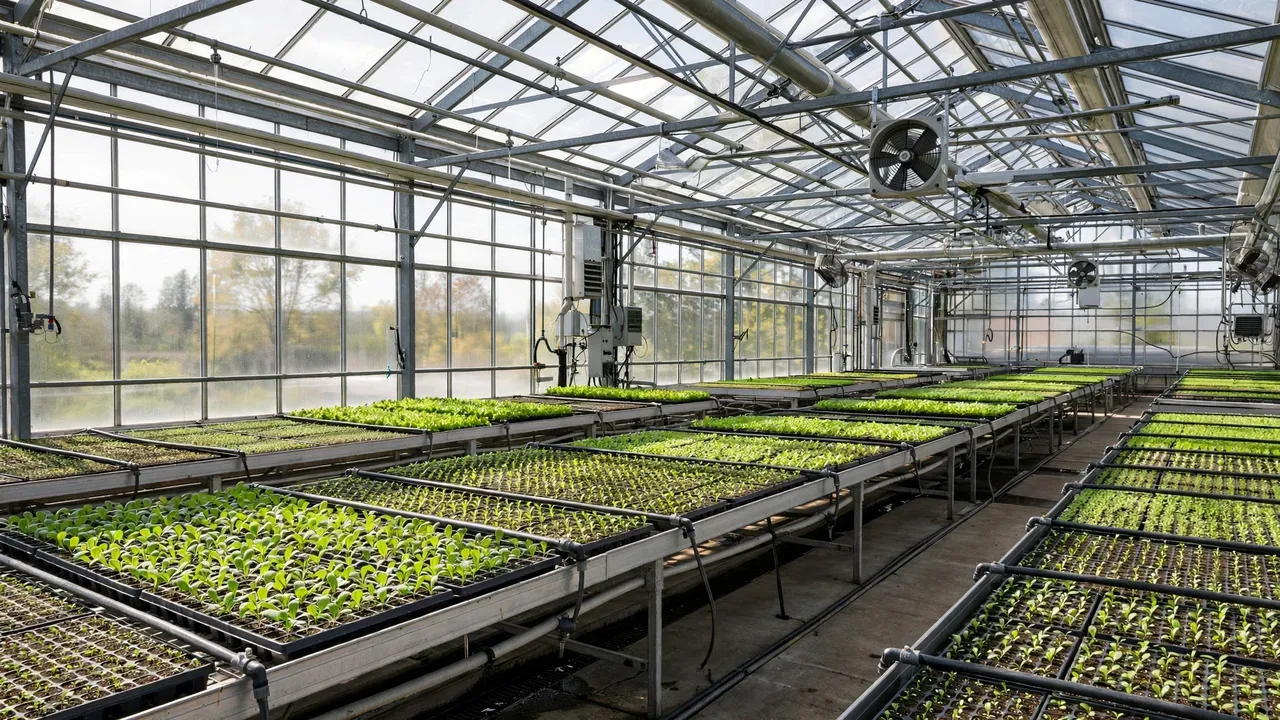
Greenhouse heating systems include unit heaters (gas or electric), radiant tube heaters, hot water boilers with finned tubes or radiant panels, and geothermal systems. The choice depends on greenhouse size, fuel availability, cost, and crop requirements. Unit heaters are common in small to medium greenhouses due to low initial cost and ease of installation. Hot water systems provide more uniform heating and are preferred for larger operations.
Heating strategy should prioritize maintaining optimal night temperatures, as this is when heating demand is highest and when temperature most affects crop development. Many growers use a DIF (difference between day and night temperature) strategy to control plant height—positive DIF (warmer days than nights) promotes stem elongation, while negative DIF (cooler days than nights) suppresses elongation. Implementing a temperature integration strategy that allows temperatures to fluctuate within an acceptable range over 24 hours can reduce heating costs by 10-20% without affecting crop quality.
Cooling and Ventilation
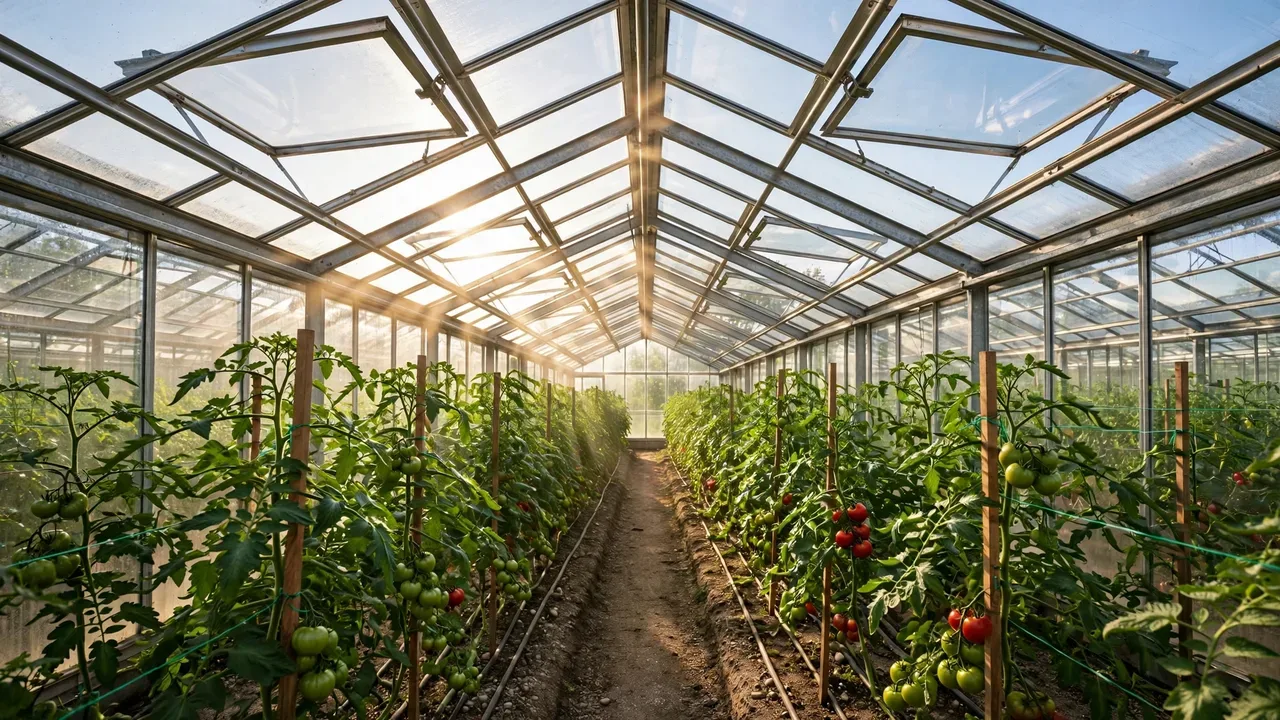
Greenhouse cooling combines natural ventilation (roof and side vents), fan and pad systems (evaporative cooling), shade cloths, and in some cases, air conditioning or fogging systems. Natural ventilation is the most energy-efficient method but may be insufficient in hot climates or during peak summer heat. Fan and pad systems can reduce greenhouse temperatures by 10-20°F (5-11°C) through evaporative cooling, but their effectiveness decreases as humidity increases.
Shade cloths are an essential complement to cooling systems, reducing solar radiation entering the greenhouse. Shade percentages range from 20% to 80%, with the appropriate level depending on crop light requirements and local climate. Retractable shade systems allow growers to deploy shade only when needed, maximizing light capture during lower-light periods. Proper ventilation is also critical for humidity control and CO₂ replenishment—stagnant, humid air promotes disease and reduces photosynthetic efficiency.
Temperature Monitoring and Automation
Accurate temperature monitoring is essential for effective greenhouse management. Use multiple temperature sensors placed at plant canopy level in different zones of the greenhouse, as temperature can vary significantly due to stratification (warm air rising), proximity to vents or heaters, and shading from structures. Data loggers that record temperature at 5-15 minute intervals provide valuable information for troubleshooting problems and evaluating system performance.
Modern greenhouse environmental control systems automate heating, cooling, ventilation, shading, and irrigation based on setpoints and sensor feedback. These systems can maintain temperatures within ±1-2°F of setpoints, optimize energy use, and provide remote monitoring and alerts. When selecting a control system, consider the number of zones you need to control independently, the types of equipment you need to operate, and whether you want remote access capabilities. Even basic controllers with day/night temperature setpoints and vent staging can significantly improve temperature management compared to manual operation.
Common Temperature-Related Problems
Temperature stratification is a common problem where warm air accumulates near the greenhouse roof while plant canopy remains cooler. This wastes heating energy and creates suboptimal growing conditions. Horizontal airflow (HAF) fans circulate air throughout the greenhouse, reducing stratification and maintaining more uniform temperatures. Install HAF fans at a rate of approximately one fan per 1000-1500 square feet, positioned to create a circular airflow pattern.
Cold spots near vents, doors, or end walls can cause uneven crop growth. Insulate greenhouse end walls and use double-layer inflated polyethylene covering with an air gap between layers to reduce heat loss. Ensure heaters are properly sized and positioned to distribute heat evenly. Hot spots near heaters or in areas with poor ventilation can cause heat stress and water loss. Regularly walk through your greenhouse at different times of day to identify temperature variations, and adjust equipment placement or ventilation accordingly.
Practical Case Study: Real-World Application
Consider a 50-hectare mixed farm in the Midwest United States implementing greenhouse temperature management: heating, cooling, and ventilation. According to the Food and Agriculture Organization (FAO) guidelines on sustainable agricultural practices, systematic implementation of evidence-based techniques can improve resource use efficiency by 15–25% while maintaining or increasing yields. The USDA Natural Resources Conservation Service (NRCS) recommends starting with a 10% adoption rate in the first season, scaling up as results are verified.
In practice, this means conducting a baseline assessment during the off-season, identifying the top two priority areas for improvement, and allocating a small trial area (2–5% of total acreage) to test new practices before full-scale implementation. Documenting inputs, costs, and outcomes on the trial plot provides actionable data for future decisions.
Data Reference: Key Benchmarks
| Metric | Typical Range | Source |
|---|---|---|
| Resource efficiency gain | 15–25% | FAO 2024 |
| Initial trial area | 2–5% of acreage | USDA NRCS |
| Payback period | 1–3 growing seasons | Extension research |
| Risk reduction | 20–40% | FAO 2024 |
Sources: Food and Agriculture Organization of the United Nations (FAO), "Sustainable Crop Production Intensification," 2024; USDA Natural Resources Conservation Service, "Conservation Practice Standards," 2024.
Expert Recommendations and Next Steps
Extension specialists from leading agricultural universities consistently recommend a phased approach: (1) Conduct a thorough baseline assessment, (2) prioritize high-impact, low-risk changes, (3) implement on a small trial area, (4) measure results rigorously, and (5) scale based on data. This iterative approach minimizes risk while building practical knowledge specific to your farm's unique conditions.
We recommend consulting your local agricultural extension office for region-specific recommendations, as optimal practices vary significantly by climate zone, soil type, and cropping system. Many extension services offer free soil testing, on-farm consultations, and educational workshops.
Conclusion
Successfully implementing greenhouse temperature management: heating, cooling, and ventilation requires a combination of knowledge, planning, and consistent execution. Start with a clear understanding of the fundamental principles, assess your specific conditions, and implement changes gradually while monitoring results. Remember that every farm is unique, and the most effective approach is one that is adapted to your particular climate, soil, crops, and resources.
By following the practices outlined in this guide and continuously evaluating and refining your approach, you can improve the efficiency, productivity, and sustainability of your farming operation. For additional tools and resources to support your farming decisions, explore our collection of free agricultural calculators and other in-depth farming guides.
Frequently Asked Questions
What temperature should a greenhouse be maintained at?
The optimal greenhouse temperature depends on the crop. Warm-season crops (tomatoes, peppers, cucumbers) need 70–85°F daytime and 60–68°F nighttime. Cool-season crops (lettuce, spinach, kale) prefer 60–70°F daytime and 45–55°F nighttime. Seedling propagation requires 75–80°F for germination, then 65–70°F after emergence. Use a greenhouse ventilation calculator to maintain these ranges.
How do I calculate the heating load for my greenhouse?
Calculate heat loss: BTU/hr = Surface Area (sq ft) × U-value × Temperature Difference (°F). For a 30×96 ft double-poly greenhouse with 8 ft walls (surface ~4,800 sq ft), U-value 0.8, maintaining 70°F inside when 0°F outside: 4,800 × 0.8 × 70 = 268,800 BTU/hr. Add 20% for infiltration and wind. A greenhouse cost payback calculator helps evaluate insulation upgrades that reduce this load.
What are the best methods for cooling a greenhouse in summer?
The most effective cooling methods are: (1) Fan and pad evaporative cooling — reduces temperature by 10–20°F in dry climates, requires 0.5–1 gallon of water per minute per 1,000 CFM; (2) Shade cloth — 30–50% shade reduces heat load by reflecting sunlight, cheapest option; (3) Natural ventilation with ridge and side vents — works when outside temp is below target; (4) Fogging systems — fine mist evaporation for precise cooling in humid climates. Combine shade + ventilation for best results.
How can I reduce greenhouse heating costs in winter?
Key strategies: (1) Install double-layer poly with inflation — reduces heat loss 30–40%, pays back in 1–2 winters; (2) Use thermal blankets or night curtains — reduces nighttime heat loss 25–50%; (3) Improve sealing — caulk cracks, repair torn plastic, install windbreaks; (4) Lower night temperature by 5–10°F for crops that tolerate it (thermoperiodic growth); (5) Use a biomass or waste-heat source if available. A greenhouse cost payback calculator quantifies savings from each upgrade.
What is thermostatic control and why is it important?
Thermostatic control automatically operates heating and cooling equipment based on set temperature thresholds. A two-stage thermostat activates heating when temperature drops below the setpoint (e.g., 62°F) and cooling when it rises above (e.g., 78°F). Proper control prevents temperature swings that stress plants, reduces energy waste from overheating or overcooling, and allows unattended operation. Use separate day/night setpoints for optimal growth and energy efficiency.
How does temperature affect greenhouse crop growth rate?
Temperature directly controls plant metabolic rate. Within the optimal range, each 10°F increase accelerates growth by roughly 30–50% up to the optimum. Above the optimum, growth declines and heat stress causes flower drop, fruit abortion, and reduced quality. Below the minimum, growth stops and chilling injury occurs. Use growing degree day (GDD) tracking to predict harvest timing based on accumulated temperature. Maintaining consistent day/night temperature differential (DIF) controls plant height.