Cover Cropping: A Complete Guide for Farmers
Cover crops are plants grown to protect and improve soil rather than for harvest. They prevent erosion (80-90% reduction), add organic matter (1-3 tons/acre/year), fix nitrogen (50-200 lb/acre for legumes), suppress weeds, and improve water infiltration. The best cover crop depends on your climate, soil, main crop, and goals — this guide helps you choose and manage them effectively.
Why Cover Crops Matter
Bare soil is vulnerable soil. When a field is left fallow between cash crops, wind and water erosion can remove tons of topsoil per acre. Weeds colonize the bare ground, requiring more herbicide. Soil organic matter declines without fresh carbon inputs. Cover crops solve all these problems while providing additional benefits like nutrient cycling, pest suppression, and forage for livestock. This guide covers cover cropping and related agricultural calculations to help you optimize your farm operations.
The USDA estimates that cover crops can reduce soil erosion by 80-90% compared to bare fallow. A 2022 study in the Corn Belt found that fields with cover crops had 0.5-1% higher organic matter after 5 years, corresponding to 1-3% higher corn yields. The economic case is strong: seed cost $20-50/acre, but savings in fertilizer, herbicide, and erosion control often exceed this, plus government cost-sharing programs cover 50-75% of establishment costs.
Types of Cover Crops
Grasses (Carbon Builders)
| Species | Key Benefit | Best For | Seeding Rate |
|---|---|---|---|
| Cereal Rye | High biomass, erosion control, nutrient scavenging | Corn-soy rotations, cool climates | 60-120 lb/acre |
| Wheat | Moderate biomass, winter hardiness | Northern climates, overwintering | 60-90 lb/acre |
| Oats | Quick growth, winter-kill (no termination needed) | Short windows, organic systems | 80-120 lb/acre |
| Sorghum-Sudangrass | Deep roots, compaction breaking, heat tolerance | Summer fallow, compacted soils | 25-35 lb/acre |
Grasses are the workhorses of cover cropping. They produce massive amounts of biomass (2-5 tons/acre), have extensive fibrous root systems that hold soil, and scavenge leftover nitrogen from the previous crop (preventing leaching). Cereal rye is the most popular cover crop in the US because it is winter-hardy, inexpensive, and produces reliable biomass even in poor conditions.
Legumes (Nitrogen Fixers)
| Species | N Fixed (lb/acre) | Best For | Seeding Rate |
|---|---|---|---|
| Hairy Vetch | 100-150 | Corn following, cold climates | 20-40 lb/acre |
| Crimson Clover | 70-120 | Warm climates, quick growth | 20-30 lb/acre |
| Winter Peas | 80-120 | Cool seasons, mixtures | 30-60 lb/acre |
| Red Clover | 70-100 | Perennial frostseeding, pasture | 10-15 lb/acre |
| Berseem Clover | 80-120 | Warm climates, forage | 15-20 lb/acre |
Legumes form a symbiotic relationship with Rhizobium bacteria in root nodules, converting atmospheric nitrogen into plant-available form. This can replace 50-100% of the nitrogen fertilizer needed for the following crop. The nitrogen is released slowly as the legume decomposes, matching crop demand better than synthetic fertilizer. Legumes are generally more expensive to establish than grasses and require proper inoculation with the correct Rhizobium strain.
Brassicas (Biofumigators & Compaction Breakers)
| Species | Key Benefit | Best For | Seeding Rate |
|---|---|---|---|
| Forage Radish | Deep taproot breaks compaction, scavenges N | Compacted soils, nutrient cycling | 5-10 lb/acre |
| Mustard | Biofumigation (nematode and weed suppression) | Nematode-infested fields | 10-15 lb/acre |
| Rapeseed / Canola | Biofumigation, forage, deep roots | Cool climates, pest suppression | 8-12 lb/acre |
Brassicas are unique cover crops with deep taproots that can penetrate compacted soil layers (forage radish roots can reach 3-6 feet deep). They also produce glucosinolates — compounds that, when the plant tissue is crushed and incorporated, release natural fumigants that suppress nematodes, soil-borne diseases, and weed seeds. This "biofumigation" effect can reduce nematode populations by 50-80%.
Cover Crop Mixtures
Single-species cover crops have limitations: grasses fix no nitrogen, legumes produce less biomass, brassicas winter-kill in cold climates. Mixtures combine the strengths of multiple species. The most popular mixture is "cocktail" cover crop mix containing 5-10 species: grass (rye/wheat), legume (vetch/clover/peas), brassica (radish/mustard), and sometimes chicory or phacelia.
Research shows that mixtures often produce more biomass than any single species alone (overyielding effect), provide more diverse root exudates for soil microbes, and are more resilient to variable weather. The tradeoff is higher seed cost and more complex management. Start simple — a grass-legume mix (rye + hairy vetch) is the most reliable entry point.
Establishment and Termination
Planting Methods
- Drilling: Most reliable, 0.5-1 inch depth, good seed-to-soil contact. Use a no-till drill with proper calibration.
- Broadcasting: Faster, works well for small-seeded species (clover, ryegrass). Follow with light incorporation or rolling. 20-30% higher seeding rate needed.
- Aerial seeding: Seed into standing crop 1-2 weeks before harvest. Works best with small seeds and timely rainfall. Most risky method.
- Frost seeding: Broadcast seed in late winter/early spring when soil freezes at night and thaws during day. Works well for red clover into wheat or pasture.
- Interseeding: Plant cover crop into standing corn at V4-V6 stage using specialized equipment. Extends the growing window.
Termination Methods
- Herbicide: Most common and reliable. Glyphosate + 2,4-D or dicamba for broad-spectrum control. Apply 1-2 weeks before planting. Best for grass-legume mixes.
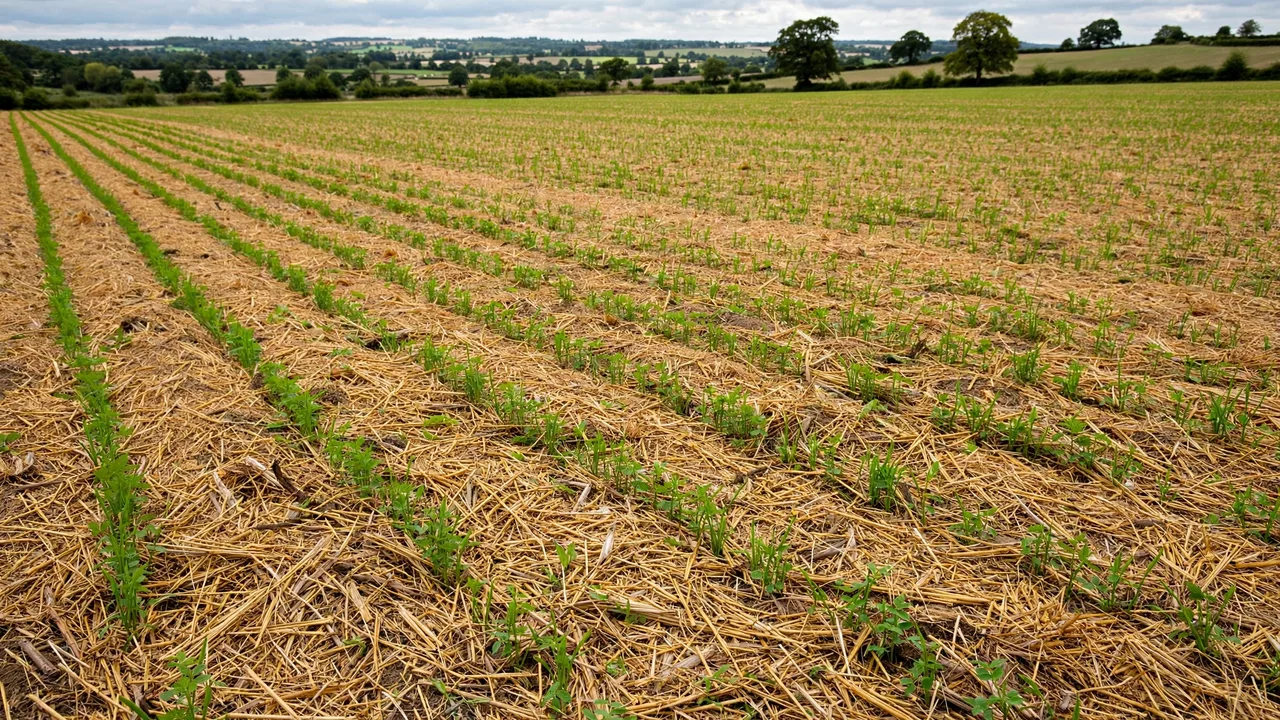
- Roller-crimper: Organic no-till method. Roll cover crop at flowering stage (anthesis for rye) to kill it and create a mulch mat. Works best with tall, dense stands of cereal rye.
- Tillage: Moldboard plow, chisel plow, or disk. Incorporates cover crop residue, releases nutrients quickly, but loses erosion control and soil structure benefits.
- Winter-kill: For species that die naturally in cold climates (oats, forage radish, mustard in zones <5). No termination cost, but residue breaks down quickly.
- Grazing: Let livestock graze the cover crop. Adds income from livestock, but removes some biomass and nutrients. Need to manage grazing intensity to leave enough residue.
Cover Crop by Main Crop
Before Corn
Best: Hairy vetch (fixes 100-150 lb N, reducing corn N needs by 30-50%). Mix with cereal rye for biomass and erosion control. Plant after soybean harvest in fall. Terminate 1-2 weeks before corn planting. Use Fertilizer Calculator to adjust N rates based on legume credit.
Before Soybean
Best: Cereal rye (excellent biomass, weed suppression, no N competition with soybean). Rye also reduces soybean cyst nematode (SCN) populations. Plant after corn harvest. Terminate 1-2 weeks before soybean planting. Avoid legumes before soybean — the soybean fixes its own N, and excess N can reduce nodulation and increase lodging.
Before Vegetables
Best: Mix of oats + peas + forage radish (quick growth, N fixation, compaction relief). Plant in early spring before warm-season vegetables, or in fall after harvest. Forage radish winter-kills in cold climates, leaving a clean seedbed. Use Seed Rate Calculator to determine mix seeding rates.
Cost-Benefit Analysis
| Cost Item | Range ($/acre) | Notes |
|---|---|---|
| Seed | $15-60 | Grass cheapest, legume most expensive |
| Planting | $10-25 | Drilling cost, or free if own equipment |
| Termination | $5-20 | Herbicide + application, or free if winter-kill |
| Total Cost | $30-105 | Average ~$50/acre |
| N fertilizer savings | $30-80 | With legume cover before corn |
| Herbicide savings | $10-30 | Weed suppression from mulch |
| Yield increase | $20-60 | 1-3% yield gain from improved soil |
| Cost-sharing (EQIP/CSAP) | $20-50 | Government programs cover 50-75% |
| Net Benefit | $30-115 | Positive in most cases |
References
- USDA NRCS - Cover Crops
- SARE - Cover Crops for Sustainable Agriculture
- University of Minnesota Extension - Cover Crops
Calculate your cover crop seed needs: Use our Seed Rate Calculator for seeding rates, Fertilizer Calculator to account for N credit, and Area Converter for field measurements. Also see our Soil Test Guide to understand how cover crops improve soil health.
Common Mistakes to Avoid
- Planting too late: Cover crops need 4-6 weeks of growth before frost to establish. Late planting = poor stands = wasted seed. Aim to plant at least 6 weeks before first frost.
- Using the wrong species: Don't plant hairy vetch in zone 8 (it won't winterkill and becomes a weed). Don't plant cereal rye before corn without accounting for N tie-up (immobilization during decomposition).
- Terminating too late: Large, dense cover crops can be hard to kill and may tie up nitrogen. Terminate 1-2 weeks before planting, or use a roller-crimper at flowering.
- Not inoculating legumes: Legumes need the correct Rhizobium strain to fix nitrogen. Hairy vetch needs Rhizobium leguminosarum biovar viciae. Crimson clover needs Rhizobium leguminosarum biovar trifolii. Inoculate seed at planting if the field hasn't grown that legume recently.
- Expecting miracles in year 1: Soil improvement takes time. You may see erosion control and weed suppression immediately, but yield gains and organic matter increases take 3-5 years. Be patient and consistent.
Related Calculators
Related Guides
Frequently Asked Questions
How do I calculate the right seeding rate for cover crops?
Seeding rates depend on species, planting method, and goal. For drill planting: cereal rye 60-90 lb/acre, crimson clover 15-20 lb/acre, hairy vetch 20-30 lb/acre, radish 5-8 lb/acre. For broadcast: increase rates by 25-50%. For mixes, use proportional rates (e.g., 50% rye + 30% vetch + 20% clover of individual rates). Use a cover crop seeding rate calculator to determine exact amounts based on your acreage, species mix, and planting method. Pure live seed (PLS) percentage matters — adjust for germination rate and inert matter.
Which cover crop species should I choose for my goals?
Match species to your primary goal: nitrogen fixation (legumes: clover, vetch, peas, beans — fix 50-200 lb N/acre), weed suppression (cereal rye, sorghum-sudangrass — allelopathic and fast canopy), erosion control (annual ryegrass, cereal rye — dense fibrous roots), soil compaction relief (forage radish, turnips — deep taproots), forage/grazing (cereal rye, oats, triticale, clover), and pollinator habitat (phacelia, buckwheat, clover). Multi-species mixes (3-5 species) provide multiple benefits but cost more. Consider your climate, planting window, and following cash crop when selecting species.
When should I plant and terminate cover crops?
Planting: after cash crop harvest (late summer/early fall for winter annuals like cereal rye, hairy vetch; spring for warm-season covers like sorghum-sudangrass, buckwheat). Aim for 4-6 weeks of growth before frost for winter annuals. Termination timing depends on the next crop: for no-till planting into cover crop residue, terminate 1-3 weeks before planting (roller-crimper at flowering stage for rye, or herbicide). For incorporation, terminate 2-4 weeks before planting to allow decomposition. Terminate legumes at early bloom for maximum N content. Avoid letting cover crops go to seed if they can become weeds.
How much carbon do cover crops sequester and how do I measure it?
Cover crops sequester 0.2-1.0 ton of CO2 per acre per year (0.5-2.5 t CO2/ha/year), depending on biomass production, root depth, and climate. Above-ground biomass contributes less to long-term sequestration than root biomass — deep-rooted covers (radish, chicory, alfalfa) deposit carbon deeper in the soil profile. To measure: take soil samples at 0-6, 6-12, and 12-24 inch depths before planting cover crops and again after 3-5 years, analyze for soil organic carbon (SOC), and use a soil carbon sequestration calculator to estimate changes. Factors like tillage reduction, cover crop species selection, and residue management all affect sequestration rates.
What are the costs and economic benefits of cover cropping?
Costs: seed $15-$60/acre (single species) to $40-$100/acre (multi-species mix), planting $10-$25/acre, termination $10-$30/acre (roller-crimper once purchased, or herbicide). Total: $35-$115/acre/year. Benefits: reduced fertilizer costs (legumes fix $30-$100/acre N equivalent), reduced herbicide costs ($10-$40/acre from weed suppression), reduced soil erosion (value $5-$20/acre), improved water infiltration (reduced irrigation costs), potential carbon credit payments ($5-$30/acre), and long-term soil health improvements (yield gains of 5-15% after 5+ years). Use a farm budget calculator to track costs and benefits over multiple years — cover cropping often breaks even in 2-3 years and becomes profitable thereafter.
How do cover crops affect soil moisture and water management?
Cover crops can both conserve and consume soil moisture, depending on timing and species. During active growth, they use water (2-6 inches per season) which can be a concern in dry years or before planting a water-sensitive cash crop. However, their residue reduces evaporation from the soil surface by 30-50% after termination, conserving moisture for the following crop. The residue also improves water infiltration by 20-50% (reducing runoff and increasing water stored in the soil profile). In humid regions, cover crops help dry out wet soils for earlier planting. In arid regions, choose low-water-use species (cereal rye) and terminate early. Use an irrigation calculator to adjust water applications based on cover crop residue effects.