Organic Fertilizer Application: Rates, Timing, and Methods
Understanding Organic Fertilizers
Organic fertilizers are derived from natural sources including plant materials, animal manures, and minerals. Unlike synthetic fertilizers that provide immediately available nutrients in precise ratios, organic fertilizers release nutrients gradually through microbial decomposition. This slow-release characteristic offers benefits including reduced nutrient leaching, improved soil structure, and enhanced microbial activity, but it also requires more careful planning to ensure nutrients are available when crops need them.
Common organic fertilizer sources include composted manures (cattle, poultry, sheep, horse), plant-based materials (alfalfa meal, soybean meal, cottonseed meal, seaweed), and natural minerals (rock phosphate, greensand, limestone, gypsum). Each source has different nutrient concentrations, release rates, and effects on soil properties. Understanding these differences is essential for developing an effective organic fertilization program.
Nutrient Content and Release Rates
Organic fertilizers vary widely in nutrient content. Composted cattle manure typically contains 1-2% N, 0.5-1% P, and 1-2% K by dry weight. Poultry manure is more concentrated at 3-5% N, 2-4% P, and 1-2% K. Plant meals like alfalfa (2-3% N) and soybean meal (6-7% N) provide nitrogen with moderate release rates. Rock phosphate contains 20-30% P₂O₅ but releases very slowly over years, making it best for long-term phosphorus buildup rather than immediate crop needs.
The nitrogen in organic fertilizers exists in both organic and inorganic forms. Only the inorganic fraction (ammonium and nitrate) is immediately available to plants. The organic fraction must be mineralized by soil microorganisms before becoming available. Mineralization rates depend on temperature, moisture, soil pH, and the carbon-to-nitrogen ratio of the material. In warm, moist conditions, 30-50% of organic nitrogen may mineralize in the first year, with smaller fractions in subsequent years. This residual effect means organic fertilization has lasting benefits but requires accounting for nitrogen credits from previous applications.
Calculating Application Rates
Calculating organic fertilizer rates requires several steps. First, determine your crop's nutrient requirements based on soil test results and yield goals. Next, select an organic fertilizer source and look up its typical nutrient analysis (remember that actual nutrient content can vary—requesting a manure or compost analysis from a lab is ideal). Then calculate the amount needed to supply the required nutrients, accounting for the percentage of nutrients that will be available in the first growing season.
For example, if your soil test recommends 100 pounds of nitrogen per acre and you use composted cattle manure analyzing 1.5% N with an estimated 30% first-year availability, you need 100 ÷ (0.015 × 0.30) = 22,222 pounds (about 11 tons) of compost per acre. Always consider the phosphorus and potassium that come along with the nitrogen—over-application of manure can lead to excessive phosphorus levels, which is both wasteful and environmentally concerning. Use our fertilizer calculator to help with precise rate calculations based on your specific inputs and crop needs.
Application Timing and Methods
Timing is critical for organic fertilizers because nutrients release gradually. Apply solid manures and composts in fall or early spring, allowing time for decomposition before peak crop nutrient demand. Fall application is generally preferred for heavier manures, while spring application works well for more readily available materials. Avoid applying manure to frozen or snow-covered ground, as this increases runoff risk. For nitrogen-demanding crops, consider split applications—applying half pre-plant and the remainder as a side-dress when plants are actively growing.
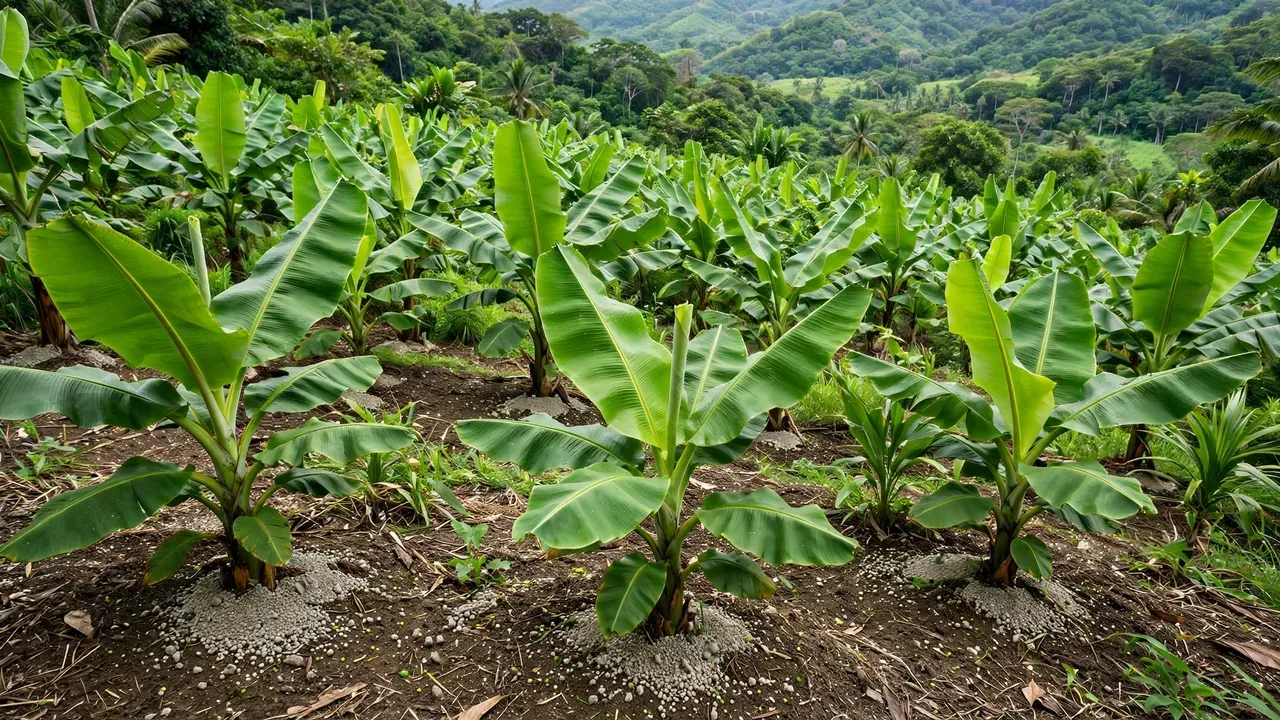
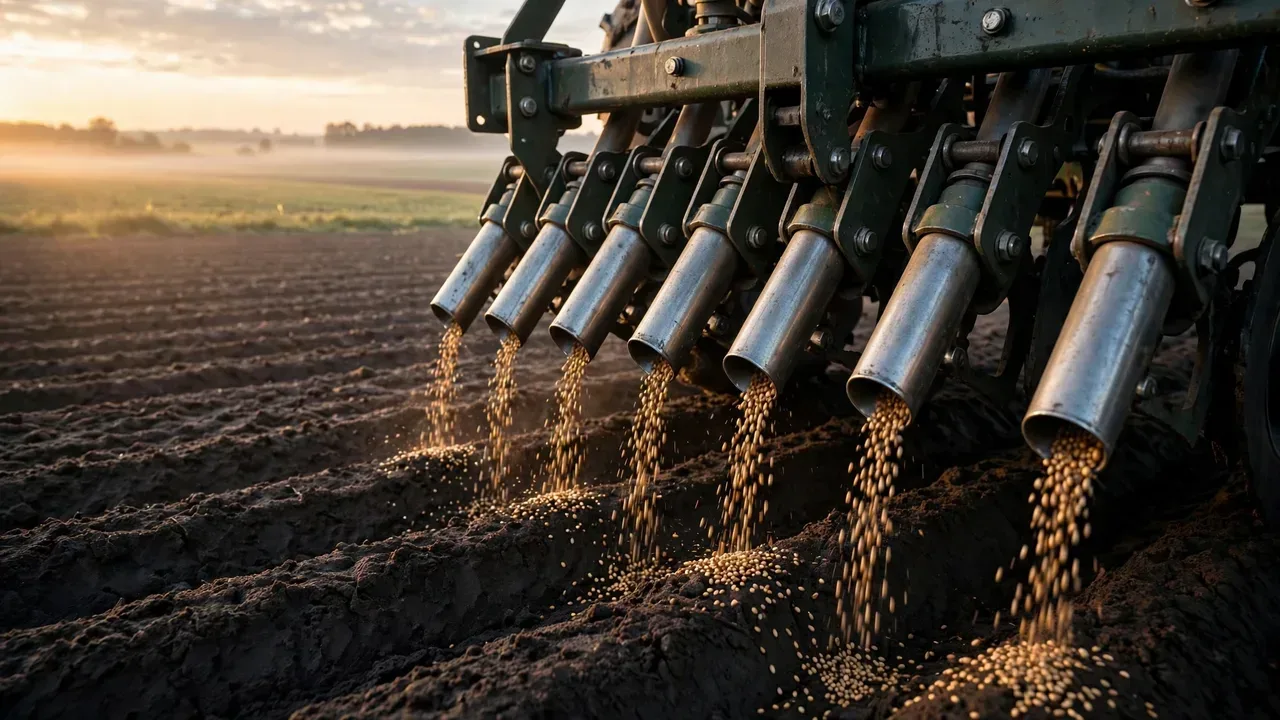
Application methods include broadcasting (uniformly spreading over the surface), banding (placing in strips near the row), and side-dressing (applying alongside growing crops). Broadcasting followed by incorporation is the most common method for solid manures and composts, ensuring good soil contact and reducing nutrient losses. Banding places nutrients closer to roots, improving efficiency for immobile nutrients like phosphorus. Liquid manures and compost teas can be applied through irrigation systems (fertigation) or as foliar sprays for quick nutrient boosts. Always wash foliage after applying manure-based products to avoid burning leaves and reduce pathogen risk.
Composting for Quality Fertilizer
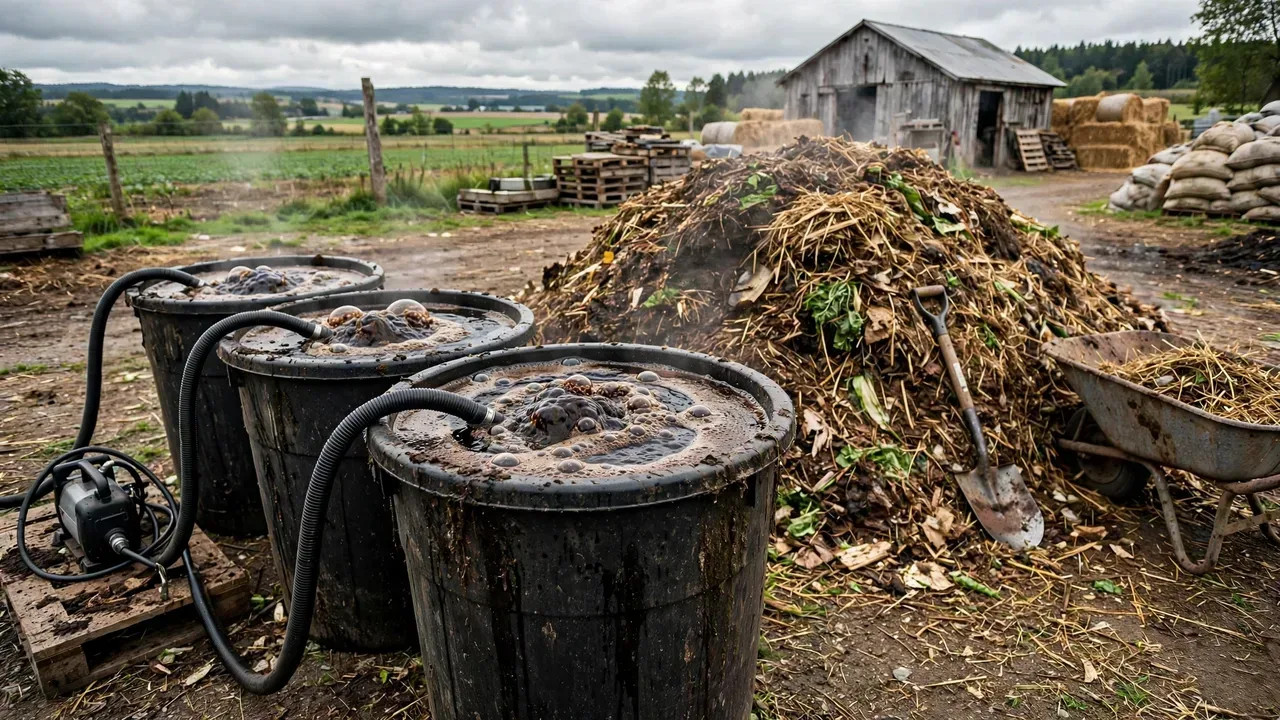
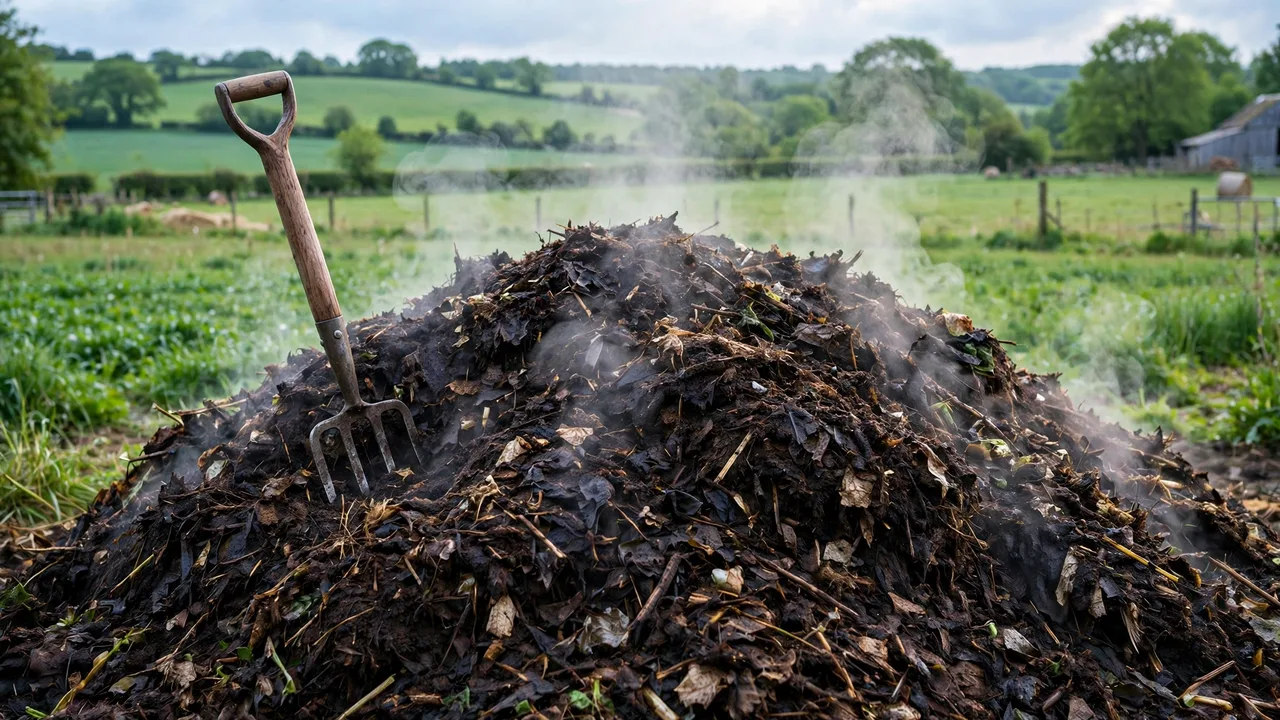
Composting transforms raw organic materials into a stable, nutrient-rich soil amendment. Proper composting involves balancing carbon-rich materials (browns like straw, leaves, wood chips) with nitrogen-rich materials (greens like manure, food scraps, fresh plant residues) at an ideal C:N ratio of 25-30:1. Maintain moisture at 50-60% (like a wrung-out sponge) and ensure adequate oxygen through regular turning. Under these conditions, thermophilic bacteria raise temperatures to 130-160°F (54-71°C), killing weed seeds and pathogens while accelerating decomposition.
A well-managed compost pile can produce finished compost in 3-6 months with regular turning, or 6-12 months with passive methods. Finished compost is dark, crumbly, and earthy-smelling, with no recognizable original materials. Apply finished compost at rates of 1-5 tons per acre for field crops, or 1-3 inches incorporated into garden beds. Compost not only supplies nutrients but also improves soil structure, water-holding capacity, and microbial diversity. For best results, combine compost with other organic fertilizers to create a comprehensive nutrient management program.
Environmental Considerations
Organic fertilization, while generally more environmentally friendly than synthetic fertilizers, still requires careful management to prevent nutrient pollution. The primary concerns are phosphorus runoff into waterways (causing eutrophication) and nitrogen leaching into groundwater. To minimize these risks, avoid over-application of manures and composts—soil testing is essential for determining appropriate rates. Implement buffer strips along waterways, and avoid applying organic fertilizers on steep slopes or near wells.
Timing applications to coincide with crop uptake reduces the window for nutrient loss. Incorporating manure into soil within 24 hours of application significantly reduces ammonia volatilization and nutrient runoff. For operations with limited land base relative to animal numbers, developing a nutrient management plan that matches manure production to crop nutrient requirements is essential. Consider exporting excess manure to neighboring farms or composting facilities. With proper management, organic fertilizers can build soil health and productivity while protecting water quality.
Frequently Asked Questions
How do I calculate organic fertilizer application rates?
To calculate organic fertilizer rate: (1) Determine crop nutrient requirement (lb/acre of N, P₂O₅, K₂O) from soil test and crop guidelines; (2) Determine fertilizer nutrient content from label or analysis (e.g., blood meal 12-0-0, fish emulsion 5-1-1); (3) Account for nutrient availability — organic N is only 50–80% available in year 1 (mineralization rate); (4) Calculate: Fertilizer needed (lb/acre) = Nutrient required (lb/acre) ÷ (Nutrient % ÷ 100 × Availability factor). Example: Need 100 lb N/acre, using blood meal (12% N, 80% available): 100 ÷ (0.12 × 0.80) = 100 ÷ 0.096 = 1,042 lb/acre. An organic fertilizer NPK conversion calculator simplifies this for any product.
What is the difference between fast-release and slow-release organic fertilizers?
Fast-release organic fertilizers (blood meal, fish emulsion, guano) have high N content (8–14%) and mineralize quickly (within 2–6 weeks), making them ideal for quick nutrient boosts during peak growth. Slow-release organic fertilizers (compost, manure, bone meal, rock phosphate) have lower nutrient concentrations and release over months to years, building long-term soil fertility. Blood meal releases 80% of N in 8 weeks; compost releases only 10–30% of N in year 1, with residual effects for 3–5 years. Match release rate to crop demand: use fast-release for heavy feeders (tomatoes, corn) during growth, slow-release as base dressing and soil building.
How do I convert compost nutrient content to fertilizer equivalent?
Compost nutrient content varies widely: finished compost typically contains 1–3% N, 0.5–2% P₂O₅, 1–2% K₂O by dry weight, but only 10–30% of N is available in the first year. To convert: Available N (lb/ton) = Compost N% × 20 lb/percent × 0.20 (availability factor). Example: Compost at 2% N: 2 × 20 × 0.20 = 8 lb available N per ton. P and K are more available (50–80% in year 1). At 10 tons/acre: 80 lb available N, plus 50–100 lb P₂O₅ and K₂O. A compost nutrient content calculator uses your compost analysis to determine precise application rates.
When is the best time to apply organic fertilizers?
Timing depends on fertilizer type and crop: (1) Compost and manure — apply in fall or early spring, 2–4 weeks before planting, to allow mineralization and avoid nitrogen tie-up; (2) Blood meal, fish emulsion — apply as side dressing when plants are actively growing (3–4 weeks after transplanting, at flowering), because they release quickly; (3) Bone meal, rock phosphate — apply at planting or in fall, as they release slowly and need contact with roots; (4) Liquid organic fertilizers (fish emulsion, compost tea) — apply as foliar feed or soil drench every 2–4 weeks during active growth; (5) Avoid applying organic N when soil temperature is below 50°F — microbial activity is too low for mineralization. Use an organic fertilizer calculator to plan your application schedule.
Can organic fertilizers burn plants like synthetic fertilizers?
Organic fertilizers are generally safer and less likely to burn plants, but some can cause damage if over-applied. High-N fast-release organics (blood meal at >200 lb N/acre, fresh manure with high ammonia content) can burn seedlings and tender plants if applied too close to roots or in excessive amounts. Fresh poultry manure (4–6% N) can burn if applied at >2 tons/acre without composting. Compost and well-rotted manure are very difficult to over-apply. To avoid burn: (1) Don't apply high-N organics within 2 inches of seed/transplant; (2) Water thoroughly after application; (3) Split applications into 2–3 smaller doses; (4) Always follow soil test recommendations.
What are the best organic fertilizer sources for N, P, and K?
Nitrogen sources: blood meal (12-0-0, fast release), feather meal (12-0-0, slow release), fish emulsion (5-1-1, fast/liquid), alfalfa meal (3-1-2, medium), soybean meal (7-2-1, medium), compost (1-3% N, slow), manure (variable). Phosphorus sources: bone meal (4-12-0, slow), rock phosphate (0-3-0, very slow, best in acidic soils), fish bone meal (4-17-0, medium), compost. Potassium sources: greensand (0-0-7, slow), kelp meal (1-0-2, medium, plus micronutrients), wood ash (0-1-3, fast, also raises pH), sulfate of potash-magnesium (0-0-22, allowed in organic with restrictions), compost, manure. Use an organic fertilizer NPK conversion calculator to blend sources for your specific nutrient target.